

Why Industrial Waste Disposal Matters for Your Business
Industrial waste disposal is the process of safely collecting, transporting, and disposing of byproducts from manufacturing, construction, and other industrial activities. With over 7.5 billion tons of industrial waste generated annually in the United States, proper disposal isn’t just an environmental responsibility—it’s a business necessity.
Key Industrial Waste Disposal Methods:
- Recycling facilities – for scrap metal, concrete, wood, and cardboard
- Landfills – for non-hazardous, non-recyclable materials only
- Roll-off dumpsters – for efficient collection and transport
- Professional waste management services – for regulatory compliance
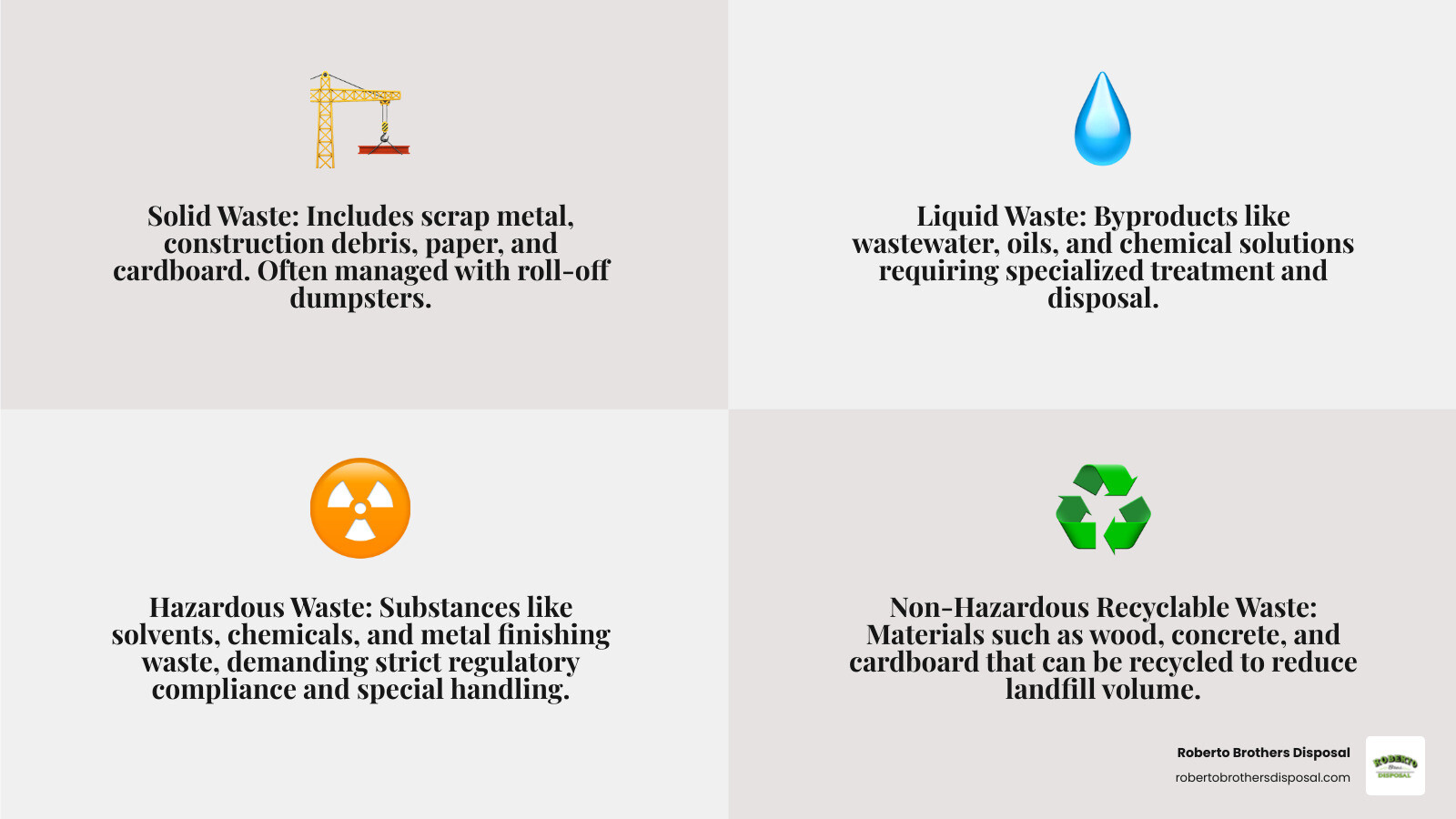
Industrial waste ranges from simple materials like paper and cardboard to complex substances like solvents and metal finishing waste. The distinction between hazardous and non-hazardous waste determines your disposal options and regulatory requirements.
The stakes are high. Improper disposal can result in EPA fines exceeding $72,000 per day, per violation. Beyond financial penalties, poor waste management damages soil, water, and air quality while putting your business reputation at risk.
Whether you’re managing construction debris, manufacturing byproducts, or facility cleanouts, understanding your disposal options helps you stay compliant while protecting both the environment and your bottom line.
Learn more about Industrial waste disposal:
Introduction: Defining and Categorizing Industrial Waste
Industrial processes are the engines of our modern world, powering everything from the cars we drive to the homes we live in. But just like any engine, they produce byproducts – and that’s where industrial waste disposal comes into play. Industrial waste refers to any unwanted or leftover materials generated from industrial processes, including manufacturing, transportation, and even packing requirements. This can range from the seemingly innocuous, like ash or grinding dust, to the overtly dangerous, such as chemicals and solvents.
The majority of worldwide waste production actually comes from industrial processes, making it a truly massive issue that demands our attention. At Roberto Brothers Disposal, we understand this complexity. We categorize industrial waste primarily into three types:
- Industrial Solid Waste: This encompasses many materials, including scrap metal, wood, plastic, paper, and cardboard. It’s often the most visible form of industrial waste and can be generated from various sources, from construction sites to manufacturing facilities.
- Non-Hazardous Waste: While not immediately dangerous, this category includes materials like sludge, liquids with non-hazardous chemicals, and general debris. It still requires careful management because, if not disposed of properly, non-hazardous industrial waste can still harm the environment. For example, some biodegradable plastics, if not handled correctly, can lead to microplastic accumulation.
- Hazardous Waste: This is the big one. Hazardous waste includes materials that are flammable, explosive, corrosive, reactive, or toxic. Think solvents, spent acids, metal finishing waste, and certain wastewater treatment sludges. These byproducts of processes in factories, hospitals, and manufacturing facilities pose significant risks to human health and the environment, demanding stringent disposal protocols.
Properly characterizing your industrial waste is the crucial first step in responsible management. It’s about understanding precisely what you’re dealing with so you can choose the right disposal method, ensuring compliance and protecting our planet. This requires separating industrial waste from regular office waste, as their disposal requirements are vastly different.
The High Cost of Improper Disposal: Environmental and Business Risks
Picture this: you’re trying to save a few dollars on waste disposal, but suddenly you’re facing a $72,000 per day EPA fine. That’s the harsh reality many businesses find when they cut corners on industrial waste disposal. The costs of doing it wrong far outweigh any short-term savings.
When industrial waste isn’t handled properly, it creates a domino effect that starts underground and spreads everywhere. Soil contamination is often the first casualty – hazardous chemicals seep into the ground, making land unusable for years or even decades. But the damage doesn’t stop there.
That contaminated soil eventually affects our water sources. Groundwater supplies, rivers, and lakes all become vulnerable when industrial waste leaches through the soil. The numbers from our past are sobering: back in 1968, we dumped 4.5 million tons of industrial waste directly into our oceans. Between 1946 and 1970, nearly 34,000 containers of radioactive waste were dumped off the eastern U.S. coastline. We’re still dealing with the consequences of those decisions today.

The environmental damage extends to ocean acidification when contaminated water reaches our seas. Marine life suffers, and those effects ripple through the entire food chain. Even “biodegradable” plastics can break down into microplastics when not disposed of correctly, creating long-term pollution problems.
Air pollution is another serious concern. Improperly managed landfills release methane and other harmful gases into the atmosphere. These emissions don’t just affect local air quality – they contribute to climate change on a global scale.
The health risks are real and immediate. Communities near contaminated sites face respiratory problems, skin irritation, and more serious long-term health issues. Wildlife impact is equally devastating, with animals losing habitats and suffering direct exposure to toxic materials.
For your business, the risks go beyond environmental damage. Reputational damage can destroy decades of hard work in a matter of weeks. Customers lose trust, partners walk away, and rebuilding that reputation takes years.
The financial consequences are crushing. Those hefty fines from the EPA can reach over $72,000 per day for each violation. Add legal liability from affected communities, cleanup costs, and lost business, and you’re looking at expenses that can sink even established companies.
At Roberto Brothers Disposal, we’ve seen businesses learn these lessons the hard way. That’s why we emphasize that proper industrial waste disposal isn’t an expense – it’s an investment in your company’s future and our shared environment.
Key Methods for Compliant Industrial Waste Disposal
Smart industrial waste disposal starts long before you fill your first dumpster. At Roberto Brothers Disposal, we’ve learned that the most successful businesses think about waste management as a complete system, not just a cleanup task.
The smartest approach begins with waste minimization and source reduction. Think of it like meal planning – when you plan ahead, you waste less food. The same principle applies to industrial processes. By analyzing how materials flow through your operations, you can often find ways to use less and waste even less. Maybe you can optimize your material usage or switch to less wasteful inputs. Every pound you don’t produce is a pound you don’t have to dispose of.
Recycling is where things get exciting. Many materials that look like waste are actually valuable resources waiting for their second act. Smart recycling programs can keep as much as 20% of a company’s waste out of landfills. This creates what we call a circular economy – where yesterday’s waste becomes tomorrow’s raw materials.
Industrial facilities generate surprisingly recyclable materials. Scrap metal from manufacturing or old machinery is like buried treasure – steel, aluminum, and copper are all highly valuable to recyclers. Concrete and rubble from construction projects can be crushed and reused as aggregate for new construction. Wood from pallets and timber can become mulch, compost, or even bioenergy. Don’t forget about everyday materials like cardboard, paper, and various plastics from packaging and manufacturing scraps. Even complex electronics can be processed by specialized facilities to recover valuable components.
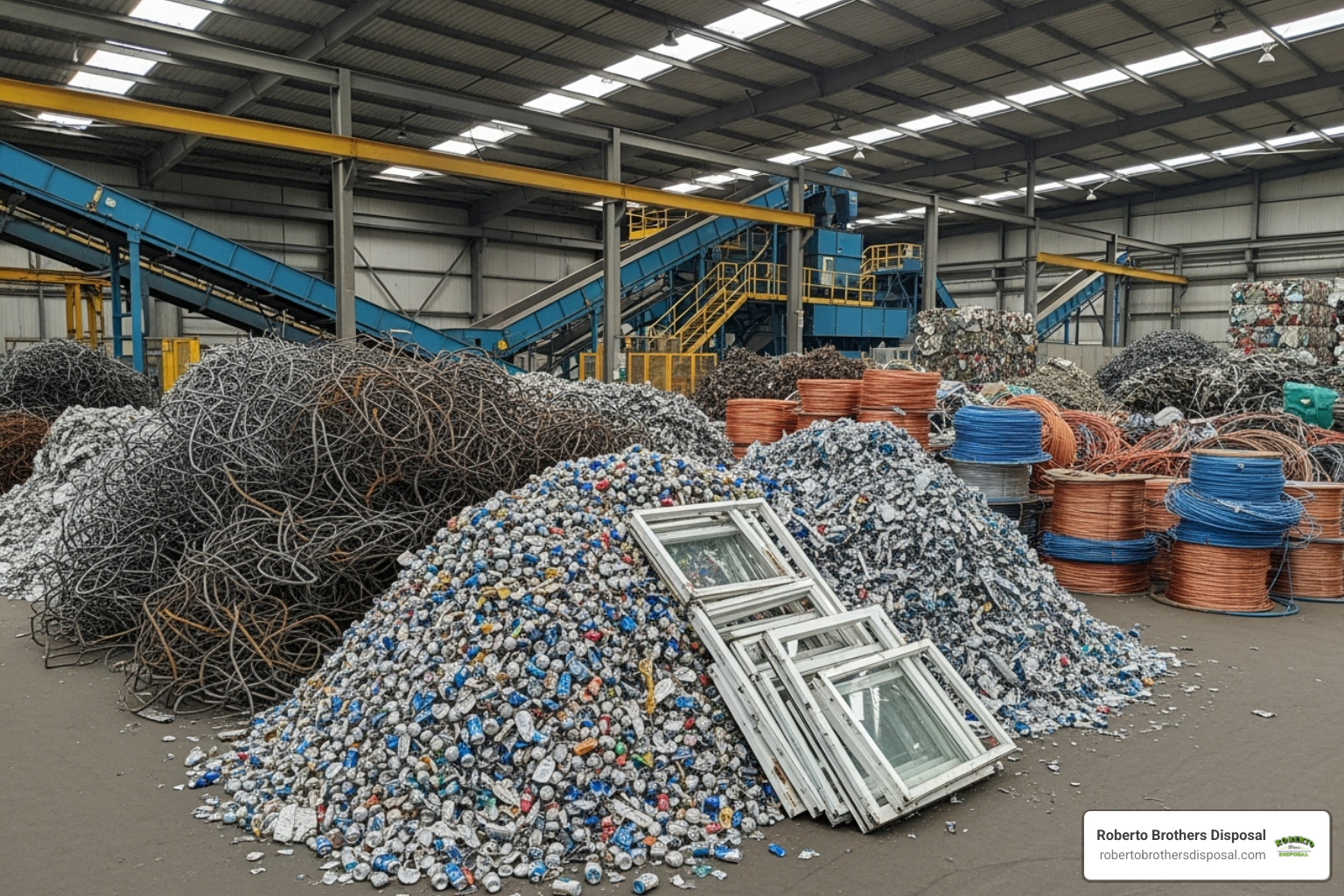
For materials that can’t be reduced, reused, or recycled, responsible landfill use becomes necessary. Modern landfills aren’t just holes in the ground – they’re sophisticated engineering projects with base seal systems to protect groundwater and cover systems to control gas release. However, landfills should be your last resort, reserved only for non-hazardous, non-recyclable materials that truly have no other option.
Roll-off dumpsters are the workhorses of efficient industrial waste collection. These containers let you collect large volumes of waste right where you generate it, then we handle the transportation to appropriate facilities. This approach keeps your site organized, reduces handling, and ensures everything gets to the right destination safely and legally.
The game-changer for most businesses is partnering with a professional waste management company like Roberto Brothers Disposal. We bring over 20 years of experience navigating waste characterization, regulatory compliance, and efficient disposal. Our team helps you choose the right dumpster sizes, coordinate pickups, and ensure everything is processed safely. This partnership often translates into significant savings and peace of mind – something that’s hard to put a price on.
Choosing the Right Roll-Off Dumpster for Your Needs
Getting the dumpster size right is like choosing the right tool for the job – it makes everything easier and more cost-effective. Too small, and you’ll be calling for extra pickups (and paying for them). Too large, and you’re paying for air space.
At Roberto Brothers Disposal, we’ve seen every type of industrial project, and we know which sizes work best for different situations. Here’s how our most popular dumpster sizes match up with typical industrial needs:
| Dumpster Size | Dimensions (H x W x L) | Typical Uses |
|---|---|---|
| 10 Yard | 3.25′ tall x 7.25′ wide x 12′ long | Small cleanouts, light debris, roofing jobs, concrete removal, small remodels |
| 15 Yard | 4′ tall x 7.25′ wide x 14′ long | Medium projects, renovation debris, larger roofing jobs, garage/basement cleanouts |
| 20 Yard | 5.5′ tall x 7.25′ wide x 14′ long | Larger cleanouts, construction, landscaping projects, medium-sized commercial cleanouts |
| 28 Yard | 6′ tall x 7.25′ wide x 17′ long | Major projects, bulky materials, large construction demolition, industrial facility cleanouts |
Every industrial project has its own personality, and we’re here to help you match the right dumpster to your specific needs. If your business regularly generates 40 or more yards of waste material, or you’re tackling a major project, a larger roll-off dumpster usually makes the most economic sense.
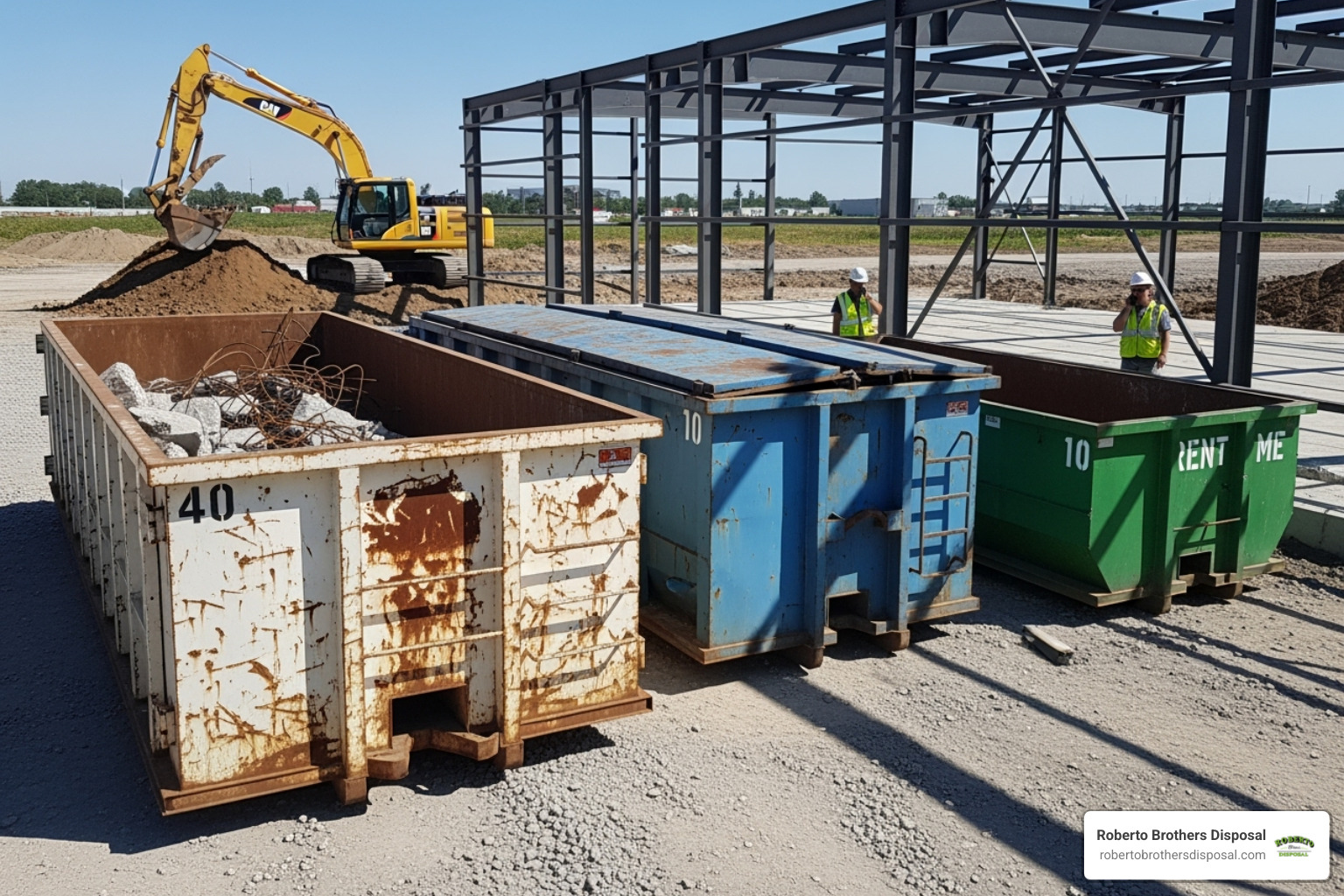
Want to dive deeper into sizing options? Check out our guide to Commercial Dumpster Sizes for more detailed information.
Best Practices for Specific Industrial Waste Disposal
Different types of industrial waste need different approaches – just like you wouldn’t use the same recipe to cook fish and steak. At Roberto Brothers Disposal, we help businesses develop custom strategies for their specific waste streams.
Scrap metal management is often the most rewarding waste stream to handle properly. Manufacturing and metal production facilities generate valuable scrap that should never see the inside of a landfill. We help you segregate metals from other materials and get them to dedicated recycling facilities where they can be transformed into new products. It’s satisfying to know that your old machinery might become part of a new building or vehicle.
Construction waste disposal requires a different approach entirely. Construction sites produce a mix of concrete, wood, drywall, and metals that can be overwhelming without a plan. Our Construction Waste Disposal services keep your projects moving smoothly while ensuring recyclable materials don’t end up in landfills. Whether you need containers for mixed debris or dedicated loads of specific materials, we’ve got the right solution.
Concrete and rubble deserve special attention because they’re so recyclable. Instead of taking up valuable landfill space, concrete can be crushed and reused as aggregate for new construction projects. Our Concrete Disposal Service connects your waste concrete to facilities that give it new life in future projects.
Safe handling of non-hazardous industrial waste might sound straightforward, but it still requires careful management. Materials like ash, sludge, and certain liquids need proper containers and disposal schedules. We help businesses separate these materials from recyclables and ensure they reach appropriate engineered landfills. Even general plant trash requires secure and efficient removal to keep your facility running smoothly.
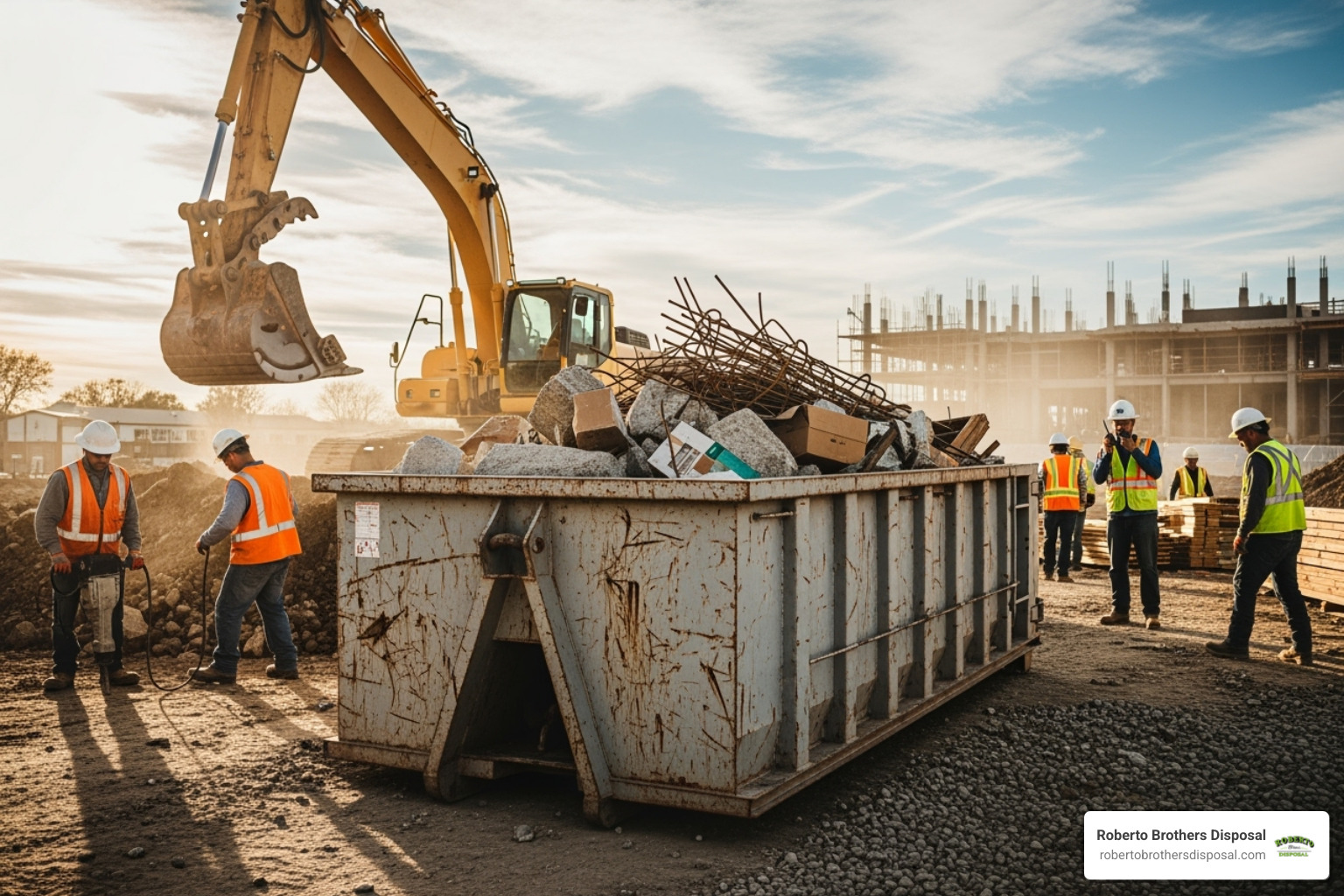
The secret sauce across all waste types is segregation at the source. When you sort waste by type before it leaves your facility, you maximize recycling potential, reduce disposal costs, and simplify compliance. Whether you’re dealing with chemicals, solvents, or everyday scrap, our team can help you implement efficient waste separation strategies that make sense for your operations.
Navigating the Regulatory Landscape: EPA, RCRA, and Compliance
Let’s be honest – navigating industrial waste disposal regulations can feel like trying to solve a puzzle while blindfolded. But here’s the thing: these rules exist for a really good reason. They’re designed to protect our communities, our environment, and yes, even your business from the serious risks that come with improper waste management.
The Environmental Protection Agency (EPA) serves as the primary watchdog for hazardous waste oversight in the United States. Think of them as the referees in the waste management game – they set the rules, monitor compliance, and aren’t afraid to blow the whistle when someone steps out of line.
At the heart of federal waste regulation sits the Resource Conservation and Recovery Act (RCRA). This comprehensive law creates what experts call a “cradle-to-grave” management system for hazardous waste. From the moment hazardous waste is generated at your facility until it reaches its final destination, RCRA tracks every step. It covers generation, transportation, treatment, storage, and disposal – basically, the entire lifecycle of hazardous materials.
But wait, there’s more complexity ahead. State-level regulations often add another layer to federal requirements. Many states have received EPA authorization to run their own hazardous waste programs, which means they take the lead role instead of the federal EPA. This can actually work in your favor, as state programs often provide more personalized guidance and faster response times.
The real teeth in RCRA come from the Land Disposal Restrictions (LDR) program, which establishes critical hazardous waste prohibitions. First, there’s the disposal prohibition – you simply cannot throw hazardous waste into regular landfills. These materials must meet specific treatment standards to reduce their danger before any land disposal can happen.
The dilution prohibition might surprise some businesses. You cannot water down or dilute hazardous waste to try to meet treatment standards. It’s like trying to make spoiled milk safe by adding more water – it doesn’t work, and regulators see right through it.
Finally, the storage prohibition prevents businesses from stockpiling hazardous waste indefinitely. Temporary storage is allowed while you accumulate enough waste to make treatment and disposal cost-effective, but storing hazardous waste for longer than one year typically requires special justification.
Transportation compliance adds another critical layer to the regulatory puzzle. Hazardous waste must be properly packaged, labeled, and accompanied by detailed manifesting documentation. Think of the manifest as a passport for your waste – it travels with the material from your facility to its final destination, creating an unbreakable chain of accountability.
Thorough record-keeping isn’t just good business practice; it’s your proof of compliance. You’ll need to maintain documentation of waste analyses, manifests, treatment certifications, and disposal records. These records become your shield if regulators come knocking with questions.
The EPA’s Guide for Industrial Waste Management serves as an invaluable resource for businesses managing non-hazardous industrial waste, offering practical tools and recommendations that can save you both headaches and money.
At Roberto Brothers Disposal, we understand that regulatory compliance can feel overwhelming. While we focus on non-hazardous waste management, we help connect you with specialized services when needed and ensure that all materials we handle meet full compliance with local, state, and federal regulations. Our 20+ years of experience means we’ve seen the regulatory landscape evolve, and we’re here to help you steer it successfully.
Staying compliant isn’t just about avoiding those hefty EPA fines – it’s about being a responsible business partner in your community and protecting the environment we all share.
Frequently Asked Questions about Industrial Waste
At Roberto Brothers Disposal, we know that navigating industrial waste disposal can feel overwhelming. After 20 years in the business, we’ve heard just about every question you can imagine. Here are the answers to the most common ones that keep business owners up at night.
What is the difference between hazardous and non-hazardous industrial waste?
Think of this as the difference between a campfire and a bonfire – both need attention, but one requires a lot more caution. Understanding this distinction is absolutely crucial because it determines everything from how you handle the waste to how much you’ll pay for disposal.
Hazardous industrial waste is the stuff that can seriously hurt people or the environment if not handled properly. The EPA has made this pretty straightforward by defining four key characteristics that make waste hazardous:
Ignitability means it catches fire easily – think solvents, paints, and cleaning chemicals that could spark up with just a little heat. Corrosivity covers materials that can eat through metal or cause severe burns, like strong acids or bases used in manufacturing. Reactivity describes waste that can explode or produce toxic fumes when it gets wet or heated – definitely not something you want sitting around. Finally, toxicity refers to waste containing harmful concentrations of specific nasty stuff like heavy metals or pesticides.
Non-hazardous industrial waste, on the other hand, includes everything else from your industrial processes. We’re talking about scrap metal, wood, paper, cardboard, plastics, and general manufacturing debris. Just because it’s called “non-hazardous” doesn’t mean you can toss it anywhere, though. Even this waste needs proper handling to prevent environmental problems and maximize recycling opportunities.
The key thing to remember? When in doubt, get it tested. Misclassifying hazardous waste as non-hazardous can land you in serious hot water with hefty fines.
How do I determine the right size dumpster for my industrial project?
Choosing the wrong dumpster size is like buying shoes that don’t fit – uncomfortable and expensive. Too small means multiple trips and extra costs. Too big means you’re paying for air space.
Start by thinking about volume in terms you can visualize. A standard pickup truck bed holds about 2 cubic yards of material. Our 10-yard dumpster (3.25′ tall x 7.25′ wide x 12′ long) holds roughly 5 pickup truck loads – perfect for small cleanouts, light debris, or roofing jobs.
For medium projects like renovation debris or larger facility cleanouts, our 15-yard dumpster (4′ tall x 7.25′ wide x 14′ long) often hits the sweet spot. When you’re dealing with larger construction projects or significant landscaping work, the 20-yard dumpster (5.5′ tall x 7.25′ wide x 14′ long) is our most popular choice for good reason.
For those major industrial facility cleanouts or projects with bulky materials, our 28-yard dumpster (6′ tall x 7.25′ wide x 17′ long) is your heavy-duty solution.
But here’s the catch – weight matters as much as size. Heavy materials like concrete or metal will max out the weight limit long before they fill the dumpster. Light, bulky stuff like cardboard or wood might fill it to the brim without hitting weight limits.
If your business regularly generates 40 or more yards of waste material, we should definitely talk about a larger dumpster or even explore other solutions that might save you money in the long run.
What are the main benefits of recycling industrial waste?
Recycling industrial waste isn’t just about feeling good – though it does feel pretty great. It’s about making smart business decisions that benefit your bottom line and the planet at the same time.
From an environmental standpoint, recycling is like giving materials a second chance at life. Instead of taking up valuable landfill space, materials get transformed into new products. This means less mining for new materials, less energy used in manufacturing, and less pollution overall. When you recycle metals, plastics, and paper, you’re literally conserving natural resources for future generations.
The economic benefits are where things get really interesting. Proper recycling often means lower disposal fees because recycled materials cost less to process than waste headed to landfills. Some materials, like scrap metal, can even generate revenue for your business. Companies using comprehensive industrial waste management services have realized millions in savings through smart waste diversion strategies.
Your brand image gets a boost too. Customers, investors, and employees increasingly care about sustainability. When you can honestly say you’re committed to recycling and environmental responsibility, it sets you apart in a competitive marketplace.
There’s also the compliance angle. Following recycling regulations helps you avoid costly fines and legal headaches. It’s much easier to stay compliant when you’re proactively managing your waste streams.
Perhaps most importantly, recycling supports what experts call the circular economy. Instead of the old “take, make, dispose” model, recycling creates a loop where today’s waste becomes tomorrow’s raw materials. This approach fosters innovation, creates jobs, and builds a more sustainable future for everyone.
At Roberto Brothers Disposal, we’ve seen how businesses transform their operations – and their costs – by embracing smart industrial waste disposal practices that prioritize recycling.
Your Partner for Reliable Industrial Waste Solutions
Let’s be honest – dealing with industrial waste disposal shouldn’t keep you up at night. Between understanding what counts as hazardous versus non-hazardous waste, staying on top of ever-changing EPA regulations, and figuring out whether you need a 15-yard or 28-yard dumpster, it’s enough to make anyone’s head spin.
That’s exactly why Roberto Brothers Disposal exists. We’ve spent over 20 years helping businesses across Middlesex County, Worcester County, Southern New Hampshire, and throughout Massachusetts steer these challenges so they can focus on what they do best – running their operations.
Every industrial facility we work with has its own unique fingerprint when it comes to waste. A manufacturing plant dealing with scrap metal and manufacturing byproducts has completely different needs than a construction company managing concrete debris and lumber scraps. We get that, and our approach reflects it.
Working with a professional waste management company transforms what can be a major headache into a streamlined process. Our expertise and compliance knowledge means you’re not constantly worrying about whether you’re following the latest RCRA requirements or state-level regulations. We handle the regulatory maze so you don’t have to become an expert in EPA guidelines overnight.
The efficiency and convenience factor is huge for our clients. When you call us, we help you choose the right dumpster size – whether it’s our compact 10-yard option (3.25′ tall x 7.25′ wide x 12′ long) for smaller cleanouts or our robust 28-yard container (6′ tall x 7.25′ wide x 17′ long) for major industrial projects. No guesswork, no paying for space you don’t need.
Cost-effectiveness isn’t just about finding the cheapest option – it’s about getting the best value. We help you maximize recycling opportunities for materials like scrap metal, concrete, and cardboard, which often means lower disposal costs and sometimes even revenue from recyclable materials. Our transparent pricing means no surprise fees showing up on your invoice.
Our commitment to eco-friendly practices isn’t just good marketing – it’s how we operate every day. We prioritize diverting materials from landfills whenever possible, connecting you with recycling facilities and ensuring that your waste management practices support your company’s sustainability goals.
As a local, family-run business, we understand that reputation protection matters enormously in today’s business climate. Proper waste disposal isn’t just about avoiding those hefty EPA fines (which can exceed $72,000 per day, per violation) – it’s about being able to tell your customers, employees, and community that you’re doing business responsibly.
Whether you need our Small Business Dumpster Service or comprehensive commercial solutions, we’re here to make industrial waste disposal one less thing you have to worry about. After two decades in this business, we’ve learned that the best partnerships are built on reliability, transparency, and genuine care for our clients’ success.
