
Understanding Commercial Recycling
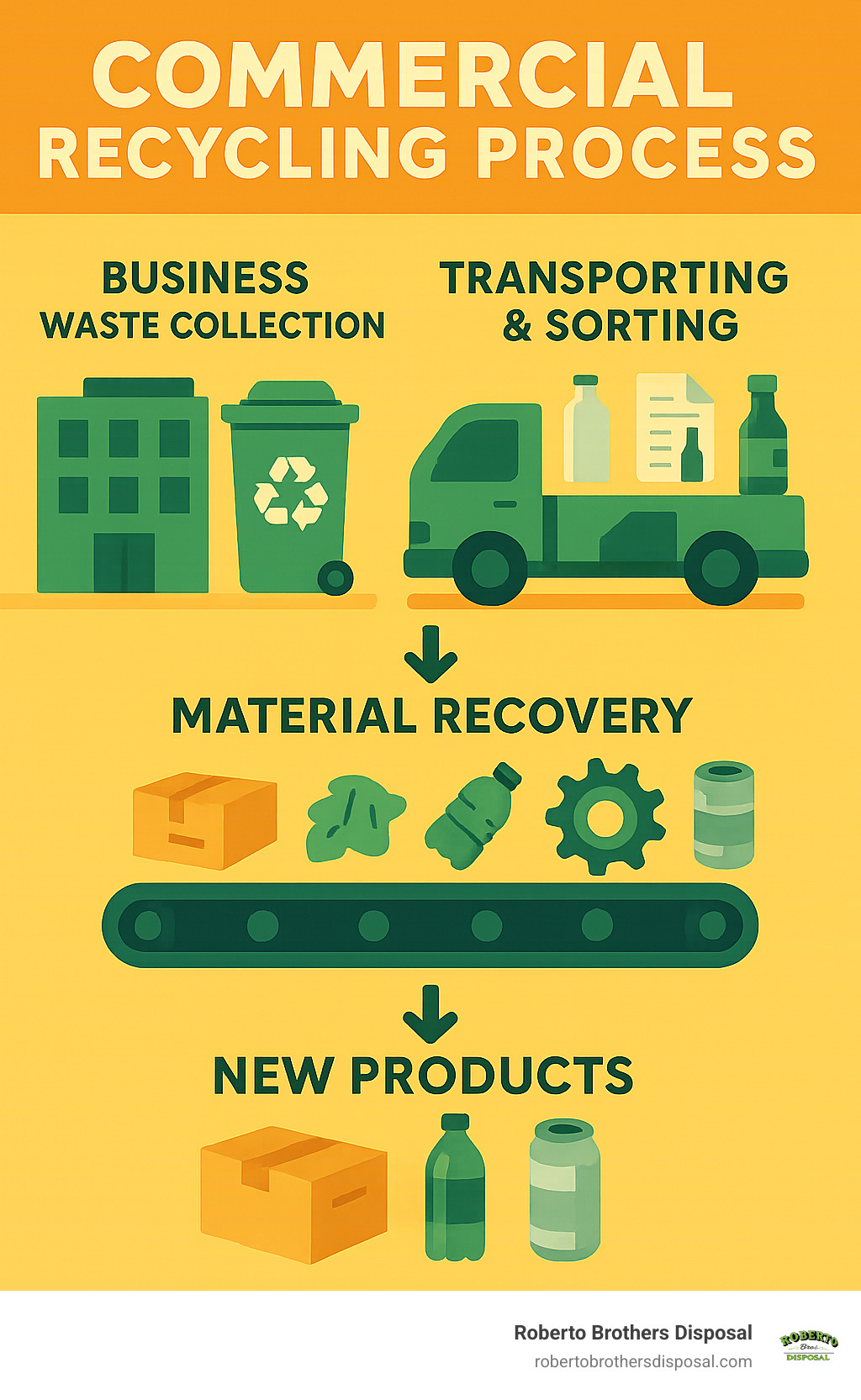
What are commercial recycling solutions? They are specialized services designed to help businesses manage and divert their waste from landfills.
- Purpose: To efficiently collect, process, and repurpose waste materials generated by commercial operations.
- Importance: Businesses can save money, meet sustainability goals, improve their environmental impact, and improve brand reputation.
- Key Materials: Commonly recycled items include cardboard, paper, plastics, glass, metals, and increasingly, organic waste and hard-to-recycle materials.
- How it works: Providers offer custom programs, specialized bins, regular pickups, and ensure materials are processed for reuse.
Every business generates waste. But not all waste has to end up in a landfill. In fact, most of it can be given a new life.
This is where commercial recycling comes in. It’s more than just putting a few bins out. It’s a strategic approach to waste management. It helps your business become a true environmental steward.
By embracing commercial recycling, you help protect our planet’s future. You also improve your company’s bottom line. It’s a win-win for everyone.
Commercial recycling solutions basics:
Why Commercial Recycling is a Game-Changer for Your Business

Running a successful business isn’t just about profits; it’s also about responsibility. Implementing commercial recycling solutions is one of the most impactful ways your business can demonstrate its commitment to both. It’s not just good for the planet; it’s genuinely good for your bottom line, your public image, and even your team’s morale.
The Environmental Impact
When we talk about commercial recycling, we’re really talking about giving materials a second chance. Instead of tossing everything into the garbage bin, we sort and process items so they can be transformed into something new. This simple act has a profound environmental ripple effect.
First and foremost, recycling significantly reduces the amount of waste that ends up in landfills. Landfills take up valuable space, can release harmful greenhouse gases, and pose long-term environmental challenges. By diverting materials, we help preserve precious land and reduce these negative impacts. For instance, did you know that some large corporations boast about recycling more than 75% of the total waste generated by their operations? That’s a massive amount of material saved from the landfill!
Beyond simply reducing landfill waste, recycling also helps us conserve natural resources. Think about it: creating new products from recycled materials means we don’t have to extract as many virgin resources like timber, water, and minerals. This saves energy too. Producing goods from recycled content often requires less energy than making them from scratch. For example, using recycled aluminum can save up to 95% of the energy required to produce new aluminum from raw materials (see the detailed explanation on aluminium recycling). This energy saving translates directly into a lower carbon footprint for businesses and the planet.
We often talk about the “5 R’s” of sustainable waste management: Reduce, Reuse, Repurpose, Recycle, and Recover. Commercial recycling perfectly aligns with these principles, allowing us to be more efficient with the resources we use and minimize our overall environmental footprint. Some services have even reported diverting 1 million tons of recyclables from landfills and avoiding 3.85 million tons of greenhouse gas emissions. That’s a lot of good for our planet!
The Business Benefits
While the environmental benefits are compelling, the practical advantages for your business are equally persuasive. Implementing commercial recycling solutions can be a real game-changer.
One of the most immediate benefits is cost savings. Waste disposal can be expensive, especially for businesses that generate a lot of trash. Recycling services are often more cost-effective than general waste collection, meaning you can literally save money by throwing less away. Some businesses have even found ways to transform “cost streams into revenue streams” by properly managing their recyclables, especially high-value materials like certain plastics or metals.
Beyond direct savings, commercial recycling can significantly improve your brand reputation. Today’s consumers are more environmentally conscious than ever before. They actively seek out and champion brands that demonstrate a commitment to sustainability. By having a robust recycling program, your business signals its values, attracting eco-conscious customers and building stronger community ties. This improved corporate social responsibility (CSR) profile can give you a competitive edge.
Furthermore, a well-implemented recycling program helps your business meet increasingly common sustainability goals. Whether it’s an internal target for waste diversion or a requirement for certain certifications, commercial recycling is a fundamental step. It also contributes to higher employee morale. When your team sees the company taking tangible steps towards environmental responsibility, it fosters a sense of pride and shared purpose. It’s a win-win: a cleaner planet and a happier, more engaged workforce.
Getting Started: How to Set Up a Successful Commercial Recycling Program
Ready to make a real difference and boost your business’s green efforts? Starting your own commercial recycling solutions program might seem like a big step. But with a clear plan, it’s totally doable and incredibly rewarding! The trick is to start smart, get your team involved, and always look for ways to do even better. Let’s walk through how to get your program up and running smoothly.
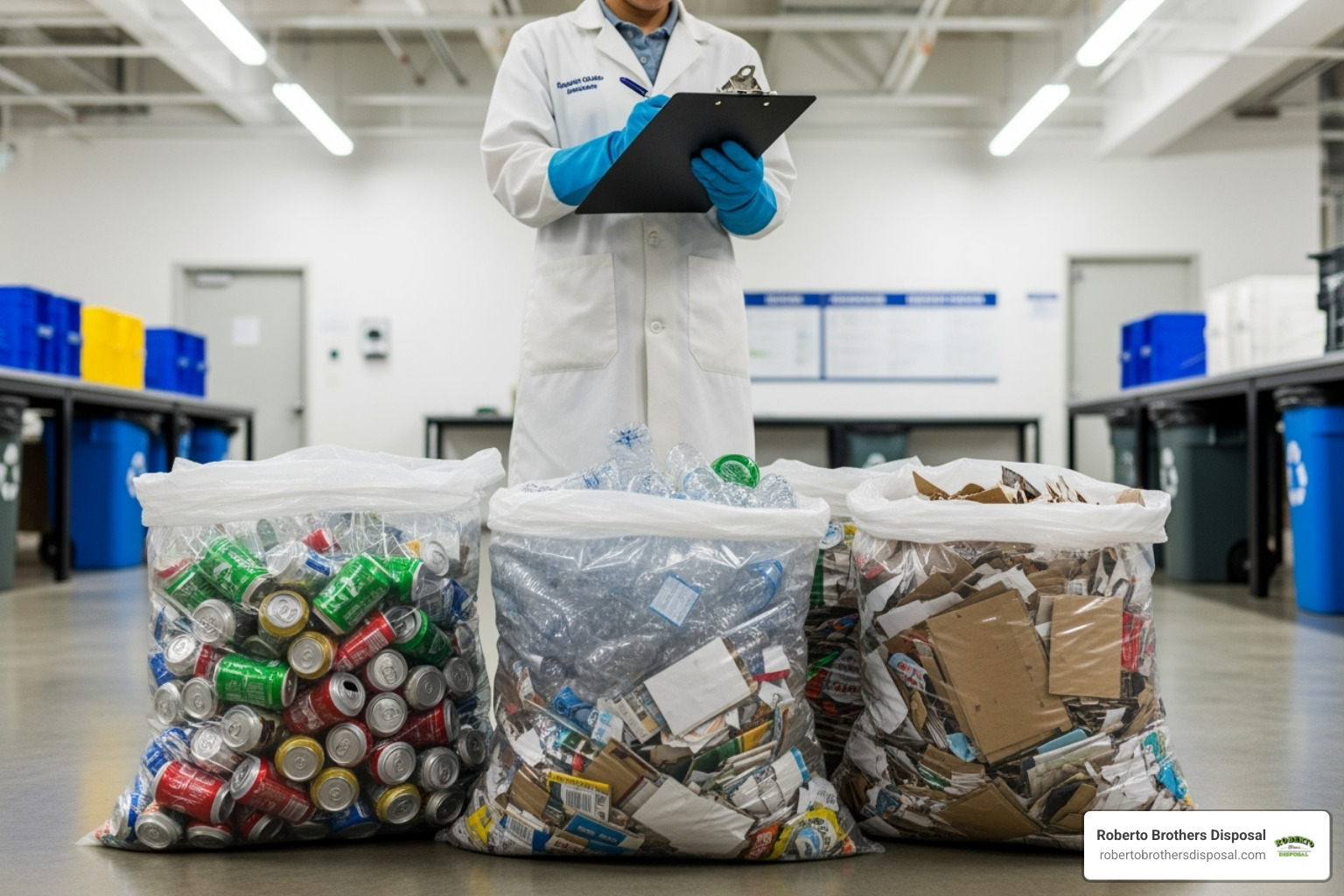
Step 1: Conduct a Thorough Waste Audit
Before you can recycle like a pro, you need to know what you’re actually throwing away. This is where a waste audit comes in – think of it as playing detective with your trash!
A waste audit means taking a close look at all the waste your business creates. For the best picture, we suggest doing this over 3-5 days. During this time, you’ll collect and sort your trash. Using clear bags is super helpful here because you can easily see what’s inside. This helps you figure out exactly what types of materials you’re tossing, how much of each, and where they’re coming from in your daily operations.
The main goal? To see how much you’re already recycling (if anything) and find those hidden chances to recycle more. Are you throwing away tons of cardboard that could be recycled? Is there a lot of food waste that could be composted? Knowing these details is the very first step to building a truly effective recycling program. Many waste providers even offer a free waste audit to help you begin, giving you great insights into your waste habits.
Step 2: Choose Your Recycling Streams and Set Goals
Once you know what’s in your trash, you can pick what to recycle! Most commercial recycling solutions offer a few options. You might choose single-stream recycling, where all approved recyclables go into one bin. This is super easy! Or, you might go for multi-stream recycling, which asks you to separate items like paper, plastic, and metal. Multi-stream can sometimes lead to higher quality recyclables.
We usually suggest starting with the materials you have the most of. For many businesses, these include:
- Cardboard: A big one for stores, warehouses, and factories.
- Office Paper: All kinds of paper from your desks and printers.
- Plastics: Think bottles, jugs, containers – the usual suspects.
- Metals: Aluminum cans, steel cans, and other metal scraps.
- Organic Waste and Composting: If you’re a restaurant, cafeteria, or just have a lot of food scraps, composting can seriously cut down on landfill waste.
After your waste audit, you’ll have a good idea of what’s possible. Then, you can set smart, achievable goals. Maybe your first goal is to recycle 50% of your cardboard in the next six months. Or perhaps you want to start a composting program for all food waste. Setting clear goals helps you see your progress and celebrate every win!
Step 3: Educate and Engage Your Team
A recycling program, no matter how perfect it looks on paper, won’t work without your employees’ help. They are key! This is where the “Culture, Communication, and Collection” (or 3C) process really shines.
Communication is super important. Be clear about why recycling matters – for the Earth and for your business. Hold quick meetings, send out friendly emails, and put up colorful posters. Explain exactly what can be recycled and, just as important, what cannot.
Make it easy for everyone. Put recycling bins where they’re easy to see and reach. Use clear, simple signs, maybe even with pictures, to show what goes where. This really helps avoid confusion and keeps your recyclables clean. Think about having central recycling spots where everyone can sort their items easily.
Offer training and resources. Give your team the tools they need to succeed. When your employees see the good they’re doing – like how much waste is diverted or how many trees are saved – it makes them feel proud. This encourages them to keep recycling and helps build a team that’s excited about “going green” for the long haul.
Exploring Your Options: Types of Commercial Recycling Solutions
Just as every business has its own unique rhythm, it also has its own unique waste! Thankfully, when it comes to commercial recycling solutions, there’s no one-size-fits-all approach. That’s actually great news! It means you can find options perfectly custom to your business, whether you’re a busy restaurant or a quiet office.
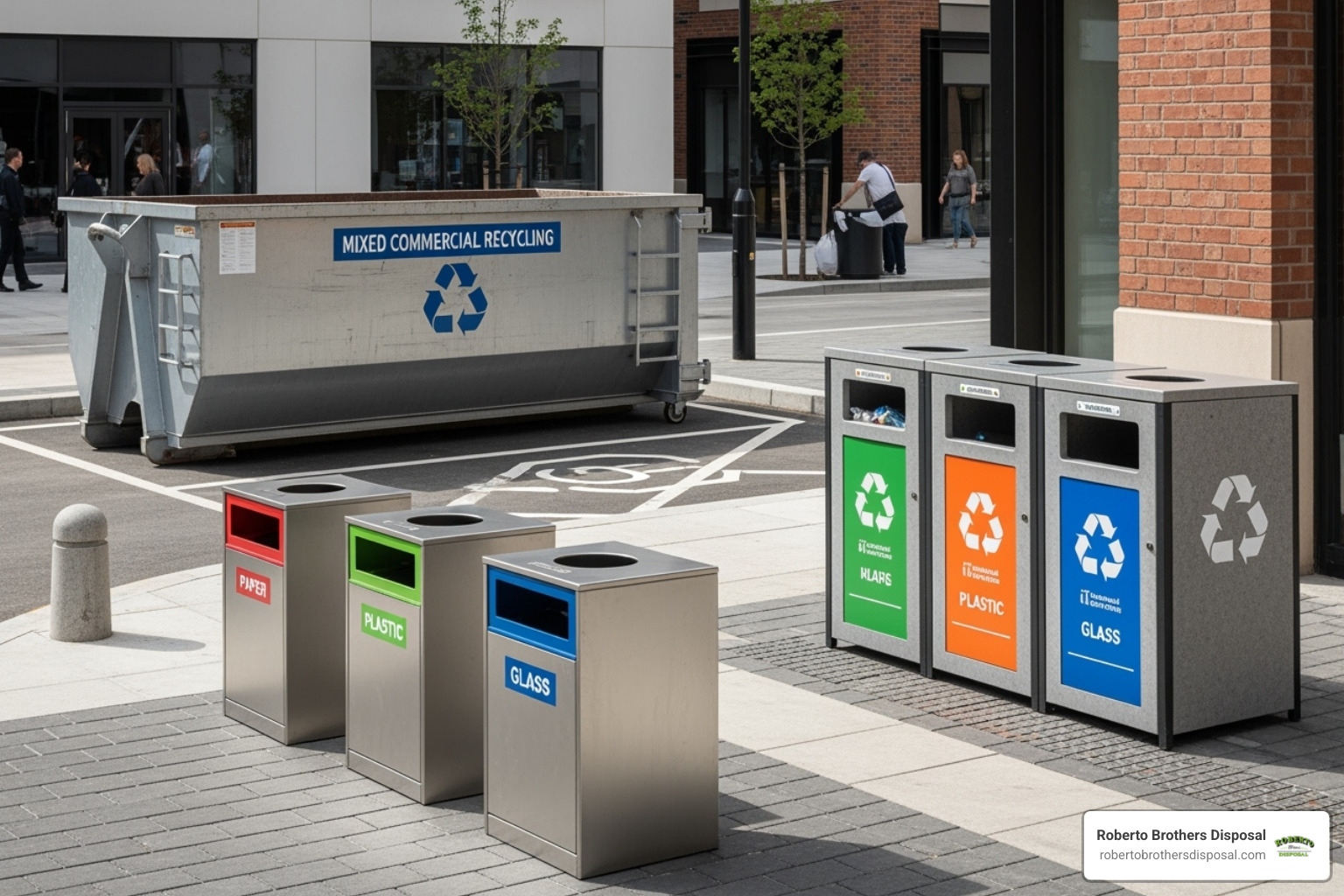
From how you sort your materials to what specialized items you need to dispose of, commercial recycling offers a diverse menu of services. You might choose single-stream recycling, where all your accepted recyclables go into one convenient bin. It’s super easy! Or, you might opt for multi-stream recycling, where you separate items like paper, plastic, and glass into different containers. This often helps create higher-quality recycled materials.
Custom Commercial Recycling Solutions for Specific Industries
One size rarely fits all, and that’s especially true for waste management. Many providers offer custom commercial recycling solutions designed to fit the unique “waste personality” of different business sectors.
Think about retail and grocery stores. These places often generate mountains of cardboard, along with plastic film and sometimes a lot of food waste. Their recycling programs might include dedicated balers for cardboard (to condense it and save space!) and special pickups for plastic bags and wraps.
For offices and corporate buildings, paper, mixed plastics, and old electronics (e-waste) are common. Solutions here focus on making it super easy for employees to recycle. This means handy indoor bins for paper and commingled recyclables, plus scheduled pickups for outdated computers and other electronics.
Restaurants and food service businesses have a different challenge: organic waste, like food scraps. Along with glass and food packaging, composting services are often a critical part of their recycling plan. Imagine turning all those food scraps into nutrient-rich soil instead of sending them to a landfill!
Manufacturing and industrial facilities can have incredibly diverse waste streams. This might include anything from scrap metal to different types of plastics and even regulated waste. Their solutions often involve large-scale industrial recycling, specialized containers, and processes to safely handle unique materials.
And let’s not forget construction and demolition sites. These places generate huge volumes of heavy debris like concrete, asphalt, wood, and metal. For these projects, robust roll-off dumpster rentals are essential. They’re capable of handling all that heavy material. While getting the right dumpster is key, making sure these materials are sorted correctly on-site is what truly helps maximize recycling.
Handling Hard-to-Recycle and Special Waste
Beyond the everyday recyclables, many businesses encounter materials that regular recycling services don’t typically accept. This is where specialized commercial recycling solutions really shine!
Got old computers, monitors, or printers? That’s e-waste (electronics). These items contain valuable materials but also some not-so-great components. Specialized services ensure they’re taken apart and recycled safely, keeping harmful stuff out of our environment.
Then there’s “universal waste.” This category includes common household and business items that need special handling, like batteries (think fluorescent lamps and bulbs). Proper disposal of these prevents them from contaminating our soil and water.
Certain businesses, like some manufacturing plants or medical facilities, might even generate hazardous materials. These definitely require highly specialized handling and disposal to meet strict regulations and protect everyone’s safety.
For businesses aiming for super ambitious “zero-waste” goals, organic and food waste composting is a fantastic solution. Turning food scraps and other organic materials into nutrient-rich compost diverts a huge amount of waste from landfills. It’s like magic for your waste stream!
Finally, for businesses handling sensitive information, secure document destruction is a must. This involves securely shredding paper, which is then recycled. It’s a double win: you protect your data and help the planet at the same time.
Some providers even specialize in those truly “hard-to-recycle” waste streams that local services might not handle. This focus on niche materials is super important for businesses that want to be leaders in comprehensive waste diversion and accept a truly circular economy.
Choosing the Right Tools: Essential Equipment for Commercial Recycling
Okay, so you’ve figured out what you’re recycling and set your goals. Awesome! Now comes the fun part: getting the right gear. Think of it like this – you wouldn’t build a house without the right tools, right? The same goes for a successful commercial recycling solutions program. Having the right equipment makes everything easier, more efficient, and helps everyone on your team recycle like a pro.
So, what tools are we talking about? We’re looking at things like handy bins for your office, big sturdy dumpsters for larger loads, and even cool machines like compactors that squash down your waste to save space. Then there are balers, which turn recyclables like cardboard into neat bundles, making them super easy to handle. And don’t forget signage – those clear, helpful signs that tell everyone exactly what goes where. They’re tiny but mighty in preventing mix-ups!
Selecting the Right Containers and Dumpsters
Your bins and dumpsters are the front lines of your recycling efforts. They need to be in the right spots, easy to use, and big enough for whatever you’re tossing.
A great idea for offices or public areas is to set up centralized recycling stations. Instead of a bunch of random bins, you have one main spot with clearly marked sections for different materials. This makes sorting super simple for everyone and helps make sure things end up in the right place. To make it even easier, use color-coded bins and clear signage. Imagine blue for recycling, green for compost – it’s a quick visual cue that cuts down on confusion and keeps your recyclables clean.
For businesses that generate a lot of recyclable materials, like big retail stores with loads of cardboard, or busy construction sites, roll-off dumpsters are an absolute must-have. They’re big, tough, and perfect for hauling away large volumes of specific recyclables. We offer a variety of sizes to fit your specific needs right here in Massachusetts and Southern New Hampshire.
Here’s a quick look at some common roll-off dumpster sizes and what they’re best for:
| Dumpster Size | Dimensions (HxWxL) | Best For |
|---|---|---|
| 10 Yard | 3.25′ x 7.25′ x 12′ | Small office cleanouts, heavy debris like concrete or dirt |
| 15 Yard | 4′ x 7.25′ x 14′ | Small-scale construction, large room remodels, roofing jobs |
| 20 Yard | 5.5′ x 7.25′ x 14′ | Mid-size renovations, large cleanouts, light construction debris |
| 28 Yard | 6′ x 7.25′ x 17′ | Large construction projects, commercial building cleanouts |
Need indoor bins in a hurry? Some providers even offer “quick ship” options, getting those bins to you super fast – sometimes within seven business days – so you can kick off your program without delay.
Finding the Right Partner for Your Commercial Recycling Solutions
Choosing the right waste management partner is like picking a good team player – it makes all the difference! You need a provider who truly gets your business, offers service you can count on, and shares your commitment to being eco-friendly.
When you’re on the hunt for that perfect partner, here are a few things to keep in mind:
- Local Expertise: A local company knows the ins and outs of regional rules and recycling centers. They can offer more personalized service because they’re part of your community. We’re Roberto Brothers Disposal, a local, family-run business right here in Ayer, MA. With over 20 years of experience, we’re proud to serve communities across Massachusetts (Essex, Middlesex, Worcester Counties) and Southern New Hampshire. We truly know the ropes when it comes to waste management in our area.
- Service Reliability: This is huge! You want a company that shows up when they say they will. Missed pickups can lead to overflowing bins and a lot of headaches. Look for a team with a solid track record of dependable service.
- Transparent Pricing: No one likes hidden fees! You deserve clear, upfront pricing so you always know what you’re paying for. That’s how we do business.
- Proper Licensing and Insurance: Make sure your provider is fully licensed and insured. This is your guarantee that your waste and recyclables are handled responsibly and taken to proper, licensed facilities.
- Customer Service: Good customer service can make all the difference. You want a partner who is easy to reach, helpful, and dedicated to finding the best commercial recycling solutions for your unique business needs. That’s exactly the kind of service we strive to provide.
At Roberto Brothers Disposal, we’re more than just a hauling company. We’re about offering comprehensive, eco-friendly waste disposal solutions that fit your business perfectly. Our goal is to make your commercial recycling program as smooth and effective as possible, helping you do good for the planet and your bottom line.
Frequently Asked Questions about Commercial Recycling
It’s natural to have questions when you’re looking into something new, especially when it comes to managing your business’s waste. We often hear similar questions from businesses curious about or already optimizing their recycling programs. Let’s tackle some of the most common ones with a clear, friendly chat!
Does implementing a commercial recycling program really save my business money?
This is a fantastic question, and the answer is a resounding yes, it absolutely can! Think about it: every item you throw in the trash eventually costs you money in disposal fees. Landfill costs are generally higher than recycling service fees. By embracing commercial recycling solutions, you’re literally diverting materials away from that expensive trash bin.
Over time, this means you can often reduce the size or frequency of your general waste pickups, leading to significant savings on your overall disposal bills. For businesses that generate a lot of clean cardboard or certain metals, there’s even a chance to generate revenue from these materials. Imagine turning a cost into a potential profit! Beyond the direct money saved, remember the indirect benefits: a better brand image, happier employees, and a positive reputation in your community can all contribute to your business’s long-term success.
What is the biggest challenge to a successful recycling program?
If we had to pick one hurdle that trips up most recycling programs, it would be contamination. What’s contamination? It’s when things that can’t be recycled (like food waste, certain plastic bags, or even liquids) end up in the recycling bin.
It’s a bit like trying to bake a cake and accidentally adding salt instead of sugar – just one wrong ingredient can spoil the whole batch! When a recycling bin is contaminated, the entire load might have to be sent to the landfill instead of being processed. This defeats the purpose of recycling and costs everyone time and resources. The best ways to fight contamination are simple: clear, easy-to-understand signage, and a little bit of education for everyone involved. When your team knows exactly what goes where, your program will shine!
What happens to my business’s recyclables after they are picked up?
Once your team has done their part and your recyclables are picked up, they start on a pretty amazing journey! They’re usually transported to a special place called a Material Recovery Facility (MRF), often pronounced “murf.” You can think of an MRF as a very high-tech sorting center.
At the MRF, a combination of clever machinery and dedicated human sorters work together to separate all the different materials. Paper goes one way, different types of plastic another, and glass and various metals find their own paths. Once sorted, these materials are cleaned, and then compressed into huge, dense blocks called bales. Imagine giant cubes of flattened cardboard or neatly stacked plastic bottles! These bales are then sold to manufacturers who are eager to buy them. These manufacturers use the recycled materials as raw ingredients to create brand new products. This is how your business’s waste gets a second life, completing a wonderful loop and contributing to a healthier planet!
Conclusion
Phew! We’ve covered quite a bit of ground today, haven’t we? From exploring the amazing environmental benefits to uncovering the real, tangible perks for your business, it’s clear that diving into commercial recycling solutions is a truly smart move.
It’s more than just a trend; it’s a powerful way for your business to show it cares – both about the planet and its own success. By setting up an effective recycling program, you’re not just reducing waste; you’re saving money, shining up your brand’s image, and even giving your team a reason to feel proud and engaged. It’s about turning that old “trash talk” into a vibrant conversation about sustainability and innovation!
Taking that first step might feel big, but it doesn’t have to be. Whether you’re ready to conduct a detailed waste audit or simply need the right containers to get started, every little bit helps. It sets your business on a wonderful path toward being more efficient and, frankly, a much better friend to our environment.
And that’s where we come in! At Roberto Brothers Disposal, we’re not just about hauling things away. As a local, family-run business right here in Ayer, MA, with over 20 years of experience, we’re passionate about making eco-friendly waste disposal easy for you. We pride ourselves on clear pricing and personalized service, because your success is our priority.
Ready to kickstart your very own commercial recycling solutions program with reliable roll-off dumpster rentals? We’re here to help you make it happen. Contact us today!
