

Why Construction Waste Disposal Matters More Than You Think
Construction waste disposal is the process of properly managing debris generated during building, renovation, and demolition projects. Here’s what you need to know:
- Common materials: Concrete, wood, drywall, metal, asphalt, bricks, and packaging
- Disposal methods: Roll-off dumpsters, recycling facilities, donation centers, and specialized hazardous waste facilities
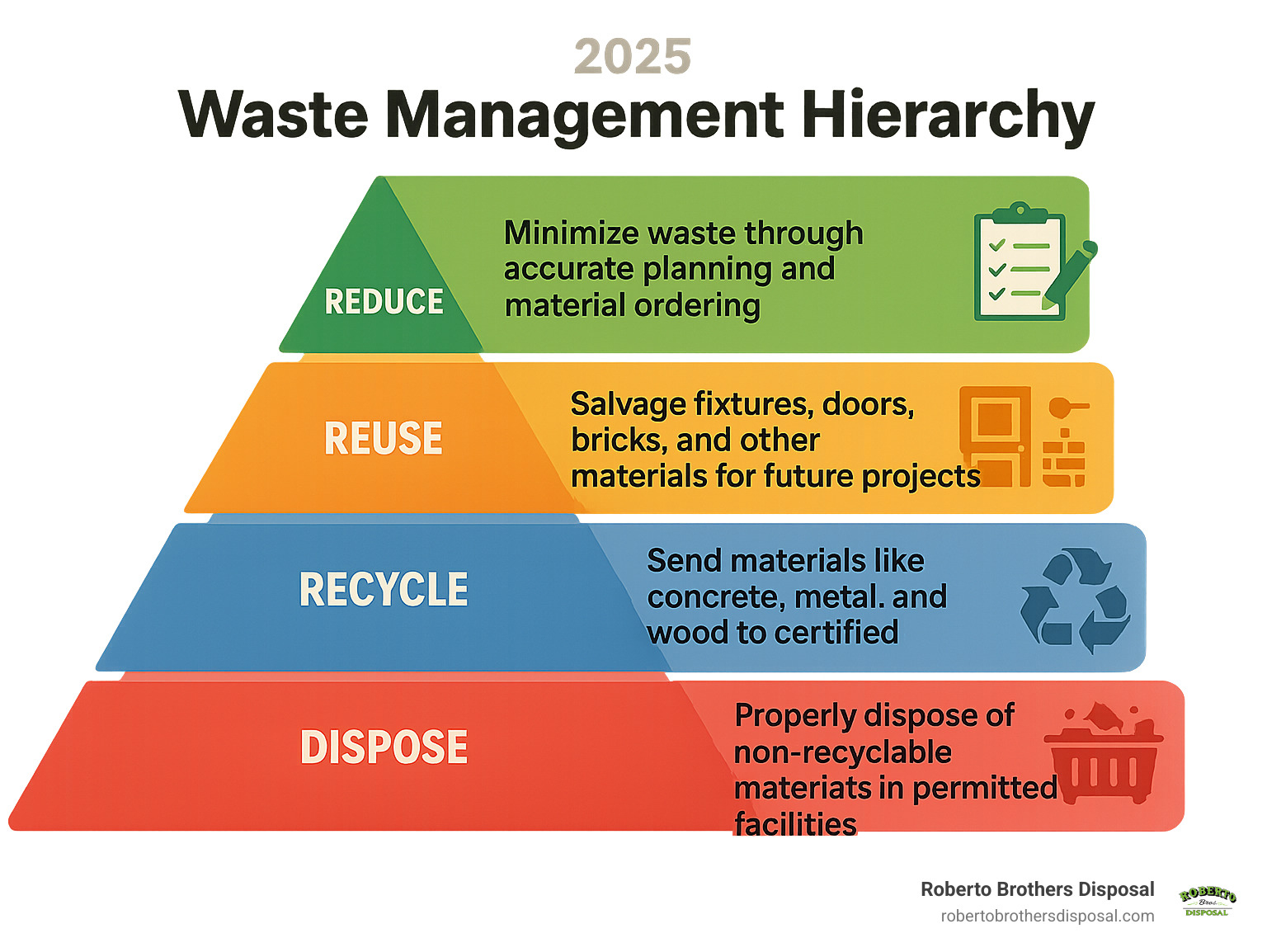
- Key strategies: Reduce waste through planning, reuse salvageable materials, recycle when possible, and dispose of non-recyclables properly
- Regulations: Most areas require permits, waste management plans, and compliance with local diversion rates
- Cost factors: Dumpster size, material type, weight limits, and disposal fees
Construction and demolition projects generate massive amounts of waste. According to EPA estimates, 600 million tons of construction debris enter the US waste stream annually – that’s more than double the amount of regular household trash.
But here’s the thing: 75% of construction debris in the US is not recycled. This creates a huge problem. When construction waste ends up in landfills, it can release toxic gases, contaminate soil and water, and take up valuable space that’s running out fast.
The good news? With proper planning and the right disposal strategy, you can turn this challenge into an opportunity. Smart waste management saves money, protects the environment, and keeps you compliant with regulations.
Whether you’re a homeowner tackling a kitchen remodel or a contractor managing a major renovation, understanding your disposal options is crucial for project success.
Understanding Construction and Demolition (C&D) Waste
While focusing on the exciting parts of a construction project is easy, managing the resulting waste is just as important. Construction waste disposal is the process of handling all debris from building, renovating, or demolishing structures—everything that doesn’t become part of the finished project.
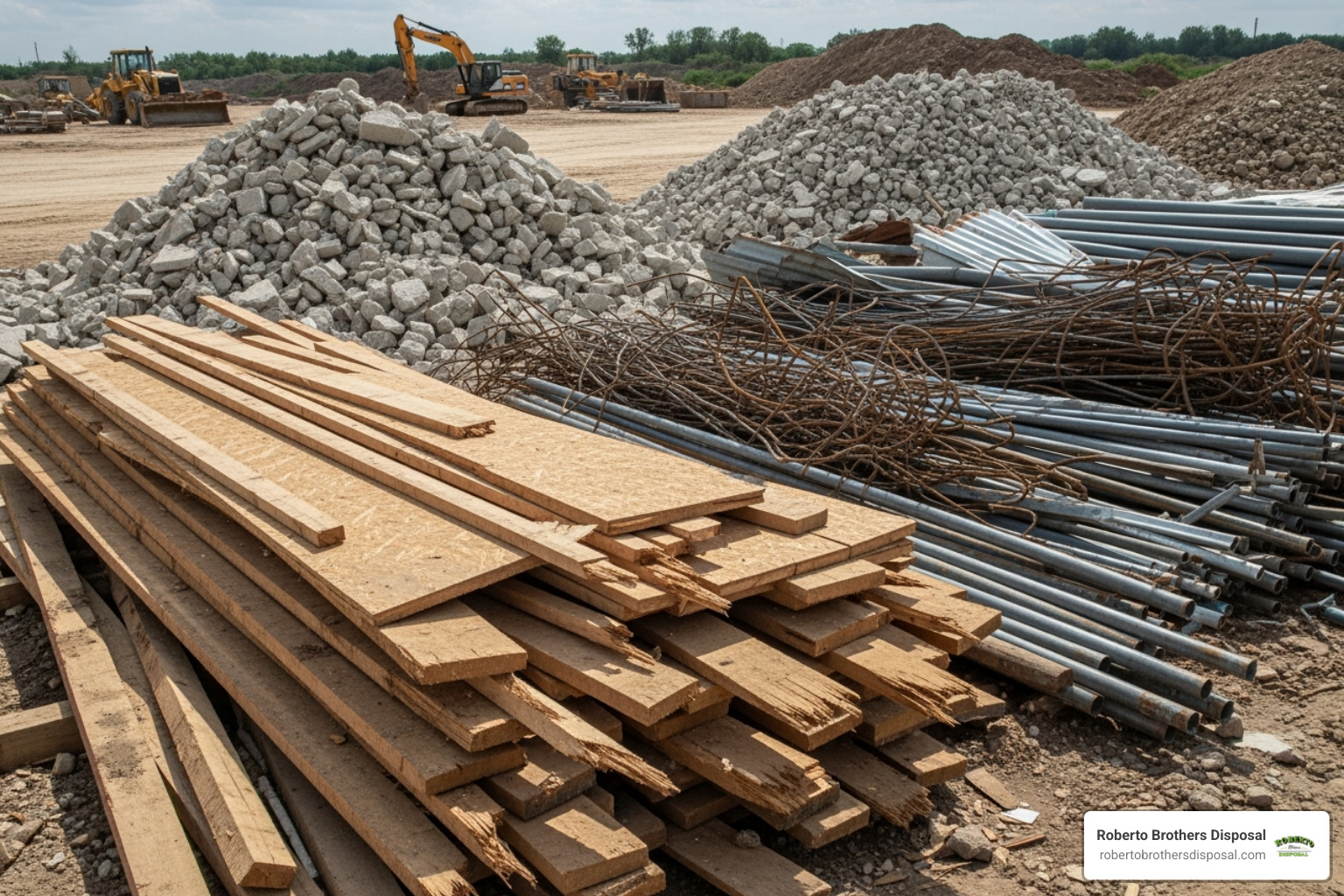
The variety of C&D waste is vast. Concrete is the most common, followed by wood, drywall (gypsum board), metal (steel beams, copper pipes), asphalt, and bricks. You’ll also find glass, plastics, insulation, and packaging.
It’s crucial to distinguish between non-hazardous and hazardous materials. Most C&D waste is non-hazardous, but items like asbestos, lead-based paint, certain solvents, and treated wood require special handling and cannot be thrown in a regular dumpster. The EPA provides helpful guidelines on General Construction Site Waste Management for safely handling these materials.
Different projects generate different waste. New construction produces more packaging and material cut-offs. Renovation mixes old and new materials, while demolition creates massive amounts of debris, which may include hazardous materials.
The High Cost of Improper Disposal: Health, Safety, and Environmental Risks
Cutting corners on waste disposal can have severe consequences beyond financial costs. With 600 million tons of construction debris generated annually and 75% of it not being recycled, landfills are under immense strain.
Improper disposal leads to a cascade of problems. Soil contamination from hazardous leaks can render land unusable. Water pollution occurs when rainwater carries contaminants into groundwater. Air pollution results from dust, chemicals, and toxic gases; for example, gypsum from drywall can produce dangerous hydrogen sulfide gas in landfills.
Illegal dumping harms the environment by destroying natural habitats. On-site, poor waste management creates safety risks like tripping hazards, injuries from sharp objects, and fire hazards from combustible materials.
The legal consequences are severe, including hefty fines, project delays, stop-work orders, and even jail time for serious environmental damage. Proper construction waste disposal is essential for protecting your health, finances, and the environment.
Your Guide to Efficient Construction Waste Disposal with Roll-Off Dumpsters
Effective construction waste disposal doesn’t have to be overwhelming. With the right plan, you can manage debris efficiently. Smart waste management begins in the design phase with accurate material ordering to reduce surplus. Another key strategy is source separation—organizing waste by material (wood, metal, concrete) on-site. This simplifies recycling and can lower disposal fees.
Consider deconstruction over demolition. Carefully dismantling structures allows you to salvage valuable materials like wood beams, fixtures, and bricks for reuse, keeping them out of the landfill. Once your waste strategy is in place, our roll-off dumpsters are the perfect tool. We offer various sizes to match your project, ensuring you don’t pay for unused space. For more details, see our Roll-Off Dumpster Rental 101.
Choosing the Right Dumpster for Your Project
Choosing the right dumpster size is a critical decision that saves time and money. You must consider both the volume and weight of your debris. A 10-yard dumpster, for example, is great for heavy materials like concrete and bricks.
| Dumpster Size | Dimensions (Approx.) | Common Project Types | Considerations |
|---|---|---|---|
| 10 Yard | 3.25′ tall x 7.25′ wide x 12′ long | Small remodels, bathroom updates, concrete/heavy debris | Perfect for dense materials; equivalent to about 3 pickup truck loads |
| 15 Yard | 4′ tall x 7.25′ wide x 14′ long | Medium kitchen remodels, deck replacements, multi-room cleanouts | Great balance for mixed debris; fits most driveways comfortably |
| 20 Yard | 5.5′ tall x 7.25′ wide x 14′ long | Major renovations, window/siding replacement, large landscaping | Our most popular choice; holds about 8 pickup truck beds worth |
| 28 Yard | 6′ tall x 7.25′ wide x 17′ long | Whole-home renovations, commercial projects, demolitions | Our largest option for big projects with lots of bulk |
Weight limits are important because landfills charge by the ton. A small dumpster filled with heavy debris can exceed weight limits. Lighter materials like wood and drywall can fill larger containers without this issue. Our 20 Yard Roll-Off Dumpster is a popular choice for most construction projects, offering ample space for bulky items. We can help you find the perfect fit for efficient construction waste disposal.
Key Strategies for Construction Waste Disposal
Smart construction waste disposal is about working smarter. The “reduce, reuse, recycle” mantra is key.
- Reduce waste from the start with accurate material ordering. Calculating your exact needs saves money on materials and reduces disposal costs.
- Reuse valuable items by deconstructing instead of demolishing. Solid wood beams, vintage fixtures, doors, and bricks can be salvaged, repurposed, or donated.
- Recycle what can’t be reused. Source separation makes it easier for facilities to process materials like concrete (crushed for aggregate), metals (melted for new products), and wood (chipped for mulch or fuel).
For everything else, our Roll-Off Dumpster Rental service provides the containers to keep your project organized, clean, and green.
Handling Common C&D Materials: A Breakdown
Understanding how to handle different materials is key to efficient construction waste disposal. Some are highly recyclable, while others require special care.
Concrete, Asphalt, and Bricks
These heavy materials are highly recyclable when handled correctly.
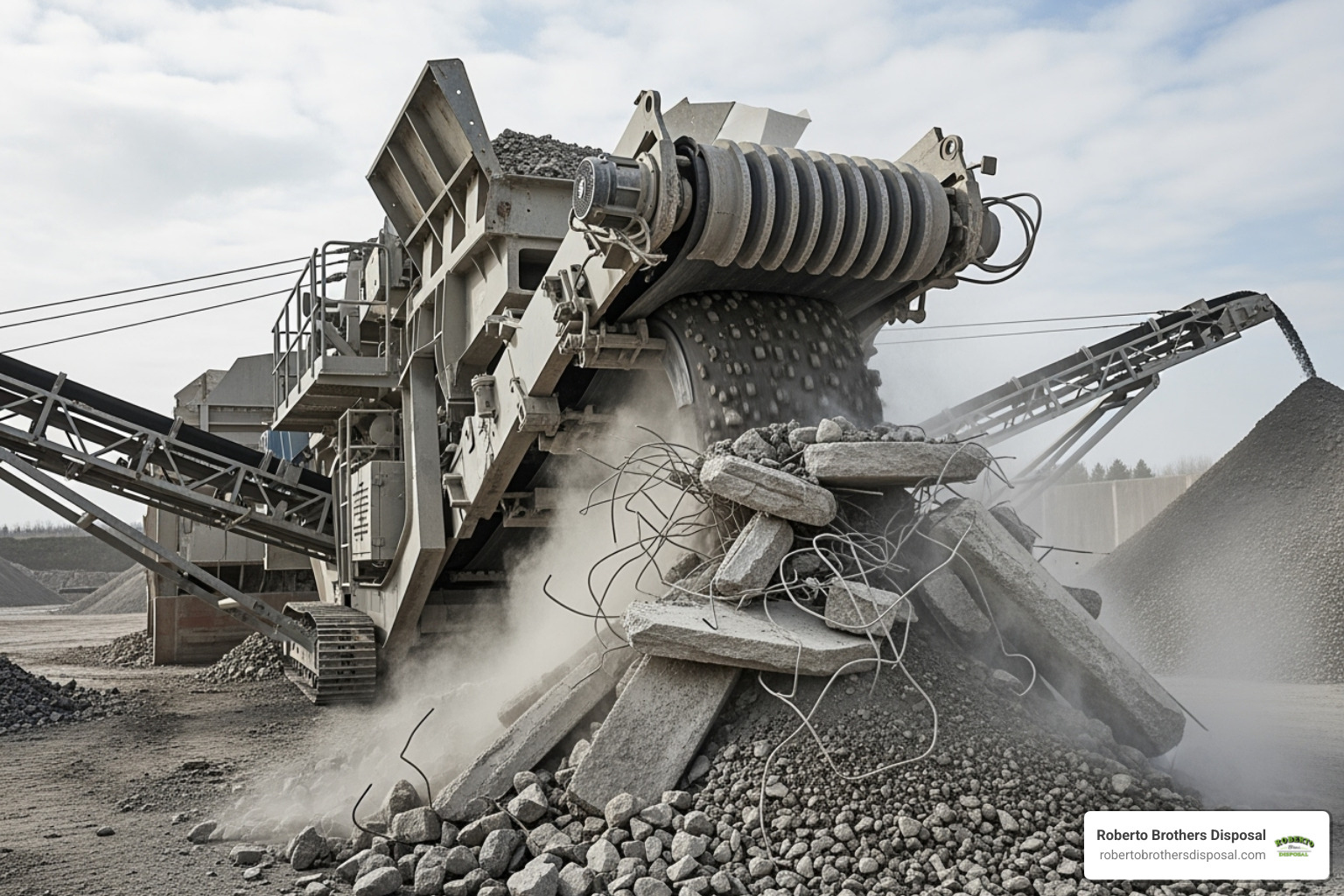
- Concrete: Instead of landfilling, concrete can be crushed into recycled aggregate for road bases, new concrete mixes, and foundations, saving money and natural resources.
- Asphalt: Old asphalt from roads and roofing can be recycled into new pavement. Recycling asphalt shingles has a significant environmental impact.
- Bricks: Good-condition bricks can be salvaged and resold. Check for structural integrity and efflorescence (salt deposits). Broken bricks can be crushed for aggregate.
Wood and Drywall (Gypsum)
These common materials have specific disposal requirements.
- Wood Waste: Untreated wood (scraps, pallets) can be chipped for mulch, used as biomass fuel, or made into engineered wood. Treated wood contains chemicals and requires specialized disposal.
- Drywall: Improperly disposed of drywall can produce toxic hydrogen sulfide gas in landfills. It should be recycled into new drywall or used as a soil amendment. Consider donating new, unused sheets to organizations like Habitat for Humanity ReStores.
Metals, Shingles, and More
- Scrap Metals: Steel, copper, and aluminum are highly valuable for recycling. Separating ferrous (magnetic) from non-ferrous metals can increase their value.
- Asphalt Shingles: These can be recycled into cold patch products for repairing potholes, diverting a significant waste stream.
- Packaging and Glass: Clean cardboard and plastics should be separated for recycling. Glass can be crushed for use in new products or as aggregate.
Identifying and Handling Hazardous Materials
This is the most critical aspect of construction waste disposal. Hazardous materials pose severe health and environmental risks and demand strict adherence to regulations.
Common hazardous materials include asbestos in older insulation, lead-based paint in pre-1978 homes, solvents, adhesives, and treated wood. These materials can release toxic fibers, dust, or chemicals.
Important: If you suspect hazardous materials, do not handle them yourself. Hire licensed professionals for identification, abatement, and disposal. These materials must be contained and transported to authorized facilities. For guidance on specific materials, consult resources like How to Handle Asbestos Safely.
Mishandling hazardous waste leads to severe fines, legal action, and health consequences. Always prioritize safety and call in experts when in doubt.
Navigating the Rules: C&D Waste Regulations and Compliance
Understanding the legal landscape of construction waste disposal is crucial for any project. Compliance is manageable once you know the requirements, which exist at federal, state, and local levels.
The federal Resource Conservation and Recovery Act (RCRA) sets the foundation for managing hazardous and non-hazardous solid waste. State and local laws add specific mandates, creating a multi-layered regulatory framework.
Common requirements include:
- Waste Management Plans (WMPs): Detailed outlines of how you will manage, reduce, reuse, and recycle project debris. Many jurisdictions require an approved WMP to issue a building permit.
- Diversion Rate Requirements: Mandates to keep a certain percentage of waste (sometimes up to 65%) out of landfills through recycling and reuse.
- Permits: Specific permits may be needed for demolition, waste hauling, or disposal of certain materials.
Regulations Governing Construction Waste Disposal
Compliance often involves paperwork, but modern online tracking systems are streamlining the process. These platforms require you to submit a waste handling plan before work begins and upload documentation like disposal receipts throughout the project.
Working with certified facilities and authorized haulers is key to successful compliance and is often a legal requirement. This protects you from liability. Maintain detailed records, including weight tickets, recycling receipts, and waste tracking logs. This documentation is your proof of compliance for inspectors.
The Price of Non-Compliance: Fines and Penalties
Penalties for improper construction waste disposal are severe. Financial fines can be substantial, sometimes reaching millions of dollars for serious environmental violations, with potential jail time for individuals.
Beyond fines, non-compliance can lead to stop-work orders, which halt your project and cause costly delays. As the waste generator, you are legally responsible for ensuring your waste reaches a lawful destination, even if you hire a third-party hauler. “I didn’t know” is not a valid legal defense.
Compliance protects your project, finances, and reputation. Partnering with a reputable waste management provider ensures you stay on the right side of the law.
Frequently Asked Questions about Construction Debris
We get a lot of questions about construction waste disposal, and honestly, we love talking about it! It might not be the most glamorous topic, but getting it right can save you serious headaches (and money). Here are the questions that come up most often when we’re chatting with customers:
What is the most cost-effective way to dispose of construction waste?
Here’s the thing about saving money on construction waste disposal: it’s all about being smart from the start. The most cost-effective approach combines three key strategies that work together like a well-oiled machine.
First, planning is everything. When you order materials accurately, you’re not just saving on purchases – you’re also reducing the amount of waste you’ll need to dispose of later. It’s like hitting two birds with one stone.
Second, source separation pays off. Taking a few extra minutes to separate recyclables like metal can sometimes generate revenue or significantly reduce your tipping fees. Clean concrete, scrap metal, and untreated wood all have value when they’re not mixed with general debris.
Finally, choosing the right dumpster size is crucial. Renting a correctly sized roll-off dumpster prevents you from overpaying for unused space or dealing with the hassle and extra costs of needing multiple hauls. We’ve seen too many people rent a dumpster that’s way too big “just in case” – and then pay for all that empty space.
Can I mix all my construction debris in one dumpster?
This is probably our most common question, and the answer is: it depends. While you can often use a mixed C&D dumpster for convenience, it’s not always the smartest move for your wallet or the environment.
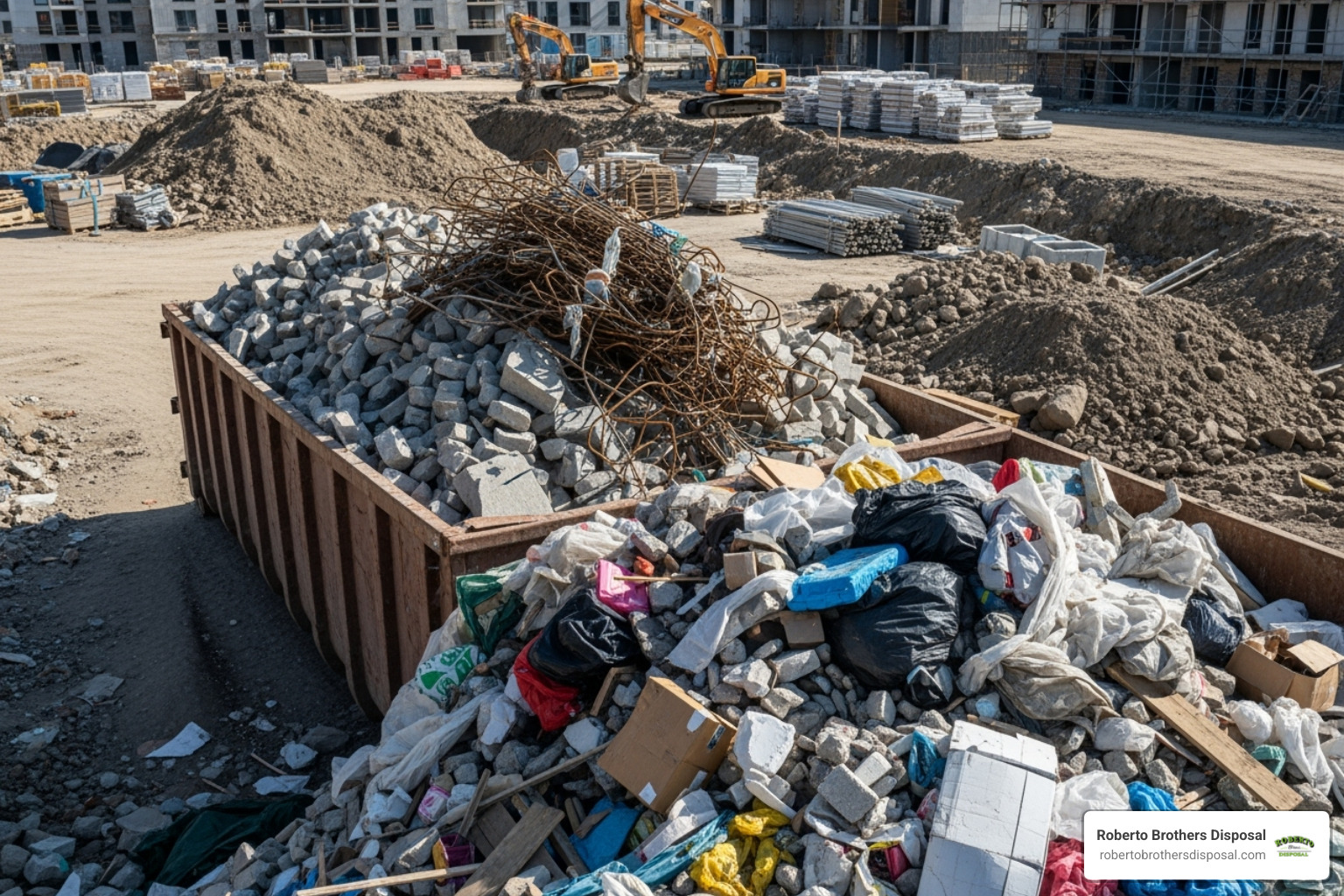
Here’s the reality: source-separating materials like clean concrete, wood, and metal into different piles or dumpsters can significantly increase recycling rates and may lower your disposal costs. Think of it this way – a load of clean concrete is worth more to a recycling facility than the same concrete mixed with drywall, packaging, and other debris.
But here’s where it gets serious: some materials can NEVER be mixed with general debris. Hazardous waste like asbestos, lead-based paint, or treated wood must be handled separately and disposed of through specialized facilities. Mixing these materials with regular construction waste isn’t just expensive – it’s dangerous and illegal.
For the complete rundown on what can and cannot go in our dumpsters, check out our Frequently Asked Questions page. We’ve covered all the details there to keep you out of trouble.
Do I need a permit for a construction waste dumpster?
The permit question is refreshingly straightforward, and it all comes down to one thing: where you’re placing the dumpster.
If the dumpster sits entirely on your private property – like your driveway, yard, or job site – you typically don’t need a permit. It’s your property, so you’re good to go.
However, if any part of the container needs to be placed on public property, such as a street or sidewalk, a permit from your local municipality is almost always required. This makes sense when you think about it – you’re essentially using public space for your private project.
The good news? We’ve been doing this for over 20 years in the Ayer, MA area, so we know the local requirements like the back of our hand. When you call us, we’ll help you figure out exactly what you need and guide you through the permit process if necessary. No surprises, no headaches – just straightforward service.
Conclusion
As we’ve explored throughout this guide, effective construction waste disposal is far more than just “getting rid of stuff.” It’s actually a critical component of successful project management that directly impacts your budget, timeline, and environmental footprint. When you understand the diverse types of C&D waste, steer complex regulations smartly, and make informed choices about recycling and reuse, every step you take matters.
Think about it this way: proper planning and diligent execution of your waste management strategy doesn’t just help you avoid those costly fines and project delays we talked about. It also positions you as a responsible builder who’s contributing to a cleaner, healthier environment. You’re embracing sustainability, conserving valuable resources, and ensuring that your building projects benefit communities for generations to come.
The financial benefits of compliance are real and immediate. When you reduce waste through accurate material ordering, separate recyclables to potentially generate revenue, and choose the right-sized dumpster for your project, you’re making smart business decisions that protect your bottom line. Environmental stewardship and financial responsibility go hand in hand.
For reliable, eco-friendly, and affordable construction waste solutions in Ayer, MA and surrounding areas, the experienced team at Roberto Brothers Disposal is here to help. As a local, family-run business with over 20 years of experience, we pride ourselves on personalized customer service, transparent pricing, and a genuine commitment to eco-friendly disposal. We understand the unique challenges of construction waste disposal in Massachusetts, including Essex County, Middlesex County, and Worcester County, as well as Southern New Hampshire.
Let us help you manage your project’s mess efficiently and responsibly. Whether you’re tackling a small bathroom renovation or managing a major commercial demolition, we have the right dumpster size and the expertise to ensure your project runs smoothly.
Ready to clear your construction site? Rent a Dumpster today and experience the Roberto Brothers Disposal difference!
