

Why Proper Concrete Disposal Service Selection Matters
Needing a concrete disposal service means you’re facing one of construction’s heaviest challenges. From demolishing a driveway to breaking up a patio, concrete waste creates disposal problems that regular trash services can’t handle.
Quick concrete disposal options:
- Dumpster rental – Best for large projects, $250-$550+ depending on size
- Junk hauling service – Good for smaller amounts, $50-$95 per cubic yard
- DIY landfill drop-off – Cheapest but requires multiple trips and heavy lifting
- Concrete recycling – Most eco-friendly, often $4-$10 per ton
The numbers show why this matters: concrete manufacturing and waste create 8% of the world’s CO2 emissions. Improper disposal fills landfills and can leach chemicals into groundwater.
The good news? Recycled concrete is cheaper than new concrete as an aggregate. Smart disposal isn’t just about waste removal—it’s a responsible choice for your wallet and the environment.
An average junk hauling truck removes only 80-120 square feet of concrete at a time, requiring multiple expensive trips for larger projects. In contrast, a single dumpster rental can handle 6-10 tons of concrete debris at once.
This guide will walk you through every concrete disposal option, from understanding costs to finding the right service for your specific project needs.
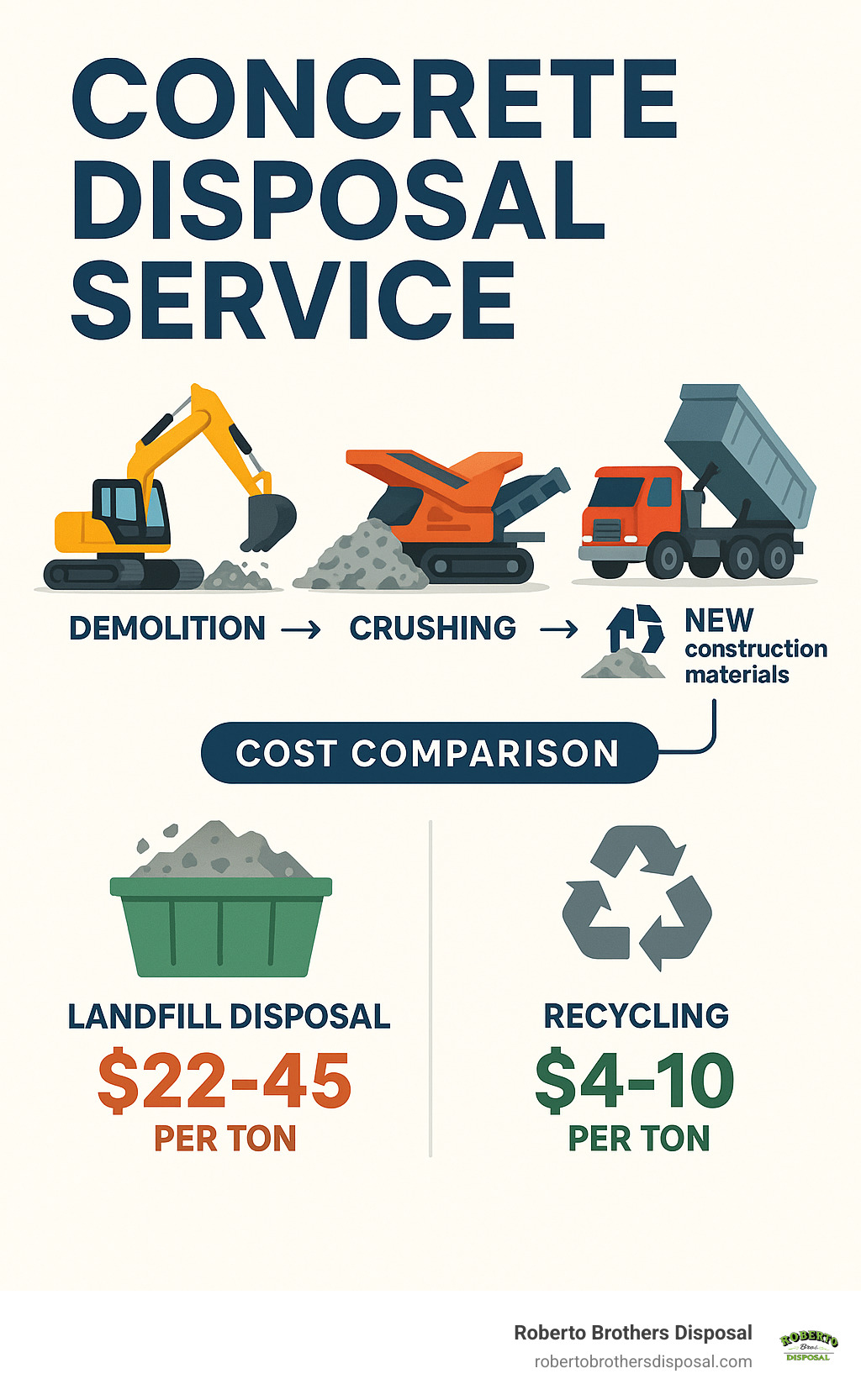
Simple Concrete disposal service glossary:
Understanding Concrete Waste and Its Impact
A pile of broken concrete is more than just rubble; its disposal impacts your wallet, community, and the planet. Concrete is incredibly heavy—a cubic yard can weigh 4,000 pounds—and it quickly consumes valuable landfill space. Diverting concrete from landfills extends their lifespan and avoids the high cost of creating new ones.
Furthermore, recycling concrete reduces the need to mine new sand and gravel, preserving natural landscapes. With concrete manufacturing and waste contributing to 8% of the world’s CO2 emissions, choosing a proper concrete disposal service that prioritizes recycling is a crucial vote for a healthier environment.
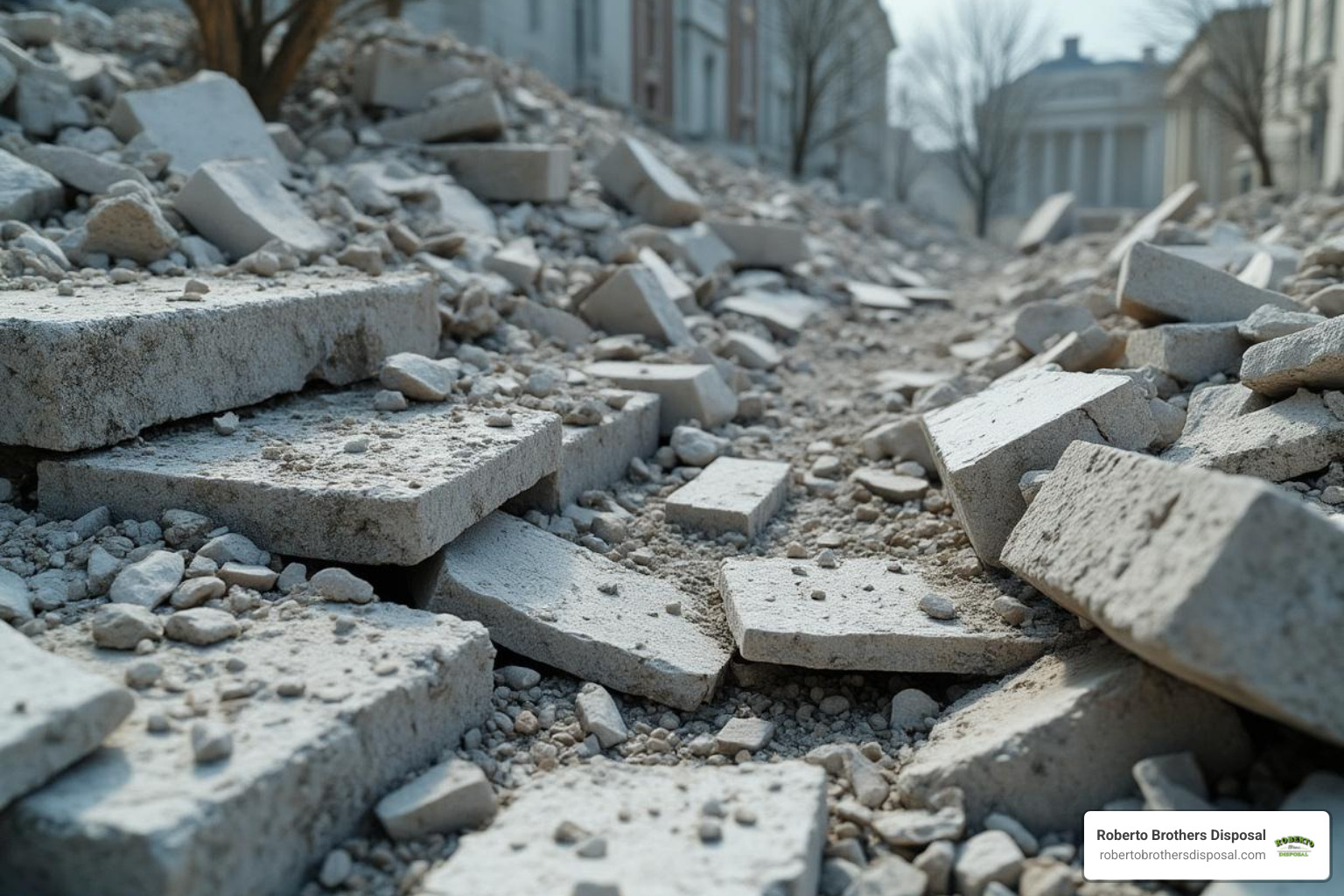
Types of Concrete Waste You Can Dispose Of
Knowing your waste type helps determine the best disposal method. Common types include:
- Concrete blocks & Bricks: Often from walls, they are easy to handle and typically recycle together.
- Pavers: From walkways and patios, they are ideal for recycling.
- Intact slabs: Large sections from driveways or patios that must be broken up before removal.
- Crushed concrete: Already broken into small pieces, this is the easiest to handle and recycle.
- Reinforced concrete: Contains steel rebar that must be separated during recycling, which experienced services handle routinely.
The Environmental Cost of Improper Disposal
Improper disposal has far-reaching consequences:
- Landfill Strain: Concrete’s density rapidly fills landfills, forcing communities to find expensive and controversial new sites.
- Greenhouse Gases: When mixed with organic waste in landfills, concrete can contribute to the release of methane, a potent greenhouse gas.
- Chemical Leaching: Contaminants like oil or paint on concrete can seep into groundwater, threatening water supplies and ecosystems.
- Air Quality: Demolition dust can impair air quality and affect respiratory health for workers and residents.
Choosing a responsible concrete disposal service is an act of community and environmental stewardship.
Primary Methods for Concrete Disposal
When facing a pile of broken concrete, the smartest disposal method depends on your project’s scale, budget, and willingness to do the heavy lifting. A few broken pavers have different needs than an entire driveway. Let’s compare the primary options to help you choose the right concrete disposal service.
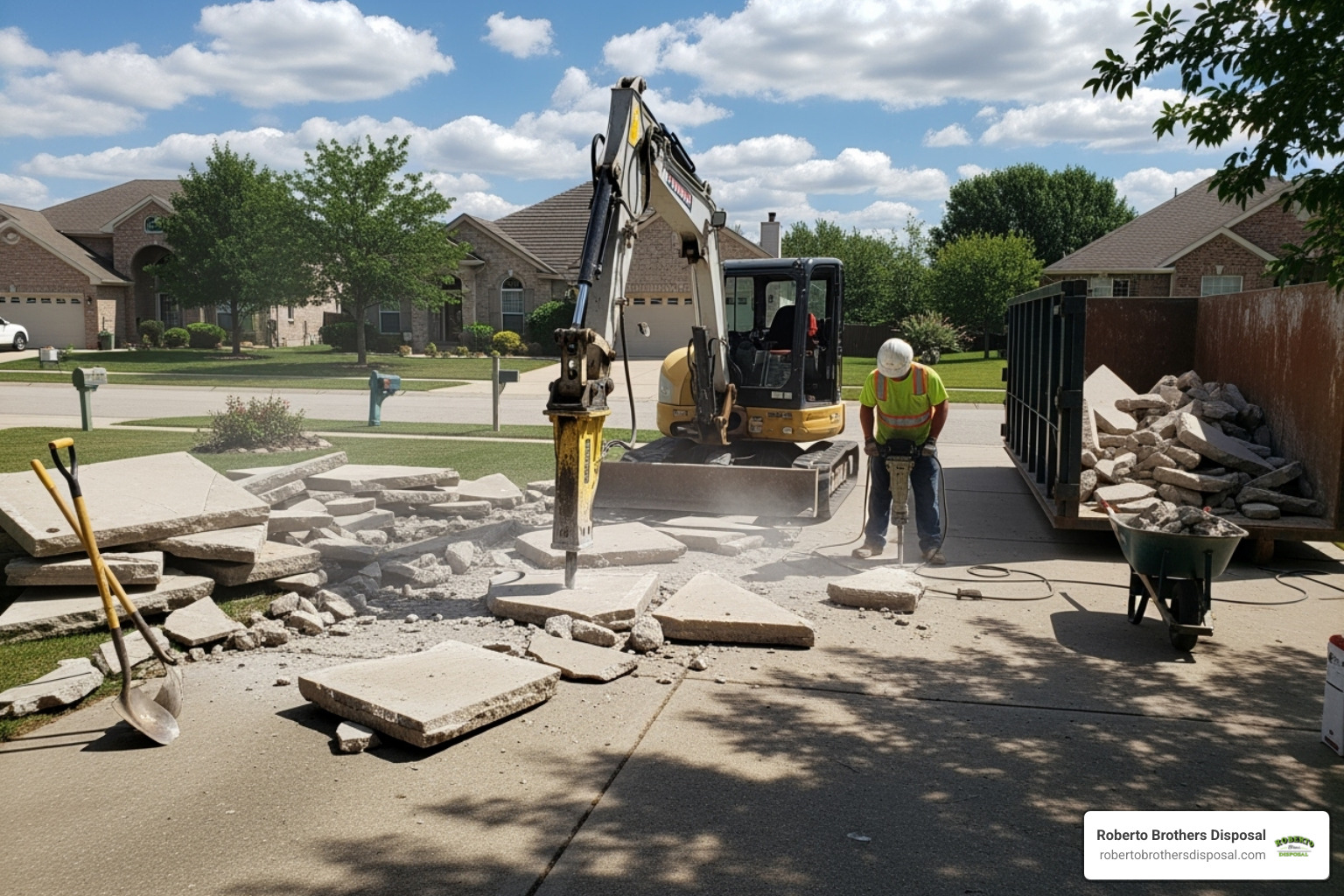
Renting a Dumpster for Concrete Debris
For projects larger than a few wheelbarrow loads, renting a dumpster is the most practical choice. Our roll-off containers are built to handle the extreme weight of concrete, allowing you to work at your own pace. If you’re new to dumpster rental, our guide Roll-Off Dumpster Rental 101: Trash Talk for Beginners covers the basics.
Weight limits are crucial; a 10-yard dumpster can hold 6-10 tons, and concrete’s density means this adds up fast. That’s why concrete dumpsters are engineered for weight, not just volume. We offer several sizes: our 10-yard dumpster (3.25′ tall x 7.25′ wide x 12′ long) is great for small jobs, the 15-yard option (4′ tall x 7.25′ wide x 14′ long) suits single-car driveways, the 20-yard dumpster (5.5′ tall x 7.25′ wide x 14′ long) is ideal for two-car driveways, and the 28-yard container (6′ tall x 7.25′ wide x 17′ long) handles major demolition.
Pricing is also affected by whether you have clean concrete (cheaper to recycle) or mixed debris (requires sorting). Let us know what you’re tossing for an accurate quote.
Hiring a Junk Hauling Service
If you want someone else to do the heavy lifting, a junk hauling service is a great option. They arrive, load the debris, and haul it away. This works best for smaller jobs, like a few broken pavers or a damaged walkway section, as most trucks can only handle 80-120 square feet (about 2 tons) at a time. Pricing is typically $50-$95 per cubic yard with labor included.
While convenient for small amounts, the cost of multiple trips for a large project, like a full driveway, can add up quickly, making a dumpster rental more economical. For broader information about handling construction debris, check out our comprehensive guide: More info about construction waste disposal.
DIY Disposal: Landfills and Transfer Stations
For the hands-on type with a sturdy truck, DIY hauling to a landfill or transfer station can seem like the cheapest option, with tipping fees around $22-$45 per ton. However, you must factor in the need for a vehicle that can handle the weight, plus the time, fuel, and physical labor of loading and making multiple trips. This approach is feasible for very small amounts but quickly becomes less appealing for larger projects compared to using a concrete disposal service.
Reusing and Repurposing Concrete
Before disposal, consider giving your concrete a second life on your property. This saves on costs and provides free landscaping materials. Broken concrete can be used to create:
- Rustic garden borders
- Pathways
- Functional and attractive retaining walls
Crushed concrete, or Recycled Concrete Aggregate, is an excellent base material for patios, sheds, or new driveways. You can also use pieces for DIY projects like fire pit surrounds. Check with neighbors or online community groups; your waste might be someone else’s treasure.
The Eco-Friendly Choice: Concrete Recycling
At Roberto Brothers Disposal, we’re passionate about turning old concrete into a useful resource. Concrete recycling is not only the most environmentally responsible choice but often the smartest financial one. It’s a key part of the “circular economy,” where waste becomes a valuable asset. By choosing recycling for your concrete disposal service, you contribute to sustainable construction, help projects earn LEED certification points, and save money.
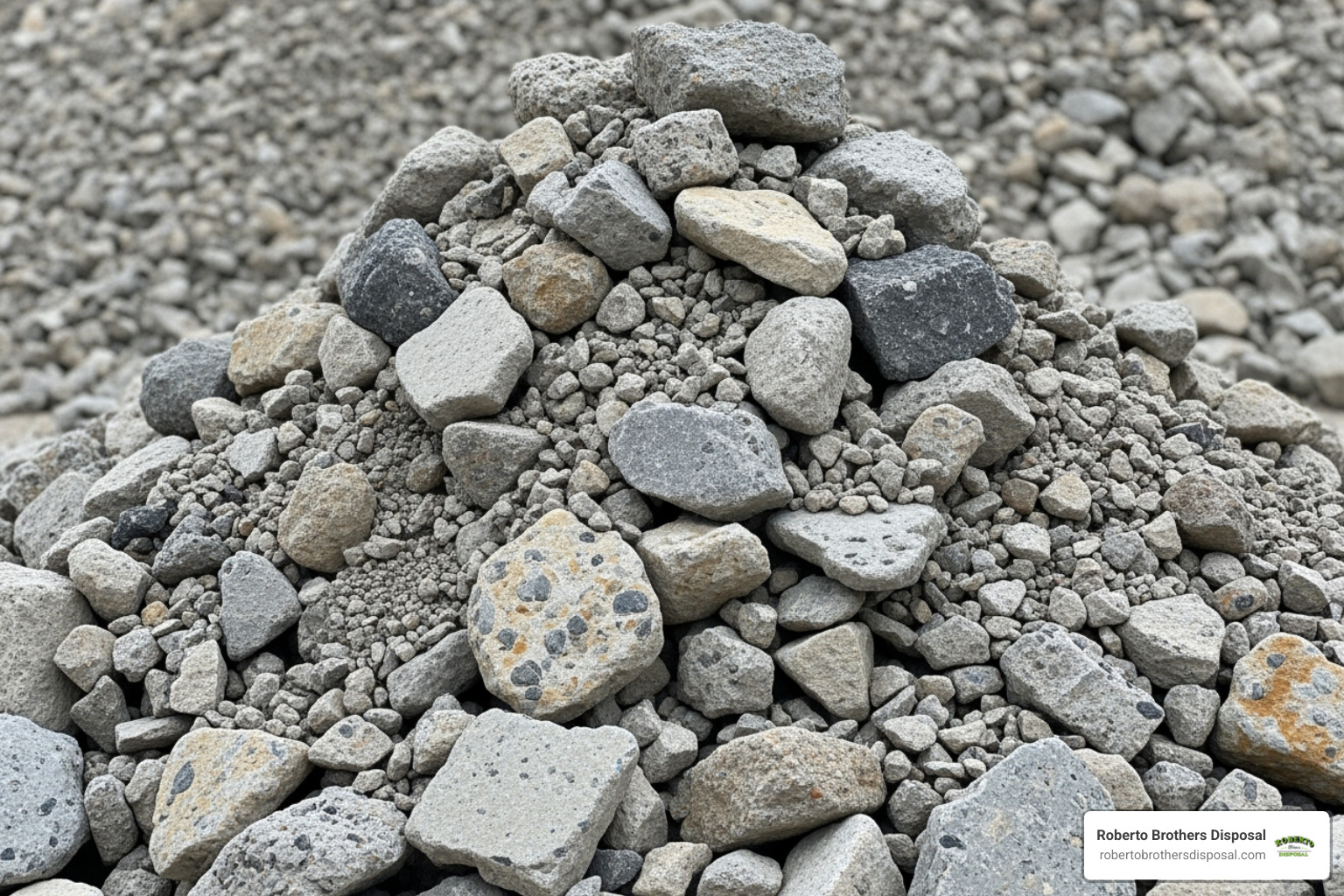
How Does Concrete Recycling Work?
The process of turning old concrete into useful material is straightforward.
- Crushing: Industrial crushers break down large concrete chunks.
- Screening: The crushed material is sorted through screens to create a uniform size.
- Contaminant Removal: A multi-step process removes unwanted materials. Wood and plastic are picked out, electromagnetic separators pull out metal, and air separators remove other light debris.
- Rebar Separation: Steel rebar is removed with magnets and sent for metal recycling.
The end product is high-quality Recycled Concrete Aggregate (RCA), ready for new construction.
Benefits of Recycling Concrete
The benefits of recycling concrete are significant for both your budget and the planet.
- Reduced Landfill Waste: Recycling keeps bulky concrete out of landfills, extending their lifespan.
- Resource Conservation: Using Recycled Concrete Aggregate (RCA) reduces the need to mine new sand and gravel.
- Lower Costs: Recycling costs $4 to $10 per ton, far less than landfill fees of $22 to $45 per ton. The resulting RCA is also cheaper than new aggregate.
Emerging research shows even more potential, from low-carbon concrete production to using concrete dust to boost crop yields and capture CO2.
Challenges and Solutions in Concrete Recycling
While highly beneficial, concrete recycling has challenges:
- Contamination: Concrete mixed with other debris (wood, plastic, asphalt) is difficult to recycle. The solution is careful sorting on-site, ideally using a dedicated dumpster for clean concrete.
- Transportation Costs: Concrete’s weight makes transport expensive. We mitigate this by using a network of local recycling partners in Massachusetts and Southern New Hampshire.
- Market Demand: Promoting the use of RCA in construction is key to ensuring a steady market for the recycled material.
- Quality Perception & Regulations: Overcoming the perception of recycled materials as inferior requires strict quality control and standardized regulations, which the industry is actively developing.
Despite these problems, the benefits of recycling make it our preferred concrete disposal service method—it’s better for your budget and the planet.
Navigating Costs and Regulations for Your Concrete Disposal Service
To avoid surprise bills or fines during a concrete removal project, plan for costs and regulations. Budgeting for disposal upfront helps you choose the best option and keep your project on track. For a general overview, see our guide on the Cost to Rent a Dumpster, but concrete has unique factors to consider.
Comparing the Costs of Concrete Disposal Methods
Here’s where the rubber meets the road – or in this case, where the concrete meets your credit card. The cost of getting rid of concrete varies dramatically depending on which route you take, and what seems cheapest upfront might not be the best value in the end.
| Method | Typical Cost Range | Included Services | Potential Hidden Fees/Considerations |
|---|---|---|---|
| Dumpster Rental | $250 – $550+ (10-20 yard) | Delivery, pickup, disposal of contents | Overage fees (if weight limit exceeded), mixed material fees, rental period extensions, permit fees for street placement |
| Junk Hauling Service | $50 – $95 per cubic yard | Labor (loading), hauling, disposal | Per-trip fees, minimum pick-up charges (e.g., $100+), higher cost for larger volumes, limited capacity per truck |
| Landfill Tipping Fees | $22 – $45 per ton | Disposal at facility | Vehicle rental, fuel, your labor/time, multiple trips, per-visit fees, facility-specific rules |
As the table shows, dumpster rentals are most cost-effective for large amounts of concrete, offering a low cost-per-ton and timeline control. Junk hauling services are convenient for small jobs, but the per-yard cost becomes expensive with the multiple trips required for larger volumes. DIY landfill runs have low tipping fees but come with hidden costs like truck rental, fuel, and your own time and labor.
For commercial projects with larger volumes, check out our detailed Dumpster Rental Prices guide for more specific pricing information.
Finding a Local Concrete Disposal Service
Finding the right concrete disposal service is straightforward. Start with an online search for “concrete disposal near me” or ask local contractors and neighbors for recommendations. Look for direct C&D recycling facilities, which offer eco-friendly disposal. When vetting companies, check their experience, reviews, and insurance. A transparent company is a trustworthy one.
As a local, family-run business in Ayer, MA, with over 20 years of experience, Roberto Brothers Disposal understands the needs of communities in Massachusetts and Southern New Hampshire. We offer transparent pricing and eco-friendly service you can rely on.
Understanding Local Regulations and Permits for a Concrete Disposal Service
Understanding local regulations is crucial to avoid fines and delays.
- Municipal Requirements: Rules vary by town. Check with your local municipal office for specific requirements in your area.
- Street Permits: You will likely need a permit to place a dumpster on a public street. We can help guide you through this process, which typically costs $25-$100.
- Weight Restrictions: Be aware of local road weight limits, especially on smaller residential streets. A reputable service will plan routes accordingly.
- Prohibited Materials: Standard concrete is fine, but wet slurry, asbestos-containing materials, and chemically contaminated concrete require special handling.
Always communicate the full scope of your project to your concrete disposal service to ensure a smooth process.
Frequently Asked Questions about Concrete Disposal
We love getting questions about concrete disposal – it means you’re thinking ahead and planning responsibly! Over our 20+ years in business, we’ve heard just about every concrete disposal question imaginable. Here are the ones that come up most often, along with the straight answers you need.
Can you put concrete in a regular dumpster?
The short answer is no. Regular dumpsters are designed for volume, not the extreme weight of concrete. A small amount of concrete can easily exceed a standard dumpster’s weight limit (typically 2-4 tons), leading to several problems:
- Damage: The immense weight can damage the container and the hauling vehicle.
- Overage Fees: Exceeding the weight limit results in costly fees, often $50-$100 per extra ton.
You must use a heavy-debris or concrete-specific dumpster from a professional concrete disposal service. These are built with reinforced steel to handle the load safely and cost-effectively.
How much does it cost to get rid of concrete?
Costs vary by method, volume, and location. Here are some typical ranges:
- Dumpster Rental: $250-$550+. A 10-yard dumpster (3.25′ tall x 7.25′ wide x 12′ long) is good for walkways, while a 20-yarder (5.5′ tall x 7.25′ wide x 14′ long) can handle a driveway.
- Junk Hauling: $50-$95 per cubic yard. This includes labor but can be expensive for large volumes.
- DIY Landfill Disposal: $22-$45 per ton, plus your time, fuel, and vehicle costs.
Costs can also vary across Massachusetts and Southern New Hampshire. The best way to budget is to get a quote from a reputable concrete disposal service like us for transparent, upfront pricing.
Is concrete considered hazardous waste?
Generally, no. Clean concrete is classified as inert construction material. However, it can become hazardous if contaminated with substances like oil, chemicals, asbestos, or lead paint. This is a risk with concrete from older buildings (pre-1980) or industrial sites.
If you suspect contamination, you must inform your concrete disposal service immediately. Contaminated concrete cannot be recycled normally and requires specialized hazardous waste disposal, which follows different procedures and has different costs. Always ask if you’re unsure; it ensures safety and compliance.
Conclusion
Navigating concrete disposal is manageable with the right information. As we’ve covered, your options range from convenient dumpster rentals for large jobs to junk hauling for smaller ones. The clear winner for both your wallet and the environment is recycling concrete. It reduces landfill waste and creates a valuable, low-cost building material from your old driveway or patio.
Planning is key. Understanding your options, getting clear quotes, and checking local regulations will prevent unexpected costs and delays, ensuring your project runs smoothly.
For over 20 years, Roberto Brothers Disposal has provided reliable concrete disposal for families and businesses throughout Massachusetts and Southern New Hampshire. As a local, family-run business in Ayer, MA, we serve communities across Essex, Middlesex, and Worcester Counties, from Lowell and Acton to Salem and Nashua, NH.
We stand apart with our commitment to transparent pricing, dependable service, and eco-friendly solutions. When you work with us, you’re not just hiring a concrete disposal service; you’re partnering with neighbors who care.
Ready to get started?
