

Why Industrial Site Cleanup Is Essential for Our Communities
Industrial site cleanup is the process of removing contamination from former industrial properties to make them safe for people and the environment. These abandoned or underused sites, often called brownfields, can pose serious health risks and hinder community growth.
Quick Overview: Industrial Site Cleanup Process
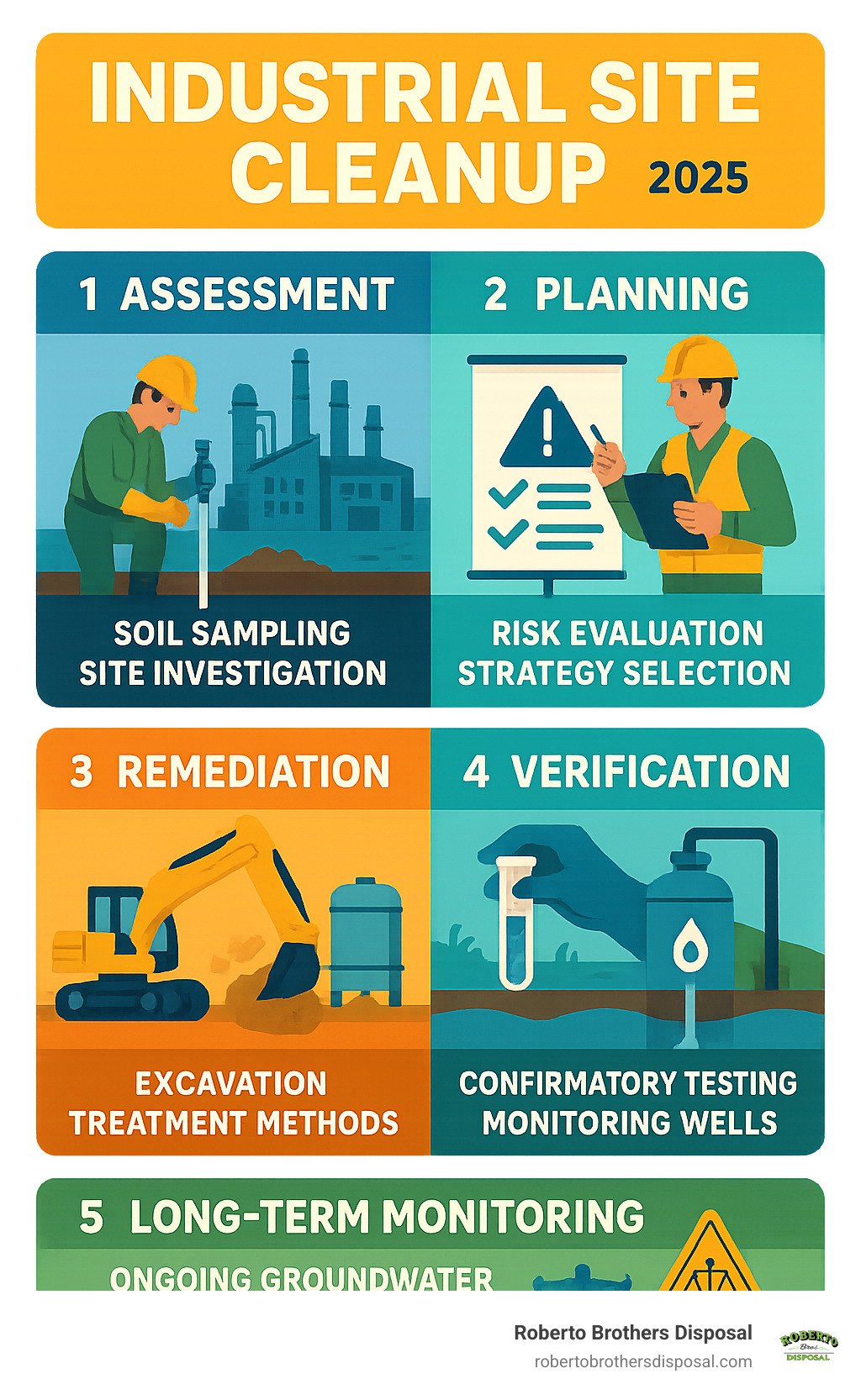
- Site Assessment – Investigate contamination through Phase I and II Environmental Site Assessments.
- Risk Evaluation & Planning – Determine risks and select appropriate cleanup technologies.
- Active Cleanup – Remove, treat, or contain contaminants using proven techniques.
- Verification & Monitoring – Confirm cleanup goals are met and ensure long-term safety.
The numbers tell a powerful story. At the Deloro site cleanup project, activities reduced arsenic concentrations by over 90 percent, and the treatment plant removes over 99.5 percent of arsenic from groundwater. Over 136,140 cubic meters of mining waste are now safely secured.
Industrial site cleanup changes dangerous liabilities into valuable community assets. Former industrial sites can become parks, housing, and new businesses that create jobs and boost local economies.
This guide breaks down the complex world of industrial site cleanup into simple steps. You’ll learn how contaminated sites are assessed, cleaned up, and returned to productive use.
Know your Industrial site cleanup terms:
The Industrial Site Cleanup Process: A Step-by-Step Guide
An industrial site cleanup project follows a proven process to ensure every detail is covered, from initial investigation to long-term monitoring.
Step 1: Uncovering the Past with Environmental Site Assessments (ESAs)
Environmental Site Assessments uncover a property’s history to identify potential contamination. The process begins with a Phase I ESA, which is a non-intrusive investigation. Our team reviews historical records, aerial photos, and environmental databases. We also conduct a site walk and interviews to look for clues about past industrial activities.
If the Phase I ESA suggests contamination is likely, we proceed to a Phase II ESA. This is the hands-on investigation phase where we sample soil and install monitoring wells for groundwater testing. Laboratory analysis of these samples provides clear contaminant identification, revealing exactly what substances are present and at what concentrations. This data-driven approach gives us a clear picture of the challenges ahead.
Step 2: Strategic Planning with Risk Assessments
Once we know what contaminants are present, we must understand the risks they pose. A human health risk assessment evaluates how people might come into contact with contaminants, such as during construction or through groundwater. An ecological risk assessment examines the potential impact on local wildlife, plants, and waterways.
This is where planning becomes strategic. We develop property-specific standards based on the site’s future use. For example, a commercial warehouse has different requirements than a residential neighborhood. This approach to selecting remediation strategies ensures the site is made safe for its intended purpose without wasting resources on unnecessary work. For information on managing costs, see our waste disposal prices.
Step 3: Active Remediation and Responsible Waste Management
This phase involves the physical industrial site cleanup work. Common methods include:
- Excavation: The most direct approach, where contaminated soil is dug up and removed from the site for proper disposal.
- On-site treatment: Using specialized equipment to neutralize or reduce contamination in place, which can be more cost-effective and reduces transportation needs.
- Off-site disposal: Transporting contaminated materials to licensed facilities that specialize in handling hazardous waste, with every load carefully tracked.
- Debris removal: Clearing old structures and rubble, which often uncovers hidden contamination.
The Deloro site cleanup, for instance, involved securing approximately 365,865 cubic meters of industrial waste under engineered covers.
Managing project debris requires the right equipment. Our roll-off dumpsters are ideal for cleanup projects:
- 10 Yard Dumpster: 3.25′ tall x 7.25′ wide x 12′ long
- 15 Yard Dumpster: 4′ tall x 7.25′ wide x 14′ long
- 20 Yard Dumpster: 5.5′ tall x 7.25′ wide x 14′ long
- 28 Yard Dumpster: 6′ tall x 7.25′ wide x 17′ long
We provide fast, reliable service to keep your project moving. Learn more about our specialized construction waste disposal services.
Step 4: Verifying Success and Ensuring Long-Term Safety
After the heavy equipment leaves, we must verify the cleanup’s success and ensure long-term safety. Confirmatory sampling provides scientific proof that remediation worked. We collect new soil and groundwater samples to confirm that contaminant levels meet the target cleanup goals.
Achieving cleanup goals means meeting either standard regulatory requirements or the custom standards developed during planning. At the Deloro site, arsenic concentrations were reduced by over 90 percent, making the area significantly safer.
Long-term monitoring is essential for sites with remaining contamination or containment systems. Groundwater monitoring wells allow us to track contaminant movement and ensure remediation systems remain effective. For example, the Deloro arsenic treatment plant’s success relies on ongoing monitoring.
Institutional controls, such as land-use restrictions or deed notices, provide an extra layer of legal protection. These measures inform future owners of site conditions and may restrict activities like digging or well installation. This comprehensive verification process ensures that industrial site cleanup projects deliver lasting results.
Identifying the Enemy: Common Contaminants and Their Risks
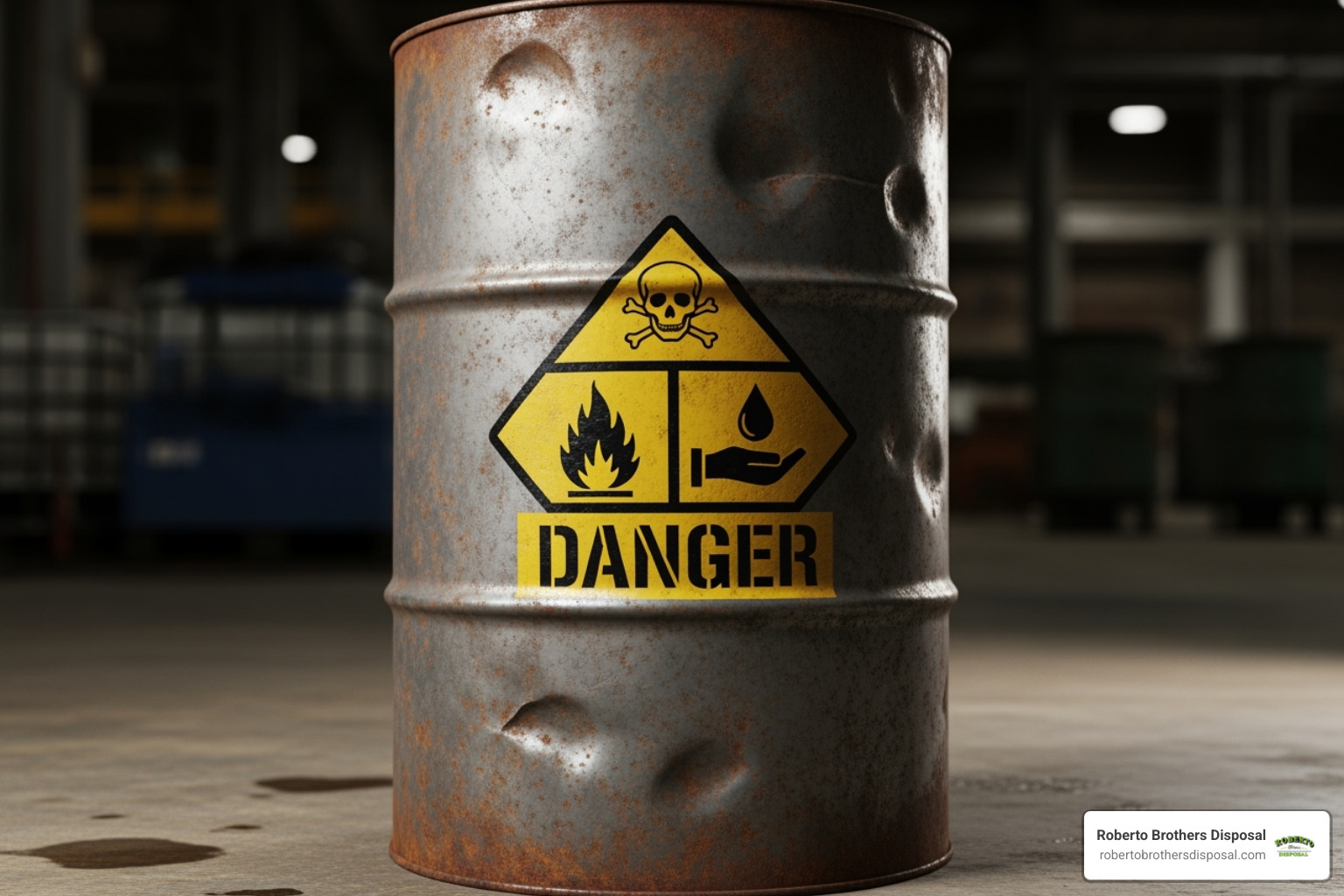
Industrial site cleanup deals with a complex mix of harmful substances from past industrial activities. Understanding these contaminants is the first step to effective remediation. Pollutants from old manufacturing plants, mining operations, or improper waste disposal create serious health risks and cause lasting environmental impact.
Heavy Metals and Inorganic Compounds
Heavy metals persist in the environment for decades, accumulating in soil, water, and living organisms.
- Arsenic: A highly dangerous contaminant common at mining sites. The health effects of arsenic exposure are severe, including organ damage and cancer.
- Lead: Often from old paint and industrial processing, it is especially harmful to children, causing developmental problems.
- Mercury: Damages the brain and kidneys. Learn more about the risks of mercury contamination.
- Asbestos: A fibrous mineral that can cause lung cancer and other respiratory diseases when inhaled, requiring careful handling during demolition.
- Chromium VI: A known carcinogen often found at sites used for plating operations or leather tanning.
Volatile Organic Compounds (VOCs) and Chemicals
VOCs evaporate easily, allowing them to travel through soil and air, spreading contamination.
- Trichloroethylene (TCE): A common industrial solvent and known human carcinogen.
- Polychlorinated biphenyls (PCBs): Formerly used in electrical equipment, these persistent chemicals can cause skin and neurological problems.
- Solvents and Petroleum Hydrocarbons: Chemicals like benzene, toluene, and xylenes, along with fuel from spills, pose risks of organ damage.
- Vapor Intrusion risks: A significant concern where VOCs seep from the ground into buildings, creating hazardous indoor air quality.
Persistent “Forever Chemicals” and Emerging Contaminants
This group includes substances that are extremely resistant to natural breakdown.
- Per- and Polyfluoroalkyl Substances (PFAS): Known as “forever chemicals,” they are found in many products and are increasingly detected at cleanup sites. Their health effects are a growing concern.
- Dioxins: Highly toxic byproducts of industrial processes that can cause cancer.
- Perchlorates: Associated with explosives, they can interfere with thyroid function.
- Persistent organic pollutants (POPs): A class of man-made chemicals that accumulate in the food chain and can affect immune and reproductive systems.
The challenge with emerging contaminants is that cleanup technologies are constantly evolving to address these persistent chemicals.
The Toolkit: Key Technologies for Industrial Site Cleanup
Effective industrial site cleanup requires a diverse toolkit of remediation technologies. The right approach depends on the contaminants, site conditions, and future land use. Methods are generally categorized as in-situ (treating contamination in place) or ex-situ (removing material for treatment). The best strategy is often a combination of methods, chosen for cost-effectiveness and environmental impact.

Physical Containment and Removal Strategies
These methods physically remove or isolate contaminants.
- Excavation and disposal: The direct removal of contaminated soil, which is then transported to a licensed disposal facility.
- Solidification and Stabilization techniques: Locking contaminants in place by mixing soil with binding agents like cement, preventing them from spreading.
- Engineered caps and covers: Multi-layered barriers placed over contaminated areas to prevent water infiltration and contain pollutants.
- Permeable reactive barriers: Underground walls of reactive materials that treat contaminated groundwater as it flows through.
- Soil washing: An ex-situ process that uses water to separate contaminants from soil, concentrating them for easier disposal.
Innovative Biological and Chemical Treatments for industrial site cleanup
These methods use natural processes or chemical reactions to break down pollutants.
- Bioremediation explained: Using microorganisms like bacteria and fungi to consume and break down organic contaminants into harmless substances.
- Phytotechnologies: Utilizing plants to absorb, contain, or break down contaminants. For example, poplar trees were planted at the Deloro site to help manage water and support recovery.
- In Situ Chemical Oxidation (ISCO): Injecting powerful chemicals into the ground to destroy contaminants at a molecular level.
- Nanoscale remediation materials: Using tiny, highly reactive particles engineered to target and neutralize specific contaminants with great efficiency.
Advanced Thermal and Extraction Techniques
These techniques use heat or vacuum forces to remove or destroy pollutants.
- Soil Vapor Extraction (SVE): A vacuum-based system that pulls volatile contaminants out of the soil as vapor for above-ground treatment.
- In Situ Thermal Treatment: Heating the ground to destroy contaminants or turn them into vapor for extraction.
- Multi-Phase Extraction: A high-power vacuum system that removes contaminated groundwater, petroleum products, and vapors simultaneously.
- Air Sparging: Injecting air into groundwater to strip volatile contaminants, which are then captured by an SVE system.
Navigating the Maze: Regulatory Frameworks and Compliance
Industrial site cleanup involves navigating a complex web of regulations. This government oversight is designed to protect public health, ensure safety standards are met, and help property owners avoid future legal liability. Understanding these frameworks is key to a successful project.
Understanding Federal and State Cleanup Laws
Federal laws provide a national foundation for cleanup. The EPA Superfund Program, operating under CERCLA, addresses the nation’s most hazardous abandoned waste sites. The Resource Conservation and Recovery Act (RCRA) governs the management of hazardous waste from generation to disposal.
However, state-specific regulations often add another layer of requirements, sometimes with stricter standards. For example, Washington State’s Department of Ecology provides a detailed framework for property owners, which you can explore at The general cleanup process. Similarly, regions like Ontario, Canada, have their own robust systems. This variation means cleanup approaches must be custom to local laws.
The Critical Role of Qualified Professionals and Documentation
Environmental cleanup is not a DIY project. It requires certified professionals like Professional Engineers to design remediation systems and Geoscientists to understand how contaminants move underground. These experts are legally accountable for their work.
A key document is the Record of Site Condition (RSC), which is essentially a clean bill of health for the property. Prepared by a Qualified Person (QP), it confirms the site meets all environmental standards. Filing an RSC provides transparency and offers significant protection from future environmental orders. As a local business with over 20 years of experience, we know the importance of compliance. Learn More info about our dumpster rental company.
Fostering Trust Through Public and Stakeholder Engagement
Successful cleanup also requires building community trust. Project transparency and public involvement are crucial.
- Community meetings keep residents informed about project plans, progress, and potential impacts.
- Public Liaison Committees, like the one used at the Deloro site, create an ongoing dialogue between the project team and the community.
- Addressing public concerns about health risks, construction traffic, and long-term safety is essential. Being upfront with information and responding to feedback builds the trust needed for a project to succeed.
Reaping the Rewards: The Benefits of Proper Site Remediation
The investment in industrial site cleanup yields significant returns, changing liabilities into assets. The benefits ripple through the community, creating economic, environmental, and public health improvements.

Economic Revival: Turning Brownfields into Goldmines
Cleaned-up brownfield sites become powerful engines for economic growth.
- Increased property values: Remediation makes a site attractive for development, boosting its value and that of surrounding properties.
- Job creation: Cleanup projects create jobs in construction and environmental services, while new businesses on the redeveloped land bring long-term employment.
- Attracting new businesses: Companies are drawn to clean, development-ready sites without environmental liabilities, bringing investment and economic diversity.
- Tax revenue: New development and higher property values increase the local tax base, funding public services.
Many former Superfund sites have been successfully redeveloped for industrial use, proving that safe reuse is both possible and profitable. Explore these Case studies of Superfund sites with industrial reuse.
Protecting Our Planet and People
The most critical benefit is the protection of our environment and health.
- Groundwater protection: Cleanup prevents contaminants from leaching into drinking water sources. The Deloro site’s treatment plant, which removes over 99.5% of arsenic from groundwater, is a prime example.
- Ecosystem restoration: Remediation allows damaged habitats to recover. Planting over 11,000 trees at the Deloro site helped restore the local ecosystem.
- Reducing exposure pathways: By eliminating or containing hazardous materials, we cut off the ways people and wildlife can come into contact with them, creating a safer environment for everyone.
The Role of Sustainable Waste Management in industrial site cleanup
As a business committed to eco-friendly solutions, we see cleanup projects as an opportunity for sustainable waste management.
- Recycling scrap metal: Demolition yields valuable metals that can be recycled, reducing the need for raw materials.
- Reusing concrete: Crushed concrete from old structures can be used as aggregate for new construction, minimizing waste.
- Reducing landfill waste: By prioritizing recycling, reuse, and on-site treatment, we conserve landfill space and reduce the project’s environmental footprint.
We help businesses manage waste responsibly, supporting a circular economy. Learn more about our Commercial Recycling Solutions.
Conclusion: Partnering for a Cleaner, Safer Future
The industrial site cleanup journey transforms contaminated liabilities into valuable community assets. The process moves from environmental site assessments and risk evaluation to active remediation and long-term verification. We’ve seen how innovative technologies can tackle dangerous contaminants like heavy metals and VOCs, guided by a clear regulatory framework.
The benefits are clear: economic revival through new development and jobs, environmental restoration that protects groundwater and ecosystems, and safer, healthier communities. Sustainable waste management practices, such as recycling and reuse, ensure these projects align with long-term environmental goals.
Success in industrial site cleanup depends on reliable partners. At Roberto Brothers Disposal, our family has served Massachusetts communities for over 20 years, providing dependable waste management solutions that keep projects on track.
Whether you need a 10-yard dumpster (3.25′ tall x 7.25′ wide x 12′ long) for minor debris or a 28-yard container (6′ tall x 7.25′ wide x 17′ long) for major excavation, we offer transparent pricing and personalized service. We handle the logistics so you can focus on the cleanup.
Environmental stewardship is about building a better foundation for the future. By working together, we can turn a vision of a cleaner, safer community into a reality.
Ready to start your cleanup project? Get a Roll-Off Dumpster Rental for your cleanup project and let’s partner together to make your vision a reality.
