
Why Construction Debris Removal Is Critical for Your Project’s Success

Construction debris removal is an essential service for safely disposing of waste from construction, renovation, or demolition projects. Proper debris management is key to keeping your worksite safe, compliant, and productive, whether for a kitchen remodel or a large commercial build.
Key Construction Debris Removal Options:
- Roll-off dumpster rentals – 10-28 yard containers for self-service disposal
- Full-service removal – Professional crews handle all lifting and hauling
- Scheduled pickup services – Regular debris collection during ongoing projects
- Specialized disposal – Proper handling of concrete, metal, and hazardous materials
Construction and demolition waste makes up 25% to 45% of all landfill waste, making proper disposal an environmental and legal necessity. An average project generates tons of debris, and improper handling leads to safety hazards, violations, and fines.
The good news? Professional debris removal can cut project costs by 5-10% through efficiency and reduced fees. Plus, recycling programs can divert over 75% of materials from landfills.
Debris comes in many forms—concrete, drywall, metal, wood—each needing specific disposal. The key is matching the right removal solution to your project’s scope and budget.
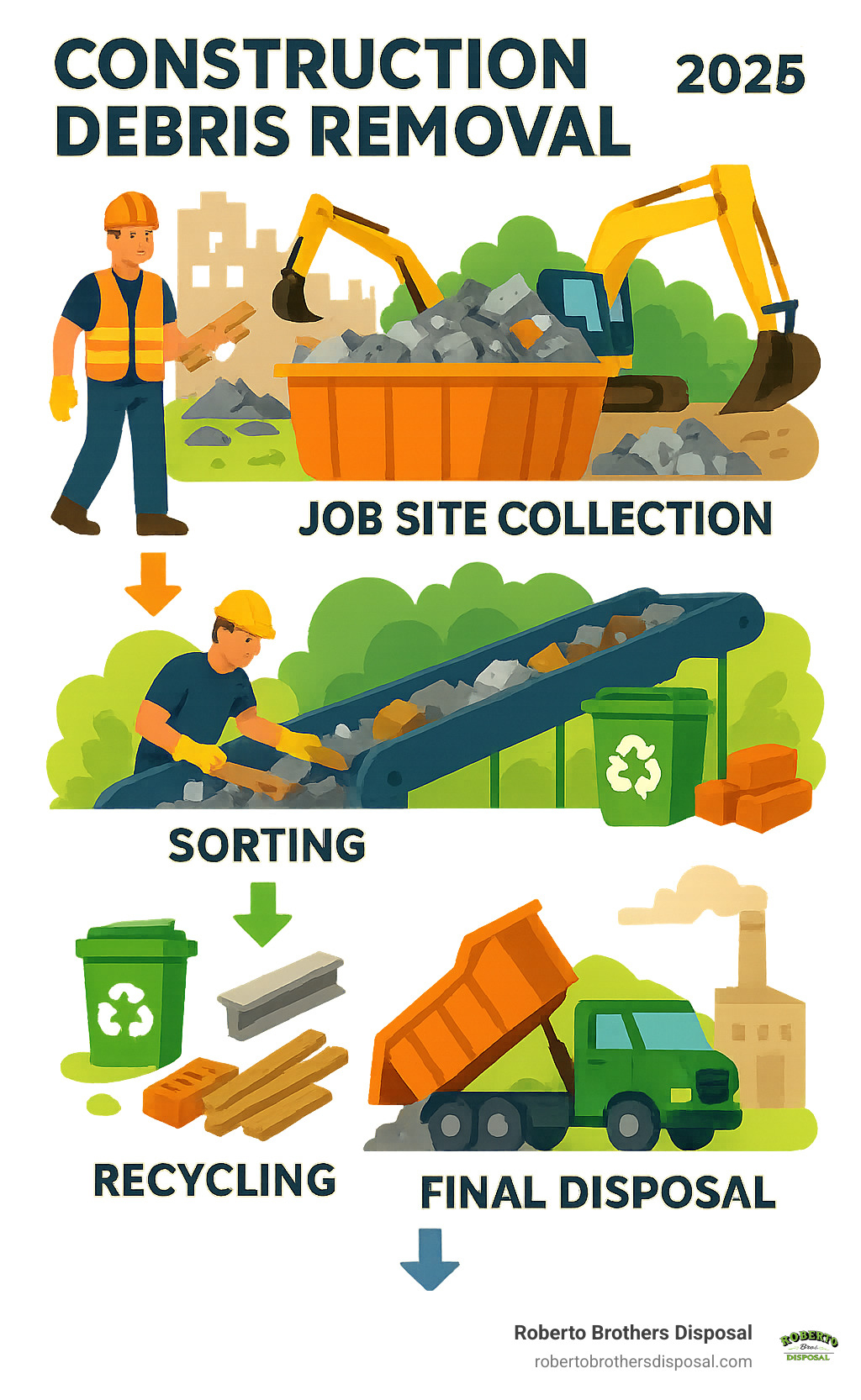
Simple Construction debris removal glossary:
Understanding Construction Debris: What Are You Dealing With?
When you’re knee-deep in a construction project, that growing pile of materials isn’t just “trash” – it’s a complex mix of valuable resources, potential hazards, and environmental responsibilities all rolled into one. Construction debris removal involves handling everything from concrete chunks to copper pipes, and understanding what you’re dealing with makes all the difference between a smooth project and a costly headache.
Think about it: construction and demolition waste makes up a whopping 25% to 45% of everything that ends up in our landfills. That’s not just a number – it’s millions of tons of materials that could often be recycled, reused, or properly disposed of instead of taking up space forever.
Common Types of Construction Waste
While every job site is unique, certain materials are common.
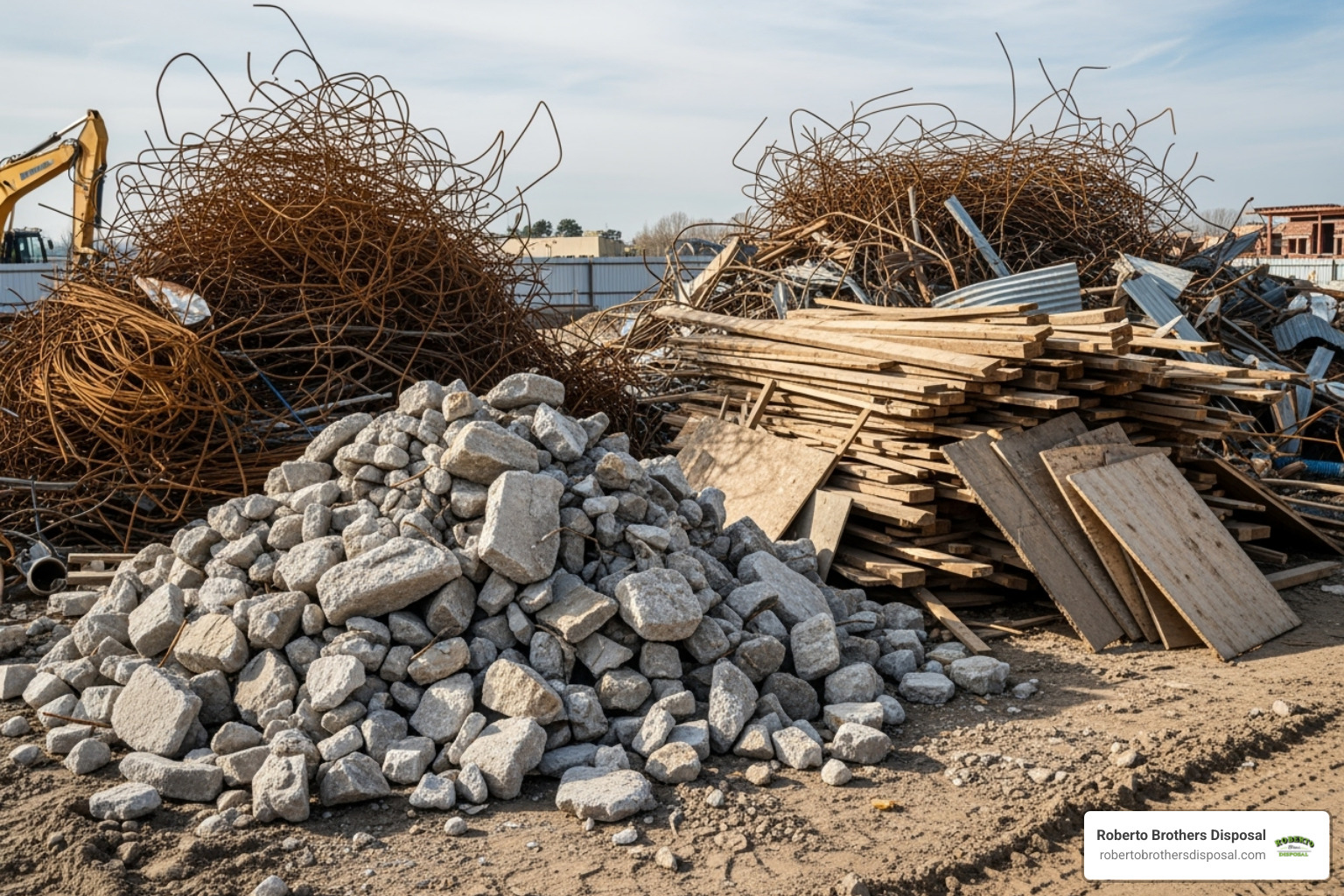
- Concrete and masonry: Making up about 85% of US construction debris, this includes broken concrete, bricks, and blocks. It’s heavy and bulky but highly recyclable.
- Wood and lumber: From framing, flooring, and plywood, untreated wood can sometimes be burned (with permits) or recycled into mulch or engineered products.
- Drywall: This gypsum-based material must be separated from other debris to be recycled effectively.
- Metals: Steel, aluminum, and copper have high salvage value and are endlessly recyclable, which can help offset disposal costs.
- Asphalt shingles: These can be ground up and used in new asphalt products.
- Insulation, plastic, and glass: Each has specific disposal requirements and recycling options.
- Hazardous materials: Asbestos, lead-based paint, and certain chemicals require licensed professionals and special disposal facilities. They must never go in regular dumpsters due to legal and health risks. For a deeper dive into the variety of materials you might encounter, check out Types of construction waste.
The “Why”: Importance of Proper Debris Management
Proper construction debris removal is about protecting people, the environment, and your budget.
- Site safety: Scattered debris creates tripping hazards, sharp edges, and unstable piles. A clean site is a safe site, preventing costly accidents and injuries.
- Environmental protection: With 75% of construction materials ending up in landfills, proper management is crucial. It prevents soil and water contamination and conserves resources. At Roberto Brothers Disposal, over 60% of the materials we collect are reused and repurposed.
- Legal compliance: Local, state, and federal regulations govern waste handling, with severe penalties for violations. It’s illegal to dump, burn, or bury construction scraps.
- Resource conservation: Recycling turns waste into opportunity. Crushed concrete becomes aggregate, wood becomes mulch, and metals are melted for new uses, saving energy and natural resources.
- Cost savings: Efficient material handling, reduced disposal fees for sorted recyclables, and avoiding fines can cut project costs by 5-10%. A clean worksite also saves time, adding to the financial benefits.
Proper debris management turns a potential headache into an opportunity for safety, sustainability, and savings. For more information on the environmental benefits, explore The environmental benefits of recycling C&D materials.
Planning Your Construction Debris Removal Strategy
Think of construction debris removal like planning a dinner party – you wouldn’t wait until guests arrive to figure out what you’re serving, right? The same logic applies to managing construction waste. Smart planning from day one saves you headaches, money, and keeps everyone safe on your job site.
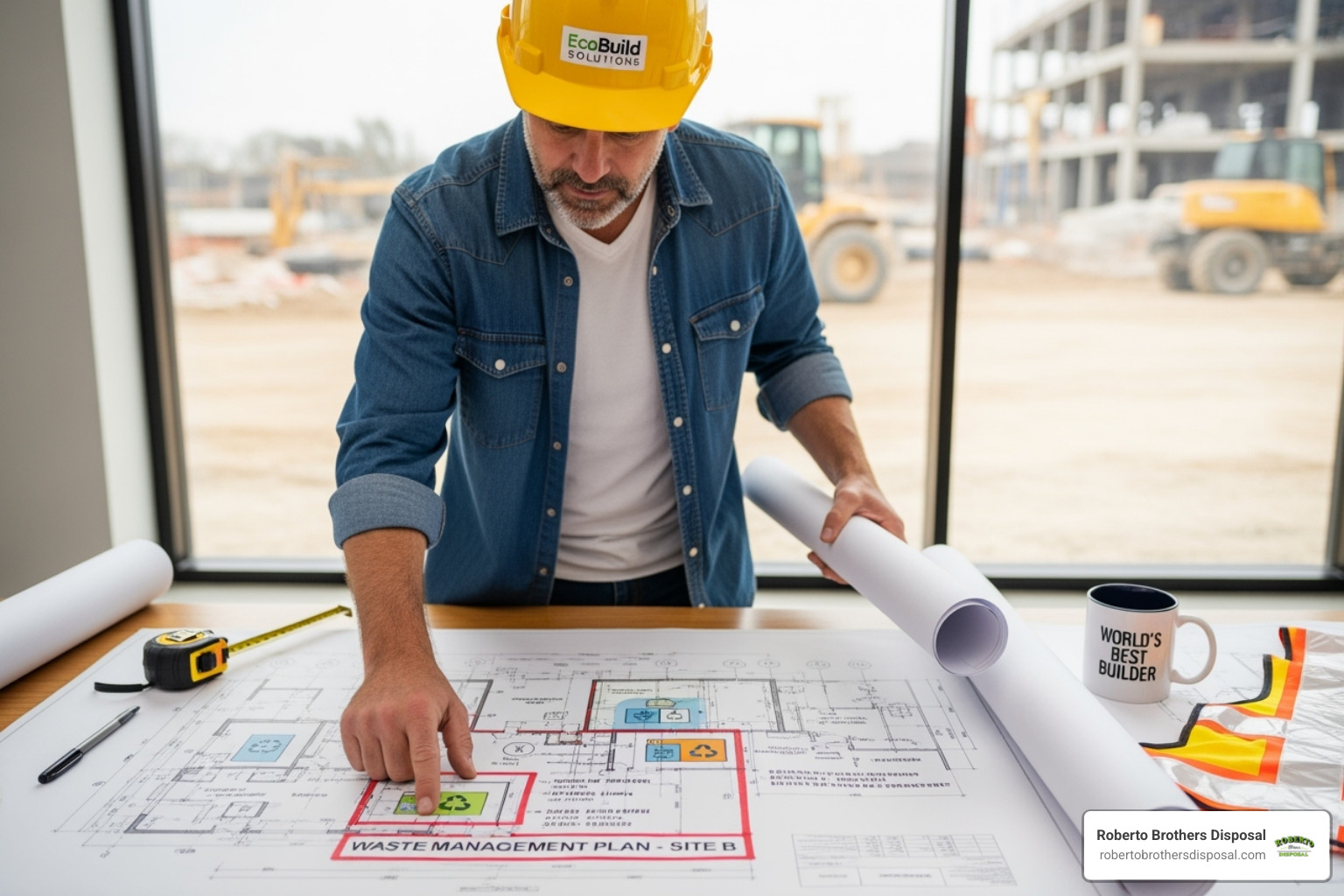
The difference between a smooth project and a chaotic mess often comes down to one thing: having a solid waste management strategy before you break ground. When debris piles up faster than you can handle it, everything else grinds to a halt.
Creating a Construction Waste Management Plan
A waste management plan is your project’s cleanup blueprint. Start by identifying potential waste streams to understand what debris you’ll generate. A bathroom remodel produces different waste than a demolition, and materials like concrete, wood, and metal require different handling. Understanding your waste streams is the first step.
Next, estimate debris volume. People often underestimate this; a small kitchen renovation can fill a 20-yard dumpster. Accurate estimates prevent overflowing dumpsters or paying for unused space. This makes selecting the right container sizes easier. A 10-yard dumpster is great for small remodels, while major projects may need 28-yard containers.
Finally, schedule pickups strategically. Regular pickups keep your site clean and productive, avoiding work stoppages due to a full dumpster. A comprehensive waste management plan ties this all together, acting as insurance against delays and unexpected costs.
The Power of On-Site Sorting and Scheduled Pickups
Material segregation, or on-site sorting, transforms chaos into efficiency. Creating separate piles for concrete, wood, and metal has several benefits. It maximizes recycling potential, allowing materials to go directly to recycling facilities and helping achieve recycling rates of over 75%. It also reduces disposal fees, as mixed waste is more expensive to process, and separated metals can even generate revenue.
Most importantly, sorting creates immediate safety improvements by eliminating hazardous mixed-debris piles. Scheduled pickups complement sorting by keeping the site clear and productive. Regular removal prevents debris from overtaking the workspace, allowing workers to focus on their tasks. This combination of sorting and scheduled pickups keeps your project safe, on time, and on budget. For more details on how we handle this process, check out our approach to Construction Waste Disposal.
Choosing Your Equipment: The Right Dumpster for the Job
Think of selecting equipment for construction debris removal like choosing tools for any important job – you need the right fit to get things done efficiently and safely. While a roll-off dumpster is usually the star player, having the right supporting equipment makes all the difference between a smooth operation and a frustrating day on the job site.
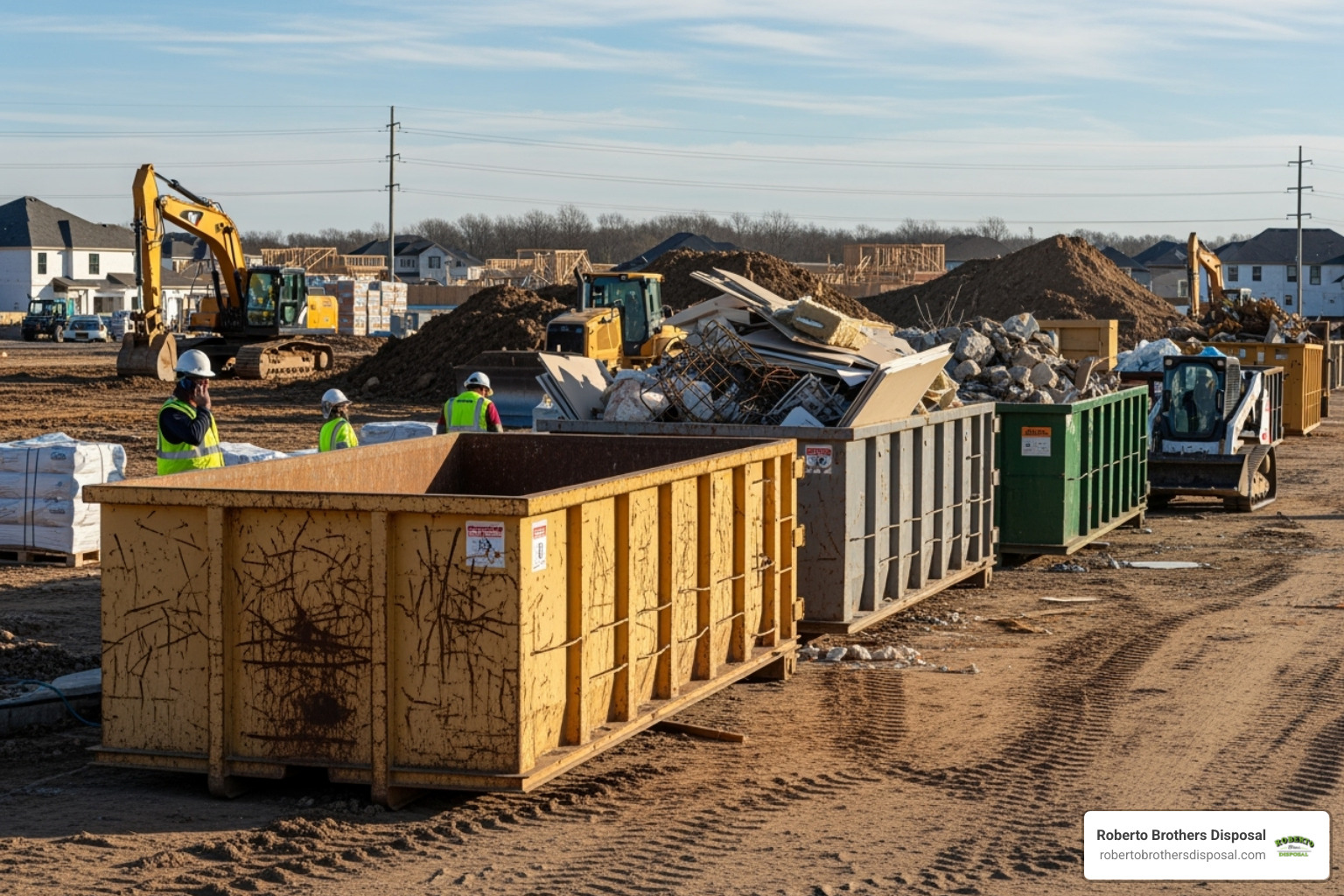
Selecting the Right Roll-Off Dumpster Size
Choosing the right dumpster size is crucial to avoid overpaying or running out of space. With over 20 years of experience, we know that matching the container to your project saves time and money. Weight often matters more than volume. Landfills charge by the ton, so heavy materials like concrete can quickly reach the weight limit, even in a half-full dumpster.
| Dumpster Size | Dimensions (L x W x H) | Common Projects |
|---|---|---|
| 10 Yard | 12′ x 7.25′ x 3.25′ | Small renovations, bathroom remodels, yard cleanup. |
| 15 Yard | 14′ x 7.25′ x 4′ | Medium kitchen remodels, multi-room cleanouts, roofing jobs. |
| 20 Yard | 14′ x 7.25′ x 5.5′ | Large renovations, small construction, whole-home cleanouts. |
| 28 Yard | 17′ x 7.25′ x 6′ | Major construction, demolition projects, large-scale cleanouts. |
Our 10-yard dumpster is perfect for small projects like bathroom remodels or attic cleanouts.
The 15-yard container is ideal for medium-sized jobs, such as kitchen renovations or small roofing projects.
Our 20-yard dumpster suits larger renovations and small construction, handling bulky items while fitting on most driveways.
The 28-yard container is our heavy-duty option for major construction, demolition, and large-scale commercial work.
Essential Equipment Beyond the Dumpster
Efficient construction debris removal requires more than just a dumpster. The right supporting equipment makes the job manageable and safe.
- Skid-steer loaders are game-changers for large projects, quickly moving heavy materials like concrete and dirt.
- Wheelbarrows are perfect for smaller loads and moving debris from tight spaces.
- Shovels and brooms are essential for a thorough cleanup, ensuring the site is professional and safe.
- Personal Protective Equipment (PPE) is non-negotiable. This includes safety glasses for eye protection, hard hats where falling objects are a risk, steel-toed boots to protect feet, and heavy-duty gloves to prevent cuts and splinters.
Having the right equipment speeds up the process and keeps everyone safe. We can help you determine the best dumpster size for your project.
Navigating the Process: From DIY to Professional Services
When you’re staring at a pile of construction debris, the question inevitably pops up: Should I tackle this myself or call in the professionals? It’s a fair question, especially when you’re watching your project budget. While rolling up your sleeves might feel like the economical choice for smaller cleanups, construction debris removal is one area where professional expertise can actually save you money, time, and a whole lot of frustration.

Professional Construction Debris Removal vs. DIY
Construction debris is heavy, sharp, and requires specific disposal methods. Here’s why hiring professionals often makes more sense than a DIY approach:
- Speed and Efficiency: A professional crew can clear a site in hours, a task that might take you a full weekend of trips to the dump. They have the right trucks, equipment, and experience to work quickly, keeping your project on schedule.
- Safety: Handling heavy, unpredictable debris is risky. Professionals are trained and equipped to manage these materials safely, preventing injuries.
- Proper Equipment: Professional services provide the right equipment, from roll-off dumpsters suited to your project to the machinery needed for efficient loading.
- Regulatory Knowledge: Professionals understand the complex local, state, and federal disposal regulations, ensuring compliance and helping you avoid costly fines.
- Environmental Responsibility: Reputable companies prioritize recycling. At Roberto Brothers Disposal, we reuse or repurpose over 60% of the materials we collect.
- Cost-Effectiveness: When you factor in truck rental, fuel, landfill fees, your time, and potential fines, DIY removal can be more expensive. Professionals often get better disposal rates, saving you money in the long run.
How to Choose the Right Construction Debris Removal Partner
Choosing the right partner is key to a smooth project. Here’s what to look for:
- Local Experience: A local company knows the area’s regulations and disposal facilities. As a family-run business in Ayer, MA, with over 20 years of experience, we know Massachusetts (including Essex, Middlesex, and Worcester Counties) and Southern New Hampshire. We handle everything from Dumpster Rental in Woburn, MA to large demolitions.
- Transparent Pricing: Look for clear, upfront quotes with no hidden fees. We believe in straightforward pricing.
- Reliability: A dependable company keeps your project on schedule. We pride ourselves on fast service that respects your timeline.
- Range of Services: Ensure the company can handle your project’s scope, offering both dumpster rentals and full-service removal. We provide comprehensive solutions for contractors and homeowners.
- Customer Reputation: Check reviews and testimonials to gauge customer satisfaction.
- Insurance and Licensing: A fully insured and licensed company protects you from liability.
A great partner is integral to your project’s success, ensuring safety, compliance, and efficiency.
Frequently Asked Questions about Construction Debris Removal
We get it – construction debris removal can feel overwhelming with all the rules, regulations, and options out there. After helping folks across Massachusetts and Southern New Hampshire for over 20 years, we’ve heard just about every question you can imagine. Here are the ones that come up most often, answered in plain English.
What are the regulatory requirements for construction waste disposal?
Waste disposal is governed by a multi-layered system of rules. Local permits and bylaws often dictate what and how much you can dispose of, and may require permits for dumpster placement. Always check your local disposal guidelines first. State and federal laws from environmental agencies and the EPA set standards for landfill operations, recycling, and general waste management. OSHA also has rules for site cleanliness.
Hazardous materials like asbestos and lead paint require special handling by licensed professionals and cannot go in a regular dumpster. All debris must go to permitted landfills or recycling centers; illegal dumping, burning, or burying is prohibited. Proper documentation is also necessary for compliance. We handle all these regulatory details for you, ensuring your project meets all requirements in Massachusetts and Southern New Hampshire.
How does technology play a role in modern waste management?
Technology has transformed construction debris removal, making it faster and more transparent.
- Online booking allows for 24/7 scheduling with instant quotes and real-time availability.
- GPS tracking and route optimization in our trucks ensure efficient paths, reducing fuel consumption and providing accurate arrival times.
- Digital invoicing and waste tracking software offer paperless billing and detailed reports on how much of your debris was recycled, reused, or disposed of.
- Eco-friendly fleets, including trucks that run on clean-burning natural gas, help reduce environmental impact.
This technology leads to improved communication and a smoother process from start to finish.
Why is documentation crucial for debris removal processes?
Documentation is a critical tool in construction debris removal. It provides:
- Proof of Compliance: Solid records demonstrate you followed all regulations, protecting you from fines.
- Recycling and Sustainability Data: Tracking recycling rates (we typically achieve over 60%) shows your commitment to the environment.
- Cost Analysis: Documentation helps you understand disposal costs and identify savings opportunities.
- Project Management Insights: Understanding waste patterns helps you plan future projects more efficiently.
- Liability Protection: In case of issues, records prove you acted responsibly.
- Data for Future Planning: Real data allows you to set realistic waste reduction goals.
We handle all documentation, turning waste data into valuable information that protects and benefits your business.
Conclusion
Proper construction debris removal is about setting your project up for success. Just as you need a solid foundation to build on, you need a solid waste management plan before you begin. Planning is essential to save time, money, and avoid compliance issues.
Right-sizing your dumpster is a key detail that impacts your budget. Getting the right container for your debris volume and weight keeps your project running smoothly and costs predictable. While DIY is an option, professional services save time and ensure compliance. Professionals steer complex regulations, handle hazardous materials, and maximize recycling, turning a potential headache into a seamless process.
For over 20 years, Roberto Brothers Disposal has helped contractors and homeowners in Massachusetts and Southern New Hampshire. As a local, family-run business in Ayer, we know the region’s regulations. We offer transparent pricing and eco-friendly disposal, with over 60% of materials reused or repurposed.
Don’t let debris derail your project. Get your site cleaned up efficiently with a Roll-Off Dumpster Rental sized for your needs and backed by local expertise. We’re here to help you build something great and clean up responsibly.
