
Decoding Your Dumpster Rental Bill
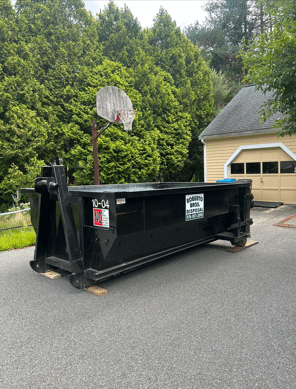
Roll off dumpster rental prices typically range from $250 to $1,115 nationwide, with most homeowners paying around $596 for their project. But what exactly goes into that price tag, and how can you avoid sticker shock when your final bill arrives?
Quick Price Breakdown:
- 10-yard dumpster: $250-$690 (average $470)
- 15-yard dumpster: $307-$724 (average $516)
- 20-yard dumpster: $315-$773 (average $544)
- 30-yard dumpster: $377-$975 (average $676)
- 40-yard dumpster: $432-$1,115 (average $774)
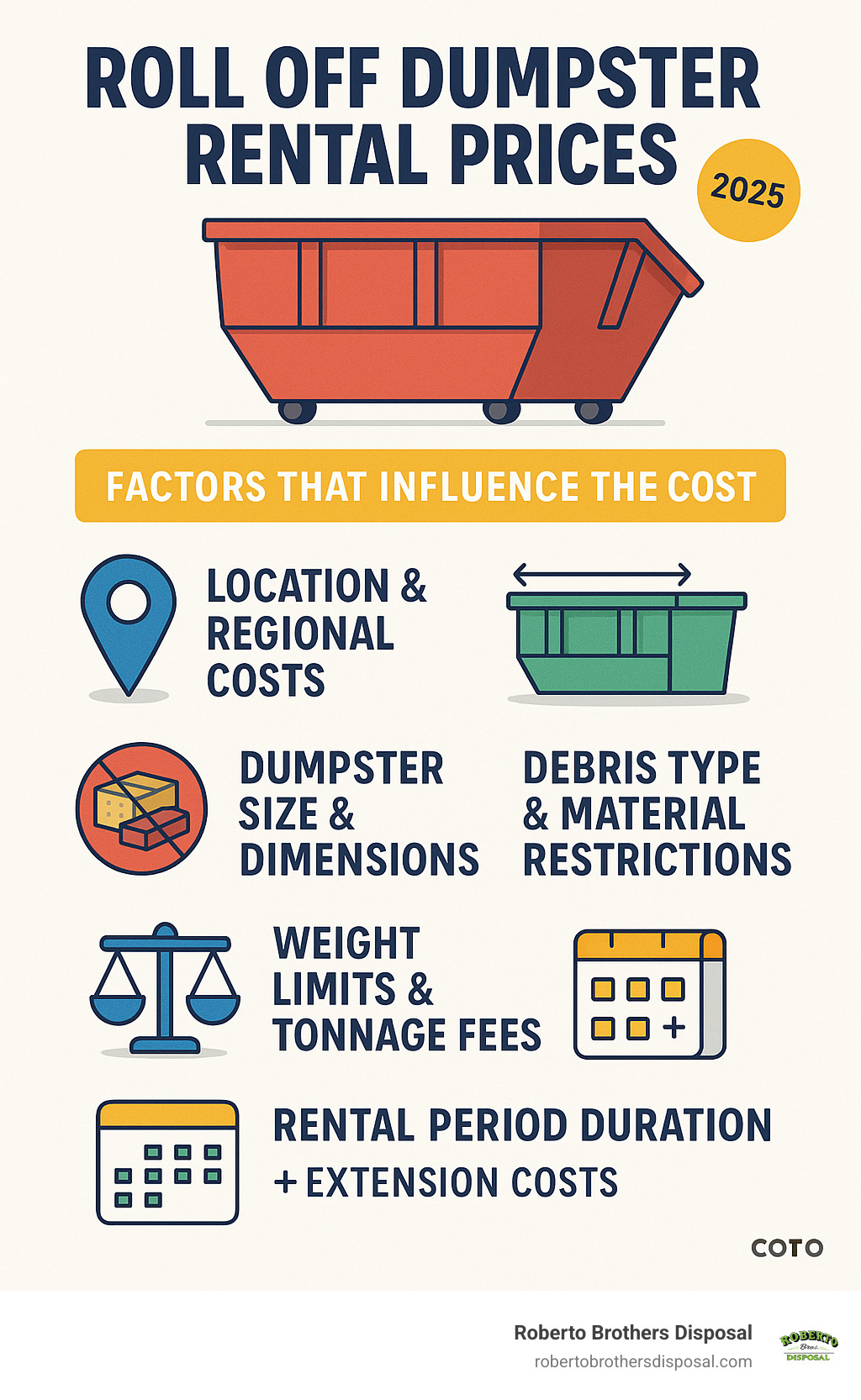
Whether you’re tackling a bathroom remodel, clearing out your garage, or managing construction debris, understanding dumpster rental pricing helps you budget accurately and avoid surprise charges. The cost depends on five main factors: your location, the size you need, what type of debris you’re disposing of, how much it weighs, and how long you need the dumpster.
Many homeowners get caught off guard by additional fees they didn’t expect. Weight overage charges can add $75-$100 per ton to your bill. Trip fees might apply if your dumpster isn’t accessible for pickup. And certain materials like mattresses, electronics, or tires often come with special disposal surcharges.
The good news? Most of these costs are predictable once you know what to look for. Some companies offer transparent, all-inclusive pricing that bundles everything upfront, while others use variable pricing that can leave you guessing about your final total.
The Core Factors That Determine Roll Off Dumpster Rental Prices
When you’re trying to understand roll off dumpster rental prices, it helps to know that every quote is built from five main ingredients. Just like baking a cake, each ingredient affects the final result – and missing one can lead to some unpleasant surprises.
Think of it this way: you wouldn’t expect to pay the same price for a pizza delivered across town as one delivered next door, right? The same logic applies to dumpster rentals. Your location, the size you need, what you’re tossing, how much it weighs, and how long you keep it all work together to create your final price.
The tricky part is that these factors don’t just add up – they multiply each other’s effects. A heavy load in a remote location during peak season? That’s going to cost more than light household junk delivered locally in the middle of winter.
Location, Location, Location: How Geography Affects Your Quote
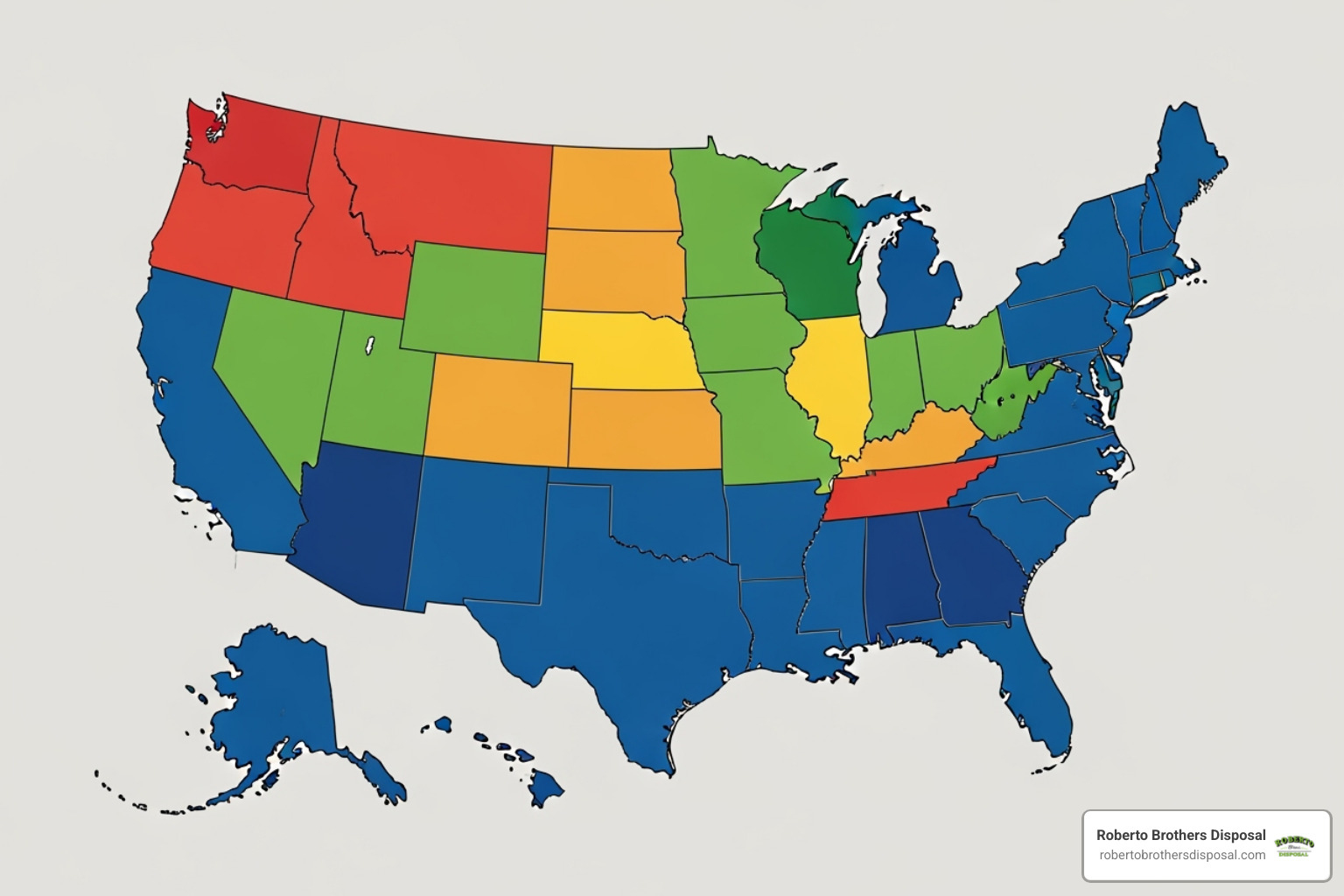
Your zip code might be the biggest factor in your dumpster rental cost – and it’s the one thing you can’t change. We’ve seen identical projects cost $200 more just because they’re in different towns. Here’s what’s really happening behind the scenes.
Local disposal fees vary wildly from place to place. Some landfills charge $40 per ton, while others hit you with $100 or more. These aren’t fees we control – they’re set by the facilities where your debris ends up, and they get passed directly to you.
Fuel costs add up faster than you might think. Every mile between our yard, your driveway, and the disposal facility costs money. If you’re in a rural area, you’ll typically pay more than someone in town with a landfill nearby.
Regional demand creates its own pricing pressure. During spring cleaning season or peak construction months, everyone wants a dumpster at the same time. When supply gets tight, prices naturally go up. We’ve noticed this especially during summer months in Massachusetts and Southern New Hampshire.
Proximity to landfills makes a huge difference in your final cost. The closer you are to where your debris gets processed, the less you’ll pay for transportation. That extra fuel and driver time for remote locations really adds up.
Municipal regulations can also bump up your bill. Some cities have stricter environmental requirements or additional fees that get factored into every quote. These local rules can add anywhere from $25 to $75 to your total cost.
The Size of the Job: How Dumpster Dimensions Impact Cost
Picking the right dumpster size is like choosing the right moving truck – too small and you’ll need two trips, too big and you’re paying for space you don’t use. Here’s how our most popular sizes stack up for different projects.
Our 10 Yard Dumpster measures 3.25′ tall x 7.25′ wide x 12′ long, making it perfect for small bathroom remodels or garage cleanouts. It holds about what you’d fit in 3-4 pickup truck loads and typically runs $250-$690.
The 15 Yard Dumpster at 4′ tall x 7.25′ wide x 14′ long handles medium projects like kitchen renovations or small deck demolitions. You can fit 4-6 pickup truck loads worth of debris, and it averages $307-$724.
Our most popular choice is the 20 Yard Dumpster, measuring 5.5′ tall x 7.25′ wide x 14′ long. This workhorse tackles whole-home cleanouts, large renovations, and roofing jobs. It holds 6-8 pickup truck loads and costs $315-$773 on average.
For bigger projects, our 28 Yard Dumpster at 6′ tall x 7.25′ wide x 17′ long handles major construction work and commercial jobs. It fits 10-12 pickup truck loads and ranges from $450-$950.
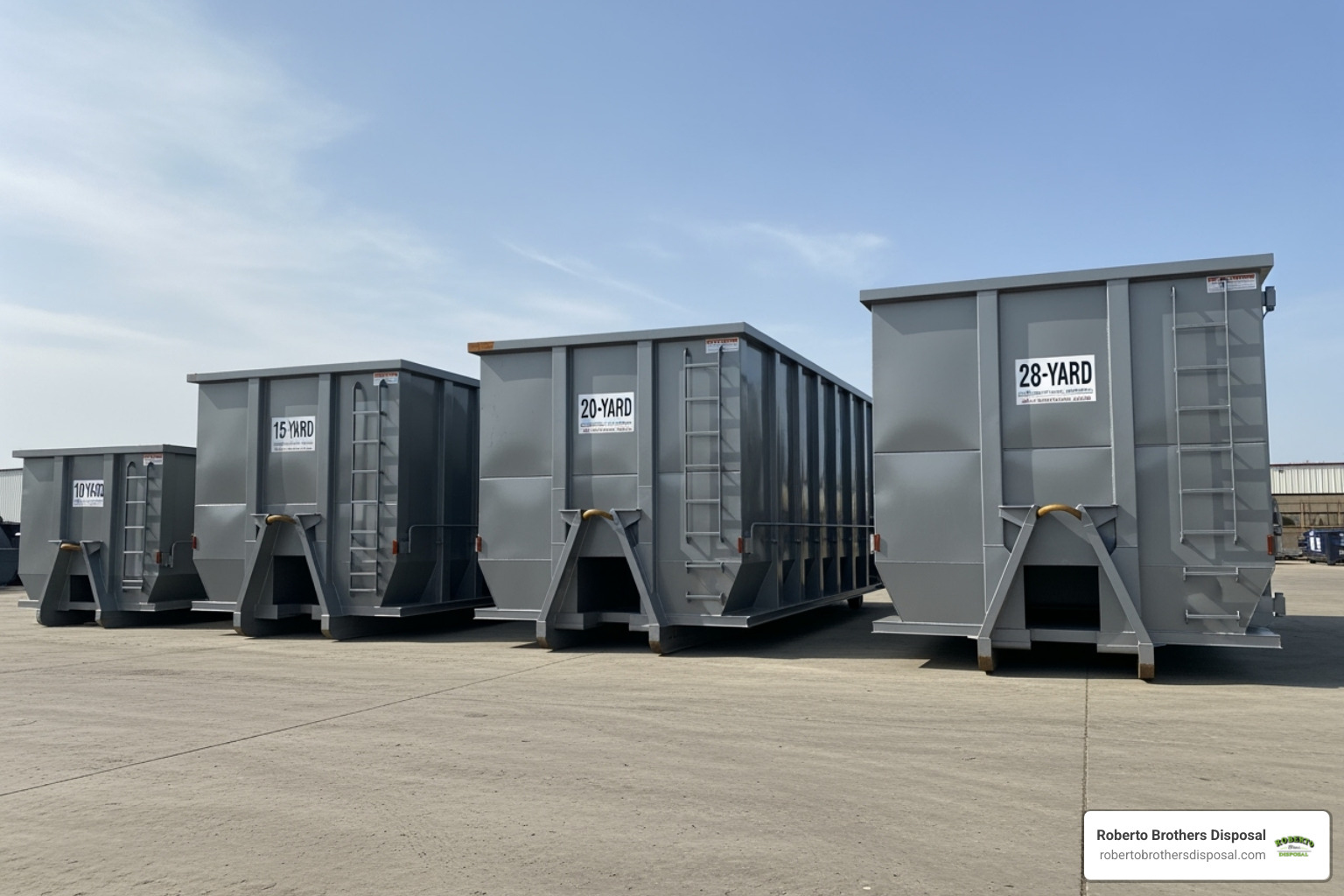
Here’s something interesting: dumpster pricing doesn’t always follow a straight line. Sometimes the difference between a 15-yard and 20-yard dumpster is only $50-$80. If you’re on the fence about size, the bigger option often gives you better value and peace of mind.
What’s Inside Matters: Debris Type and Weight Limits
What you’re throwing away can impact your bill more than the dumpster size itself. We’ve seen customers get shocked by extra fees simply because they didn’t realize how disposal costs vary by material type.
Household junk like furniture, clothing, and general clutter is usually the most affordable to dispose of. These materials are easy to process and don’t require special handling, keeping your costs predictable.
Construction debris including drywall, lumber, and roofing materials falls into a middle category. While generally acceptable, these materials can be heavier than household items, potentially pushing you over weight limits.
Yard waste like grass clippings and branches is typically fine, but watch out for dirt and soil. These materials are deceptively heavy and can quickly blow past weight allowances.
Heavy materials like concrete, asphalt, and brick are the real budget busters. A 10-yard dumpster filled with concrete can weigh 10-15 tons, far exceeding typical weight limits of 2-3 tons.
Most dumpsters come with weight limits ranging from 1-4 tons depending on size. Exceed these limits and you’ll face overage fees of $75-$100+ per additional ton. We’ve seen customers get hit with $300+ in surprise charges because they didn’t realize how heavy their debris was.
Here’s a quick weight reference to help you plan: household junk weighs about 300-400 pounds per cubic yard, construction debris runs 500-800 pounds per cubic yard, and dirt or concrete can hit 2,000-3,000 pounds per cubic yard.
The Rental Clock: How Long You Need the Dumpster
Time is money with dumpster rentals, but most standard rental periods of 7-10 days give you plenty of breathing room for typical projects. The key is planning your timeline to avoid unnecessary extension fees.
Standard rental periods typically include 7-10 days in the base price. This gives you time to complete your project without rushing, including a weekend if you need it for family help.
Daily extension fees usually run $5-$25 per day, which sounds reasonable until you realize a two-week extension can add $70-$350 to your bill. If you know you’ll need extra time, it’s worth discussing longer rental options upfront.
Scheduling pickup requires some coordination on your end. Some companies charge trip fees if you’re not ready when the truck arrives. Clear communication about your timeline helps avoid these $50-$100 charges.
Project timeline planning can save you money. Starting a renovation on a Wednesday might mean paying for weekend days when you’re not actively working. Consider delivery timing to maximize your included rental period.
For more detailed project planning advice, check out how to budget for home renovations to ensure your dumpster rental aligns with your overall project schedule.
Beyond the Base Price: Uncovering Potential Additional Fees
The base dumpster rental price is just the starting point. Additional fees can add 20-50% to your final bill if you’re not prepared. We believe in transparency, so let’s break down the most common surcharges you might encounter.
Common Surcharges to Watch For
Overage Fees: The most common surprise charge, overage fees kick in when your debris exceeds the included weight limit. At $75-$100+ per ton, these can quickly add up. A typical overage scenario might add $150-$300 to your bill.
Trip Fees: If we arrive for delivery or pickup and can’t access your dumpster due to blocked driveways, parked cars, or other obstacles, you’ll face a trip fee of $50-$100. This also applies if your dumpster isn’t ready for pickup on the scheduled date.
Late Payment Fees: Most companies charge 1.5-3% monthly interest on overdue balances. While this might seem minor, it can add up over time.
Cancellation Fees: Need to cancel your rental? Depending on timing, you might face fees ranging from $25-$100. Last-minute cancellations typically cost more than those made with advance notice.
Dig-Out Fees: If debris gets stuck in your dumpster (frozen materials in winter, or tightly packed items), landfills may charge dig-out fees of $50-$200 to remove the contents.
Relocation Fees: Need your dumpster moved once it’s placed? Relocation fees typically run $75-$150, depending on the distance and complexity of the move.
The Permit Puzzle: Do You Need One and What Does It Cost?
Permit requirements catch many homeowners off guard. Whether you need a permit depends entirely on where you plan to place your dumpster.
Driveway Placement: If the dumpster fits entirely on your private property (driveway, yard, etc.), you typically don’t need a permit. This is the most common and cost-effective option.
Public Property Placement: Planning to put your dumpster on the street, sidewalk, or any public property? You’ll need a permit from your local municipality. These permits typically cost $10-$100 and can take 1-3 business days to process.
Homeowner’s Responsibility: Most dumpster rental companies don’t handle permit applications for you. It’s your responsibility to contact your local city or town hall to determine requirements and obtain necessary permits.
Municipal Variations: Permit requirements vary significantly by location. Some towns in Massachusetts require permits for any dumpster placement, while others only require them for public property. Always check with your local municipality before scheduling delivery.
Prohibited Items: What You Can’t Toss in the Bin
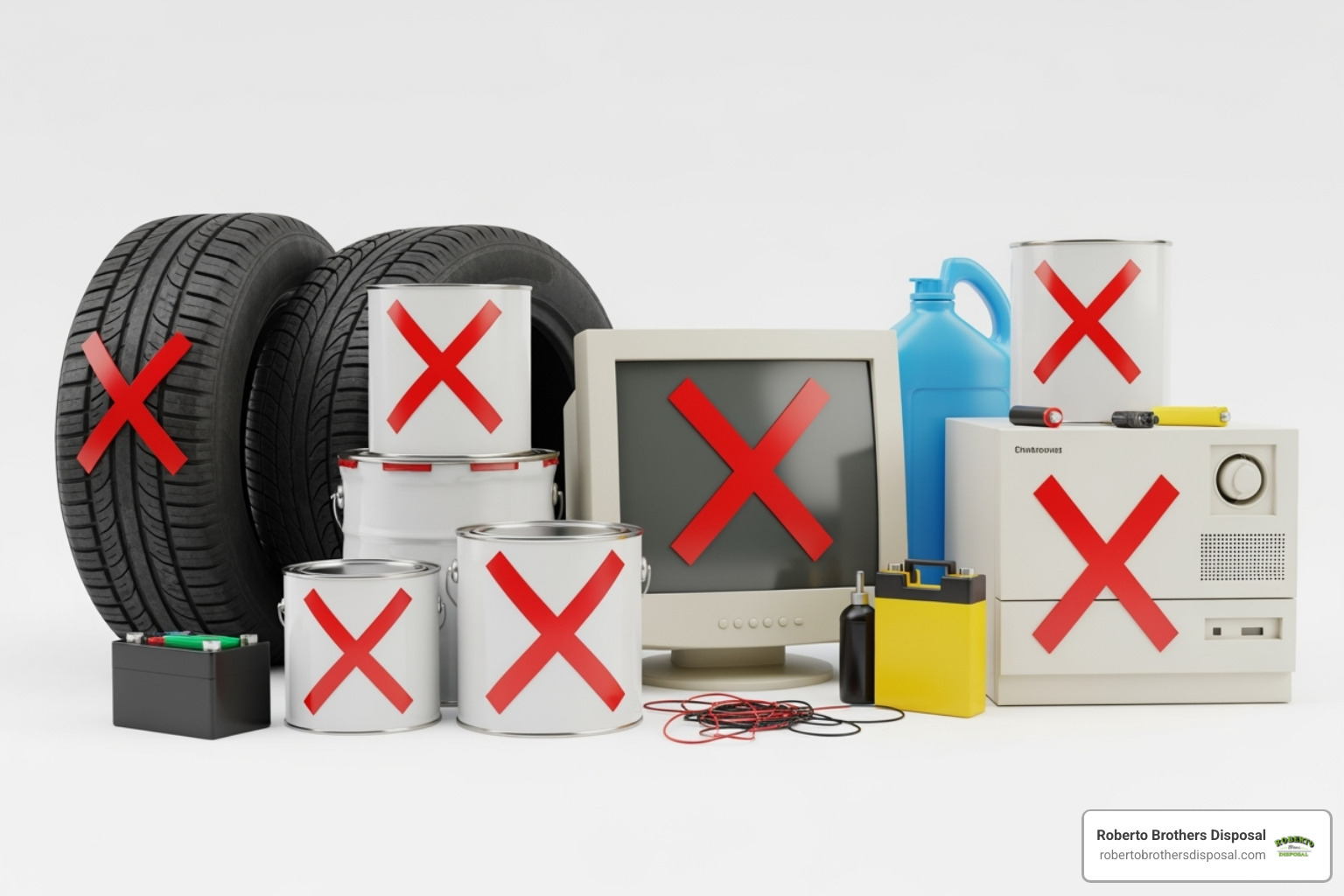
Certain materials are prohibited from standard dumpster disposal due to environmental regulations, safety concerns, or special processing requirements. Disposing of prohibited items can result in fines of $100-$500 per item.
Common Prohibited Items:
- Hazardous waste (chemicals, pesticides, cleaning products)
- Paint and paint cans (unless completely empty)
- Automotive fluids (oil, gasoline, antifreeze)
- Batteries (car batteries, household batteries)
- Tires (some companies accept these for an additional fee)
- Asbestos-containing materials
- Flammable liquids and gases
- Appliances containing Freon (refrigerators, air conditioners)
- Electronics (TVs, computers, monitors)
- Medical waste
Special Disposal Requirements: Many of these items require special handling and disposal at designated facilities. For guidance on proper disposal methods, check out the EPA’s guide for disposing of household hazardous waste.
Additional Fees for Acceptable Items: Some items are acceptable but come with surcharges:
- Mattresses: $10-$25 each
- Appliances: $25-$85 each
- Tires: $10-$15 each
- Electronics: $25-$65 each
Understanding Your Quote: Flat-Rate vs. Variable Pricing
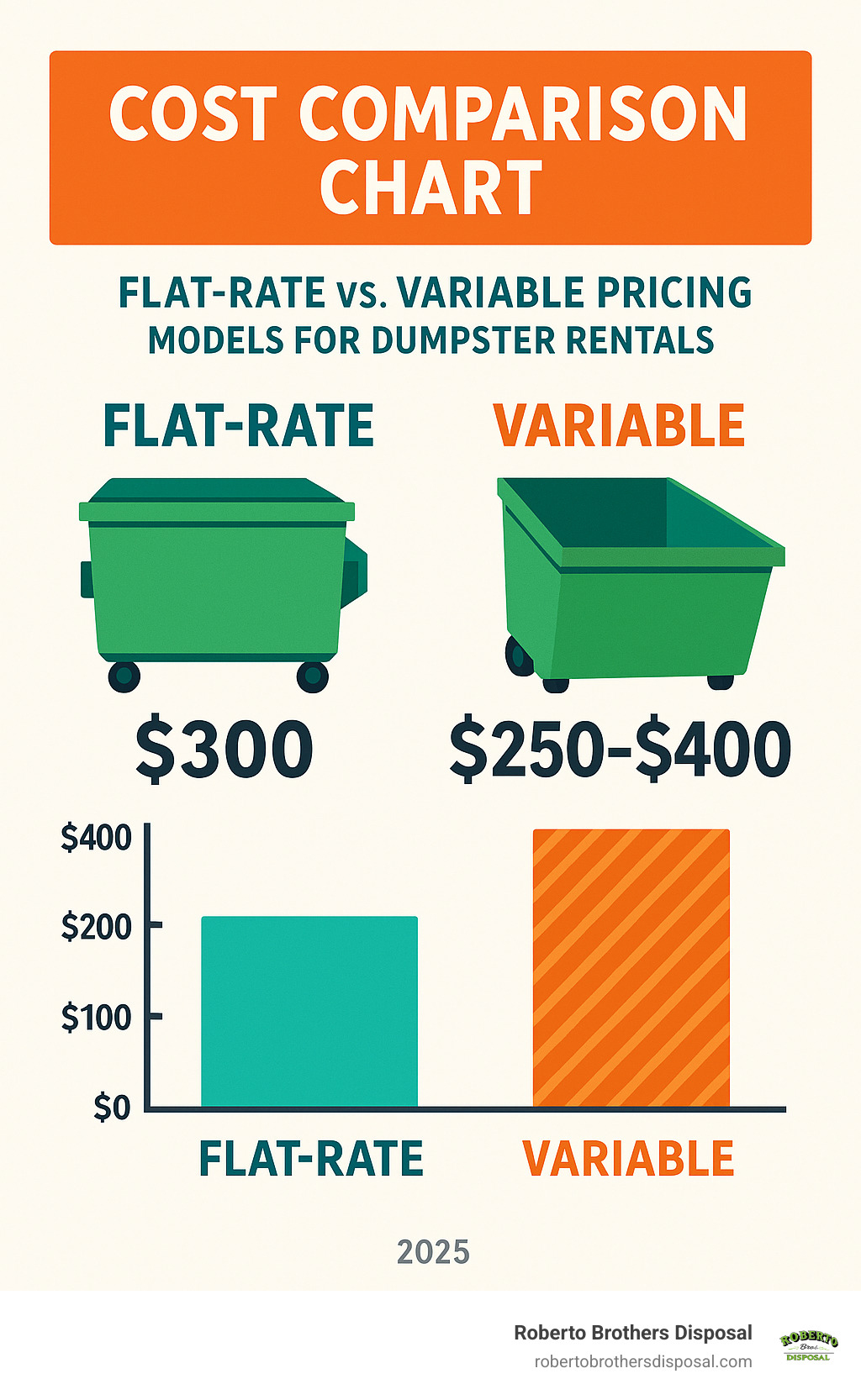
When comparing dumpster rental quotes, you’ll encounter two main pricing models: flat-rate and variable pricing. Understanding the difference can save you hundreds of dollars and prevent billing surprises.
What to Expect from Flat-Rate Pricing
Flat-rate pricing bundles all costs into one upfront price. Here’s what’s typically included:
Delivery: Transportation of the dumpster to your location, including fuel costs and driver time.
Pickup: Scheduled removal of the dumpster and hauling to the disposal facility.
Rental Period: Usually 7-10 days of rental time without additional daily charges.
Weight Allowance: A specified weight limit (typically 1-4 tons depending on dumpster size) with no additional charges if you stay within limits.
Landfill Fees: All disposal costs at the landfill or transfer station.
Bundled Cost Benefits: Flat-rate pricing makes budgeting easier because you know your total cost upfront. There’s no guessing about final weight or surprise disposal fees.
The main advantage of flat-rate pricing is predictability. You know exactly what you’ll pay before the dumpster arrives, making it easier to budget for your project.
How Variable-Rate Pricing Works
Variable-rate pricing starts with a lower base rate but adds charges based on actual usage:
Lower Base Rate: The initial quote might seem attractive because it only covers delivery, pickup, and rental time.
Separate Charges: Disposal fees, weight charges, and landfill costs are billed separately based on actual usage.
Final Weight Calculation: Your dumpster gets weighed at the disposal facility, and you’re charged based on actual tonnage.
Potential for Surprises: Final bills can be significantly higher than initial quotes if your debris is heavier than expected.
Itemized Billing: You’ll receive detailed breakdowns of all charges, but the total might be hard to predict in advance.
Variable pricing can work well if you’re disposing of very light materials and stay well under weight limits. However, it requires more careful planning and debris estimation.
How to Choose the Right Dumpster and Get the Best Value
Smart planning keeps roll off dumpster rental prices in check. The idea is simple: rent once, fill once, and avoid paying for unused space. For extra pointers, visit our beginner tips.
A Quick Size Guide
| Project | Recommended Size |
|---|---|
| Small bathroom remodel | 10-15 yd³ |
| Garage clean-out | 15-20 yd³ |
| Kitchen renovation | 20-28 yd³ |
| Roofing (≈1,500 sq ft) | 20-28 yd³ |
| Whole-home clean-out | 28 yd³ |
| Large construction / multi-room gut | 28 yd³ |
Tip: When torn between two sizes, choose the larger one. The price jump is usually only $50-$80—far less than the cost and hassle of a second rental.
Simple Ways to Cut Costs
- Donate or sell usable items before the dumpster arrives.
- Break down furniture and lumber so every cubic foot counts.
- Keep debris level with the rim to avoid trip fees or a second bin.
- Split a dumpster (and the bill) with a neighbor tackling a similar project.
Sizing correctly and trimming waste up front is the fastest way to keep your project on budget.
Frequently Asked Questions About Roll Off Dumpster Rental Prices
After 20+ years serving Massachusetts and Southern New Hampshire, these are the pricing questions we hear most. For more details, see our FAQs page.
What is the average cost to rent a roll-off dumpster?
Nationwide, rentals run $250-$1,115, landing around $596 on average. In our service area:
- 10–15 yd³: $300-$600
- 20 yd³: $400-$700
- 28 yd³+: $500-$900
Location, debris weight, and peak seasons (spring–summer) can nudge your price up or down.
What is usually included in the quote?
A flat-rate quote from a reputable hauler should bundle:
- Delivery and pickup
- 7-10 day rental window
- Weight allowance (1-4 tons, size-dependent)
- Standard landfill or transfer-station fees
- All taxes and environmental surcharges
Confirm that weight and disposal charges are truly included—variable-rate quotes list them separately.
How do I avoid surprise fees?
- Track your weight allowance; overage is $75-$100+ per ton.
- Keep prohibited items out (batteries, paint, tires, appliances with Freon, etc.).
- Clear the drop-off spot; blocked access triggers $50-$100 trip fees.
- Fill only to the rim—overloaded containers can’t be transported.
- Be ready for pickup on the agreed date to dodge extra daily rental charges.
Work with a company that details every possible fee up front—transparency is the surest way to prevent sticker shock.
Conclusion: Making an Informed Decision for Your Project
Understanding roll off dumpster rental prices comes down to knowing what drives the costs and planning accordingly. Your location, the size you choose, what type of debris you’re disposing of, how much it weighs, and how long you need the dumpster – these five factors work together to determine your final bill.
The good news is that most surprise charges are completely avoidable with a little preparation. Weight overage fees hit hardest when homeowners underestimate how heavy their debris is. That pile of construction materials or yard waste can weigh much more than you’d expect. Prohibited items can also catch you off guard if you don’t ask about restrictions upfront.
We’ve learned over our 20+ years in business that the biggest frustration for customers isn’t the cost itself – it’s the surprise charges that show up after the fact. A $400 dumpster rental that turns into a $650 bill because of hidden fees feels like a bait-and-switch. That’s exactly why we believe in transparent, all-inclusive pricing that tells you everything upfront.
When you’re comparing quotes, don’t just look at the base price. Ask about weight limits, overage fees, prohibited items, and any potential surcharges. The cheapest initial quote often isn’t the best value if it doesn’t include everything you need.
At Roberto Brothers Disposal, we’ve built our reputation on treating customers like family. As a local business serving Massachusetts and Southern New Hampshire, we understand that every project is different. Whether you’re cleaning out your garage or managing a major renovation, we take the time to understand your specific needs and recommend the right solution.
Our eco-friendly disposal practices ensure that as much of your debris as possible gets recycled or disposed of responsibly. We’re not just hauling your waste away – we’re making sure it’s handled in a way that protects our local environment.
The difference between a good dumpster rental experience and a great one often comes down to the company you choose. Look for personalized service, clear communication, and a track record of satisfied customers in your area. A company that takes the time to explain your options and answer your questions upfront will save you headaches down the road.
Ready to move forward with your project? We’re here to help you choose the right dumpster size, understand all costs before you commit, and make sure your waste disposal goes smoothly from delivery to pickup. Request a Free Estimate for your project today! and find why so many of our customers come back to us for their next project.