

Understanding What You’ll Pay for Concrete Disposal
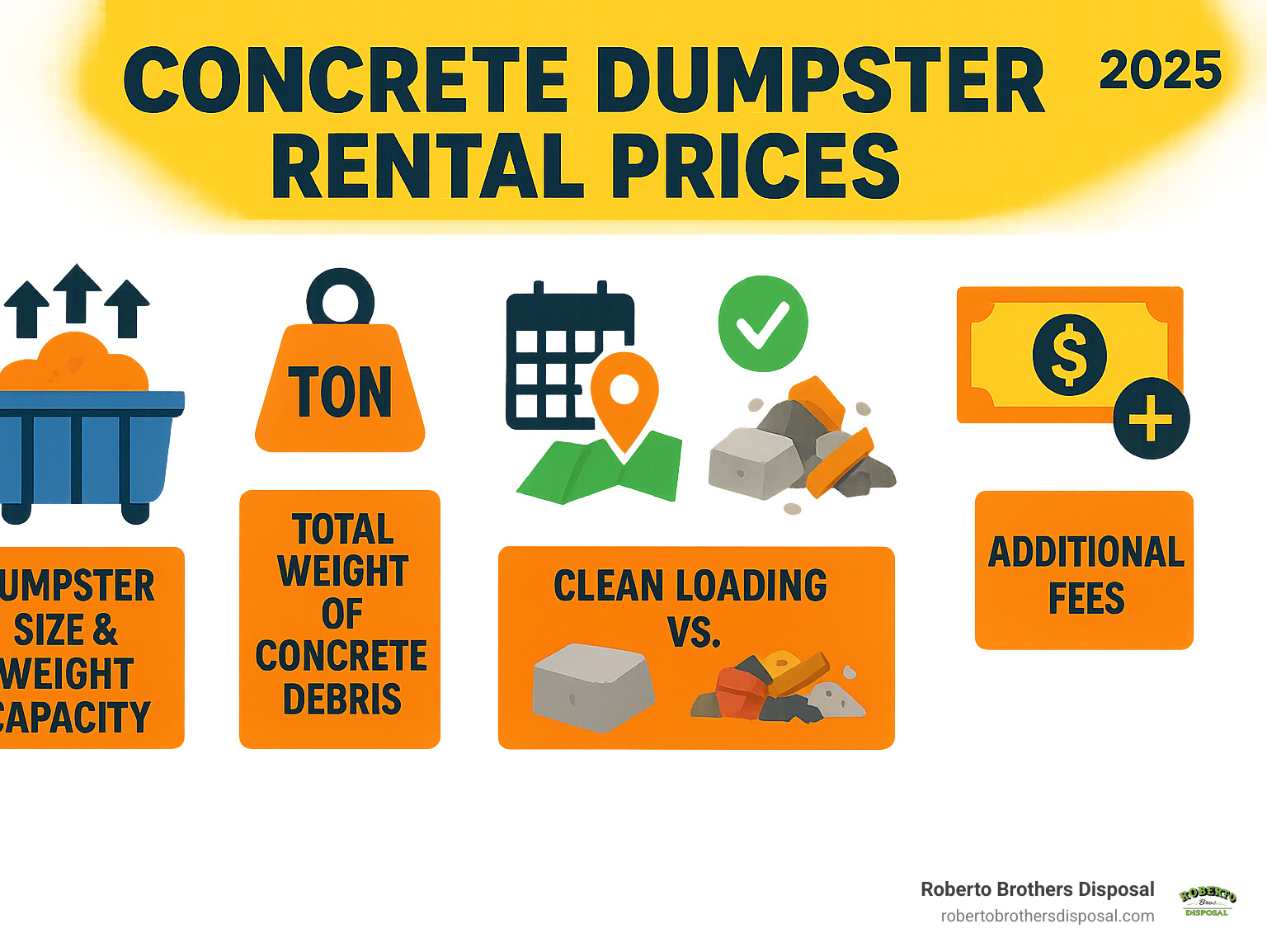
Concrete dumpster rental prices typically range from $300 to $795 for a 10-yard dumpster. The final cost depends on your location, debris weight, and rental duration.
Quick Pricing Overview:
- Average Cost: $350-$450 for heavy debris dumpsters
- Weight Allowance: Usually 9,000-12,000 lbs included
- Overage Fees: $30-$100 per additional ton
- Concrete Weight: ~4,000 lbs per cubic yard (2 tons)
- Best Size: 10-yard dumpster for most concrete projects
When demolishing a driveway or patio, understanding rental costs upfront prevents surprises. Concrete is deceptively heavy—one cubic yard weighs as much as a small car.
The biggest factor affecting your bill is weight. A 10-yard dumpster filled halfway with concrete can exceed 20,000 pounds, which is why specialized pricing for concrete-only loads is common.
Most homeowners choose 10-yard dumpsters for concrete because they can handle the weight without exceeding road safety limits. With larger dumpsters, you’ll likely hit the weight limit long before you fill the container.
Smart planning saves money. Clean loading (concrete only) costs less than mixed debris, with some companies charging as little as $30 per ton for pure concrete versus $140 per ton for mixed waste.
Similar topics to concrete dumpster rental prices:
What Determines Your Final Concrete Dumpster Rental Price?
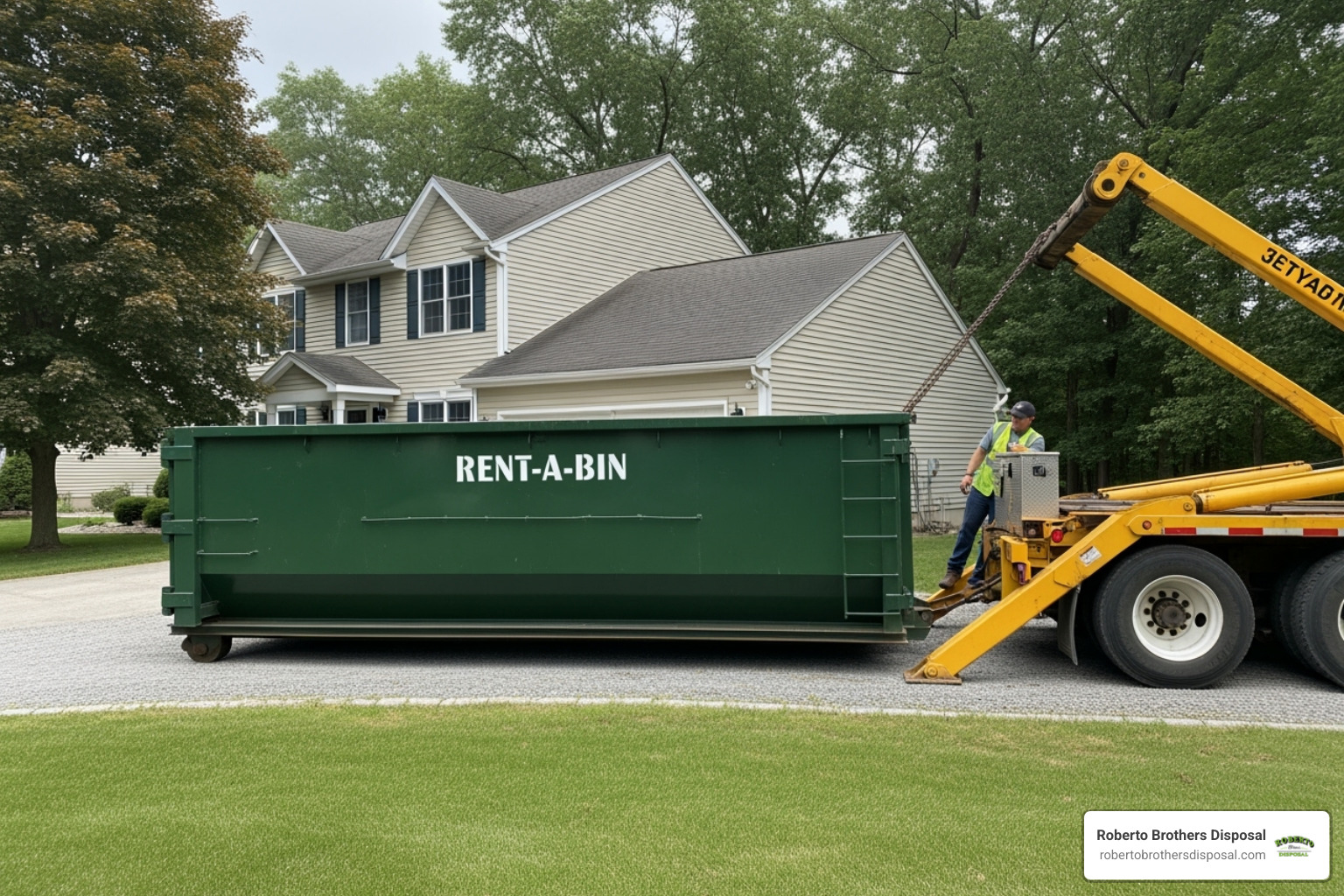
Several key factors determine your final concrete dumpster rental prices. Unlike typical waste, concrete’s unique properties directly impact your bill. Understanding these factors—the immense weight of concrete, your location, rental duration, and whether you mix debris—can save you from surprises.
Why Concrete’s Weight is the #1 Cost Factor
Concrete is incredibly heavy, weighing about 4,000 pounds per cubic yard. To put that in perspective, filling a 10-yard dumpster just halfway with concrete can exceed 20,000 pounds (10 tons).
This reality drives pricing. Disposal facilities charge by weight, and transportation is governed by strict DOT road weight limits. Our rental agreements include a generous weight allowance, but exceeding it results in overage fees, typically $30 to $100 per additional ton. These fees reflect the real costs of safe, legal disposal. A guide to concrete weight can help you estimate your load before you start.
Choosing the Right Dumpster Size for Heavy Debris
Bigger isn’t always better with concrete. The goal is to balance capacity with weight limits.
A 10-yard dumpster (3.25′ tall x 7.25′ wide x 12′ long) is the best choice for most concrete projects. It’s designed to handle heavy loads without exceeding legal road limits.
While our 15-yard dumpster (4′ tall x 7.25′ wide x 14′ long) offers more space, you’ll hit the same weight limit with pure concrete. It’s better suited for mixed loads with lighter materials. The 20-yard (5.5′ tall x 7.25′ wide x 14′ long) and 28-yard (6′ tall x 7.25′ wide x 17′ long) dumpsters are ideal for bulky construction debris but are impractical for concrete-only loads, as you’d exceed the weight limit with only a fraction of the space filled.
For a full comparison, see our Dumpster Rental Sizes Guide.
How Location and Rental Period Affect Concrete Dumpster Rental Prices
Your location in Massachusetts (including Essex, Middlesex, and Worcester Counties) or Southern New Hampshire significantly impacts concrete dumpster rental prices.
- Local landfill fees are a primary factor, as tipping fees vary by facility.
- Fuel costs for delivery and hauling from our Ayer, MA base are also factored in.
- Regional demand can influence pricing in busy construction areas.
Most rentals include a standard 7-10 day period. If you need more time, daily extension fees apply. Planning your timeline helps avoid these extra charges.
The Financial Benefits of ‘Clean Loading’ Your Dumpster
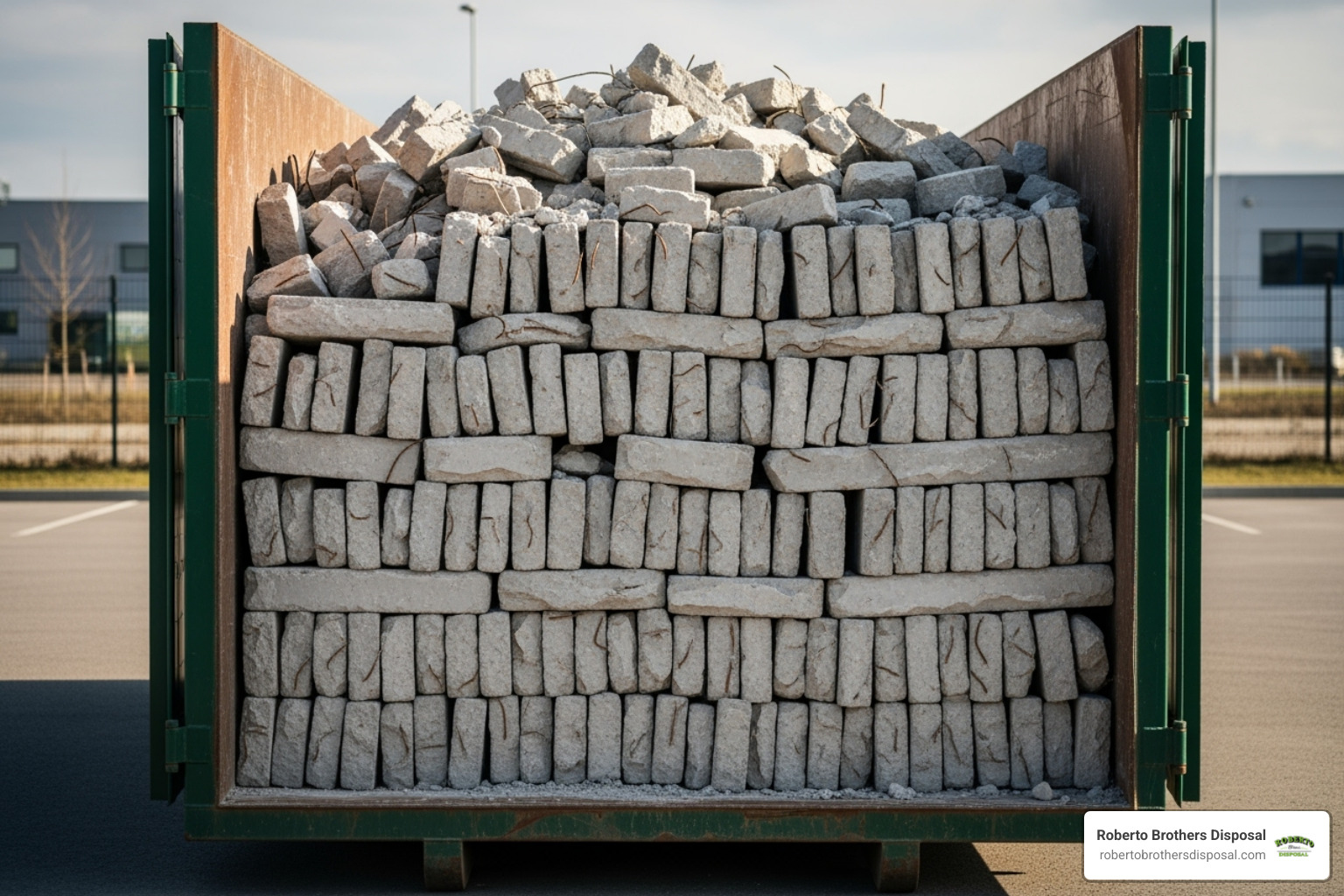
The easiest way to save money is to keep your load clean. Concrete-only loads are sent to recycling facilities, which have much lower disposal fees—sometimes as low as $30 per ton compared to $140 per ton for mixed waste.
This recycling potential is not only cost-effective but also environmentally friendly, turning old concrete into aggregate for new projects. Most importantly, clean loading helps you avoid contamination fees, which are charged when prohibited items are mixed in, reclassifying the entire load as more expensive mixed waste.
Avoiding Hidden Costs: Potential Surcharges and Fees
No one likes surprise bills. While we practice transparent pricing, it’s important to know about potential surcharges to keep your concrete dumpster rental prices on budget.
Here are common fees and how to avoid them:
- Overage Fees: Charged per ton if your debris exceeds the weight allowance in your agreement. Accurately estimating your concrete’s weight is the best way to avoid this.
- Contamination Fees: Incurred if you mix unallowed materials (like trash or wood) into a concrete-only dumpster. This fee covers the higher disposal cost of mixed waste.
- Trip Fees: Applied if our driver cannot deliver or pick up the dumpster due to blocked access, an overfilled container, or an unprepared site.
- Extension Fees: If you need the dumpster longer than the standard rental period, we can arrange an extension for a daily rate. Please call us to schedule this to avoid higher late fees.
- Cancellation Fees: A fee may apply if you cancel a rental with less than 24 hours’ notice to cover scheduling costs.
- Permit Costs: Placing a dumpster on public property (like a street) requires a permit from your local municipality. You are responsible for securing and paying for this permit before delivery. Failure to do so can result in fines or a trip fee.
We outline all potential fees in our quotes to ensure your concrete dumpster rental prices are predictable. For more details, see our guide on dumpster rental costs.
The Smart Way to Dispose of Concrete
Disposing of concrete can be done in a way that benefits your wallet and the environment. At Roberto Brothers Disposal, we champion eco-friendly solutions, including responsible concrete disposal.
Concrete Recycling: An Eco-Friendly and Cost-Effective Option
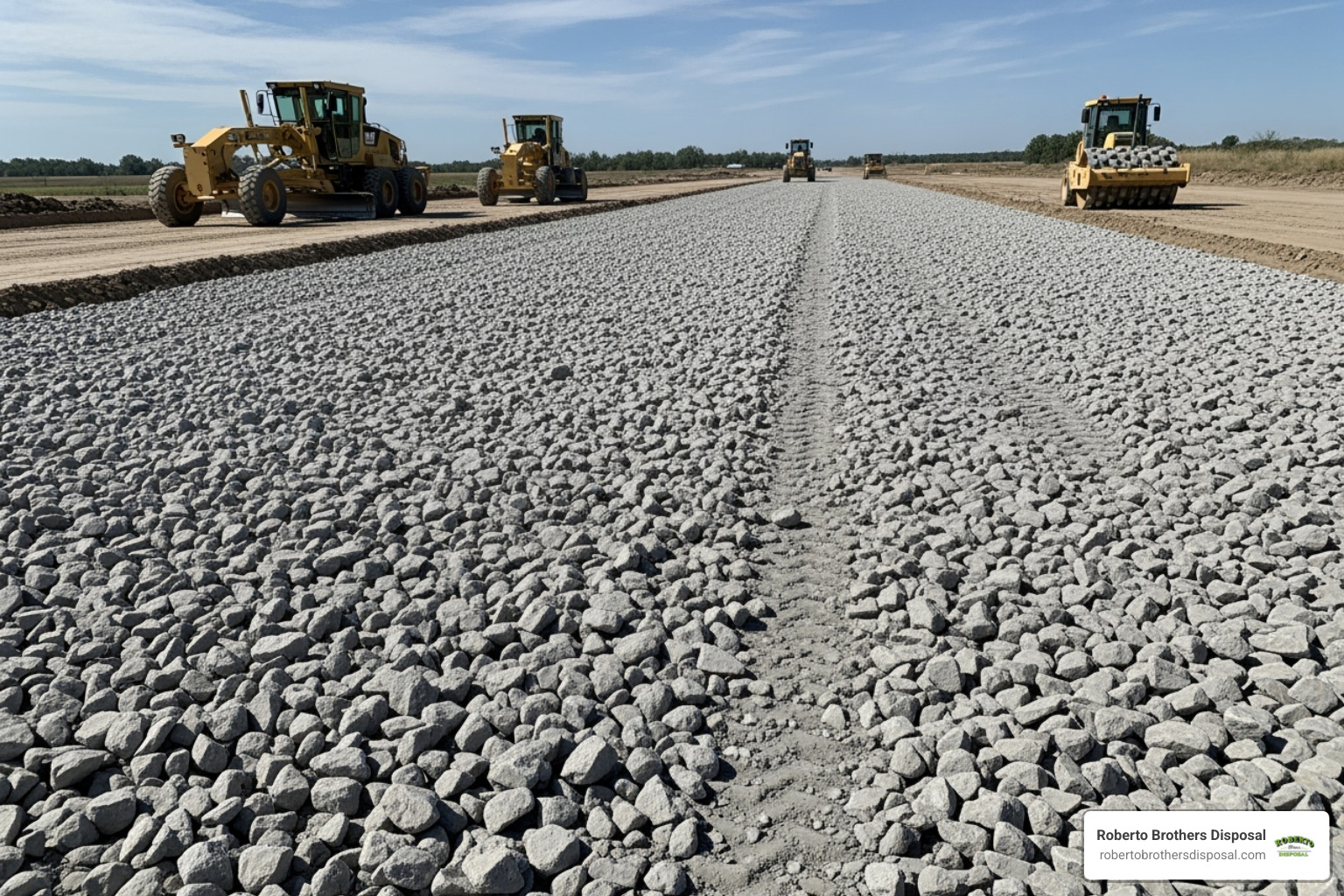
Concrete is highly recyclable. Instead of heading to a landfill, old concrete can be crushed and repurposed, which is great for the environment and your budget.
The process involves breaking down old concrete, removing contaminants like rebar, and crushing it into aggregate. This recycled material is used for:
- Road base for new highways
- A component in new concrete mixes
- Erosion control and landscaping
- Fill material for construction sites
Recycling saves you money because disposal facilities charge much less for clean, recyclable concrete. We pass these savings on to you, lowering your concrete dumpster rental prices. By recycling, you also help conserve natural resources and reduce landfill waste. You can learn more about the benefits from the EPA’s guide to sustainable management of construction and demolition materials.
Prohibited Items: What NOT to Put in a Concrete Dumpster
To ensure a smooth rental without extra costs, it’s crucial to know what not to put in a concrete-only dumpster. Adding prohibited items can lead to fees or service refusal.
Keep these materials out of your concrete dumpster:
- General Trash: No household garbage, furniture, or appliances.
- Yard Waste: No leaves, branches, grass, or soil.
- Hazardous Waste: Absolutely no chemicals, paints, oils, solvents, or pesticides. These require special disposal. Learn more from the EPA’s basics of hazardous waste.
- Asbestos: This material is strictly forbidden and requires specialized abatement and disposal services.
- Other Prohibited Items: Tires, batteries, and any kind of liquid waste (including wet concrete slurry) are not allowed.
If you’re unsure about an item, just ask us! For a complete list of what can go in a general dumpster, see our guide on What Can You Put in a Dumpster?.
How to Get an Accurate Quote and the Best Price
Getting an accurate quote for concrete dumpster rental prices is key to managing your budget. At Roberto Brothers Disposal, we value clear communication. Providing us with key project details helps us give you the most precise and affordable estimate.
Step 1: Accurately Estimate Your Debris Volume
Since concrete’s weight is the primary cost driver, estimating your debris volume is crucial. You don’t need to be exact, but knowing the approximate size of the concrete you’re removing helps us provide an accurate quote.
One cubic yard of concrete weighs about 4,000 pounds (2 tons). Here are some common project estimates:
| Project Description | Dimensions (L x W x D) | Approximate Cubic Yards (CY) | Approximate Weight (Tons) |
|---|---|---|---|
| Single-Car Driveway | 40 ft x 10 ft x 4 in. | 5 CY | 10 Tons |
| Double-Car Driveway | 40 ft x 20 ft x 4 in. | 10 CY | 20 Tons |
| Patio | 15 ft x 10 ft x 4 in. | 2 CY | 4 Tons |
| Pathway or Sidewalk | 20 ft x 3 ft x 4 in. | 0.74 CY | 1.48 Tons |
Note: These are estimates. Actual weight can vary based on concrete type and rebar content.
These numbers help us recommend the right dumpster and weight allowance, minimizing the risk of overage fees. For example, a single-car driveway (10 tons) fits within the weight limit of one 10-yard dumpster. A double-car driveway (20 tons) would require two separate 10-yard dumpster rentals to comply with road safety limits.
Step 2: Key Questions to Ask for Transparent Concrete Dumpster Rental Prices
When you call for a quote, asking the right questions ensures you get a complete picture of the costs. We are always happy to provide clear answers.
- Is the quote a flat rate? A flat rate typically includes delivery, pickup, a set rental period, and a weight allowance, making your final cost predictable.
- What is the included tonnage for concrete? Confirming the weight limit is the best way to avoid overage fees.
- What is the overage cost per ton? Know the charge for each ton over the allowance.
- What is the rental period and cost for extensions? Confirm the number of included days and the daily rate for extra time.
- Are there any other potential fees? Ask about charges for contamination, trip fees, or cancellations to avoid surprises.
- Do I need a permit? If placing the dumpster on a public street, you’ll likely need a permit from your town. Inquire about the process and potential costs.
Asking these questions will help you get a clear, all-inclusive quote for your concrete dumpster rental prices. For more tips, see our guide on How to Rent a Dumpster.
Frequently Asked Questions about Concrete Dumpster Rentals
We get many questions about concrete projects. Here are answers to some of the most common ones we hear about concrete dumpster rental prices and disposal.
What is the cheapest way to dispose of concrete?
The most cost-effective method is typically renting a specialized concrete dumpster and practicing ‘clean loading.’ While self-hauling might seem cheaper at a per-ton rate ($32-$40), it involves hidden costs like truck rental, fuel for multiple trips, and your own time. A junk removal service can cost over $550 for just two tons. Renting a 10-yard dumpster for clean concrete is often the best value because recyclable concrete has lower disposal fees, and we pass those savings to you. It’s the best balance of cost, convenience, and safety.
How much concrete can I put in a 10-yard dumpster?
This is about weight, not volume. A 10-yard dumpster can hold 10 cubic yards of material, but its capacity for concrete is limited by weight. Concrete weighs about 4,000 pounds (2 tons) per cubic yard. Our 10-yard dumpsters for concrete have a weight limit of around 10 tons (20,000 lbs). This means you can fit approximately 5 cubic yards of concrete before hitting the limit. The dumpster will only be about half full. Filling it more would exceed safe transport limits and result in overage fees. We always clarify the specific weight allowance in your rental agreement.
Can I mix concrete with other debris in my dumpster?
We strongly advise against mixing concrete with other debris. Here’s why:
- Higher Costs: Mixed loads are charged at a much higher per-ton rate than clean, recyclable concrete. You will also incur contamination fees, which will increase your concrete dumpster rental prices.
- Disposal Issues: Recycling facilities only accept pure concrete. A mixed load may be rejected or sent to a more expensive landfill.
- Weight Miscalculations: Mixing heavy concrete with light debris makes it difficult to estimate the total weight, increasing the risk of overage fees.
For the best price, use a dedicated dumpster for concrete. If you have multiple waste types, we can help you find the most efficient solution, which might involve renting separate dumpsters.
Conclusion
Navigating concrete dumpster rental prices is straightforward once you understand the key factors. The most important takeaway is that concrete’s weight dictates the cost. Choosing the right size—usually a 10-yard dumpster—and practicing “clean loading” are the best ways to keep your project on budget. By keeping concrete separate, you benefit from lower recycling rates and avoid contamination fees.
At Roberto Brothers Disposal, we make waste disposal simple and transparent. As a local, family-run business in Ayer, MA, with over 20 years of experience, we are dedicated to providing fast, affordable, and reliable service. We proudly serve customers across Middlesex, Worcester, and Essex Counties in Massachusetts, as well as Southern New Hampshire.
We believe in personalized service and clear communication, ensuring you get budget-friendly and eco-friendly solutions. Ready to tackle your concrete project with confidence?
Get a fast, affordable quote for your dumpster rental today!
