
Understanding Commercial Dumpster Rental Prices
Commercial dumpster rental prices can seem tricky. While costs vary, here’s a quick look at average monthly prices for common commercial dumpster sizes:
| Dumpster Size | Average Monthly Cost |
|---|---|
| 2 Cubic Yard | $100 – $200 |
| 4 Cubic Yard | $150 – $250 |
| 6 Cubic Yard | $200 – $300 |
| 8 Cubic Yard | $250 – $350 |
These averages help with budgeting, but your actual cost will depend on several key factors.
Businesses need reliable waste solutions with clear, upfront pricing to avoid hidden fees. This guide breaks down what affects your commercial dumpster cost to help you get the best value.
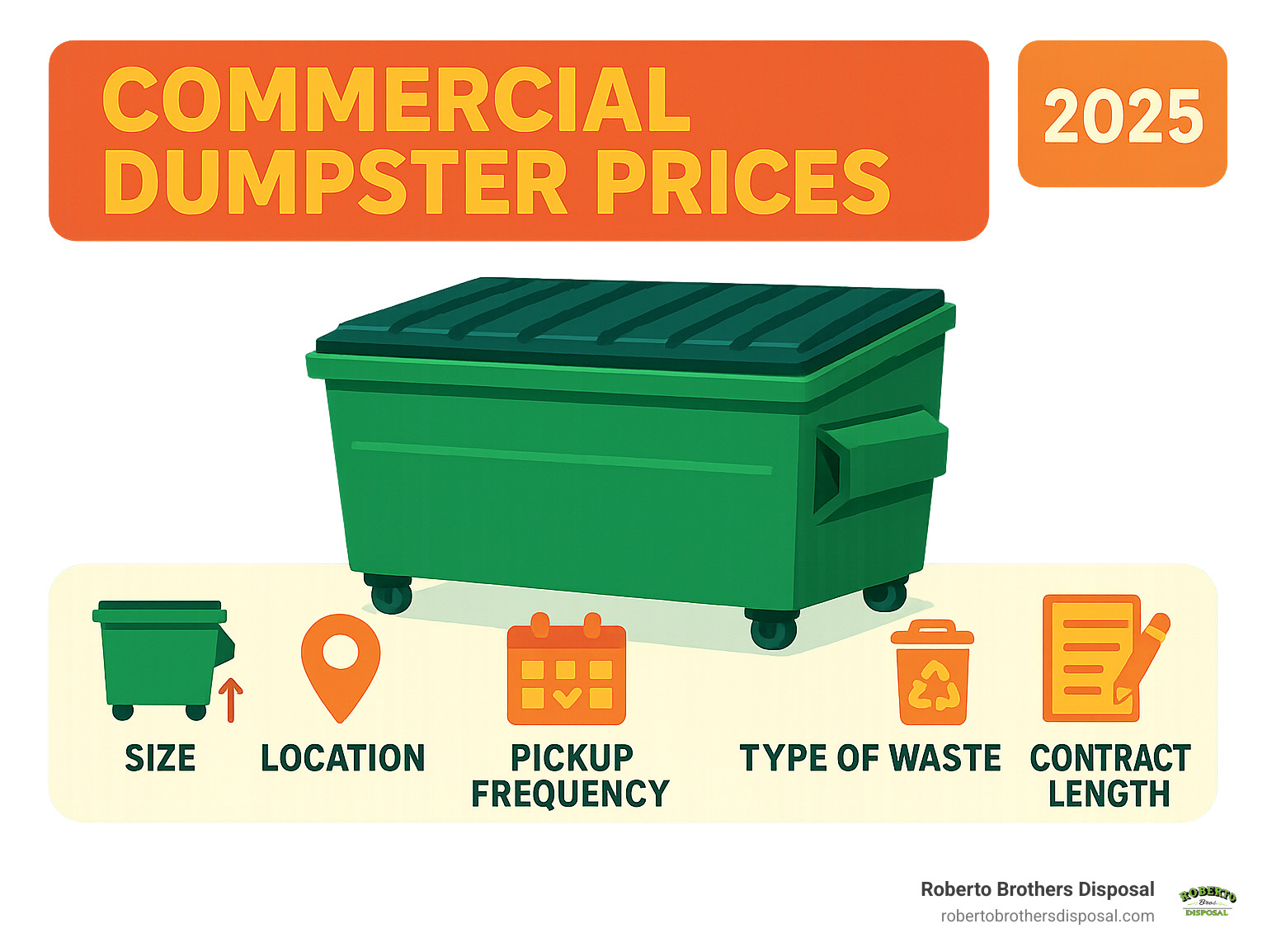
The average monthly cost for a commercial dumpster is about $175, but this is just a starting point. Monthly services can range from $90 to over $300. This wide range highlights why understanding the specifics is crucial for budget planning.
For a deeper dive into general dumpster rental costs, you can explore our detailed guide: Cost to Rent a Dumpster
Average Monthly Costs by Dumpster Size
Let’s break down the typical monthly costs for common commercial dumpster sizes. These are usually front-load containers for ongoing waste collection, often seen behind restaurants, retail stores, and office buildings.
| Dumpster Size | Average Monthly Price Range | Capacity (Approx. 32-Gallon Trash Bags) | Typical Business Users |
|---|---|---|---|
| 2 Cubic Yard | $100 – $200 | 40-60 bags | Small shops, cafes, very small offices, independent restaurants |
| 4 Cubic Yard | $150 – $250 | 80-100 bags | Medium-sized businesses (up to 100 employees), retail stores, small apartment complexes |
| 6 Cubic Yard | $200 – $300 | 120-150 bags | Schools, large apartment complexes, retail plazas, medium-to-large restaurants |
| 8 Cubic Yard | $250 – $350 | 160-200 bags | Shipping centers, large grocery stores, large office complexes (500+ employees) |
A 2-yard dumpster, the smallest option, averages around $130 a month, ideal for small businesses. A 4-yard dumpster is typically $130-$200, and a 6-yard option is usually $160-$225. A 10-yard commercial dumpster, often a temporary roll-off, could be $180-$250 monthly. These figures help you budget based on your waste volume.
How Location Impacts Average Prices
Your business’s location significantly impacts dumpster rental prices, which can vary dramatically between cities. Why the difference?
It boils down to several local economic factors:
- Local Disposal Fees: Landfills and recycling facilities charge “tipping fees” to accept waste, and these vary by municipality. Higher landfill costs lead to higher rental prices.
- Cost of Living and Labor: In regions with a higher cost of living, labor costs for drivers and staff are higher, which is reflected in the rental price.
- Fuel Surcharges: Fuel is a substantial overhead for waste haulers. Longer distances to disposal sites or higher local fuel prices will increase your bill. Our routes are designed for fuel-efficiency, but remote locations may incur higher transportation rates.
- Market Competition and Demand: Densely populated areas often have more competitive pricing. Conversely, areas with fewer providers or high demand can see higher prices. For instance, a temporary roll-off rental in a major city can be significantly higher than in a less competitive market.
- Regional Regulations: Some areas have stricter environmental regulations or waste management policies that can add to disposal costs or require specialized handling.
These factors create a unique pricing landscape for each location, so getting a localized quote is the best approach.
The Core Factors That Determine Your Final Bill
Beyond averages, your final commercial dumpster rental prices are a customized quote based on your specific needs. Understanding these key factors helps us create a service agreement that fits your operations and budget.
Choosing the Right Dumpster Size and Type
Commercial waste is mainly handled by two dumpster types: front-load containers and roll-off dumpsters, each serving a different business purpose.
-
Front-Load Dumpsters are what you see behind stores and restaurants, perfect for ongoing, everyday trash and recycling. They come in 2, 4, 6, or 8 cubic yard sizes and are picked up on a regular schedule. They’re great for businesses with consistent general waste.
-
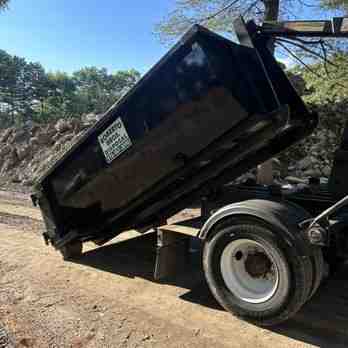
Roll-Off Dumpsters are often used for temporary, larger waste needs like big cleanouts, renovations, or manufacturing waste. These larger, open-top bins are delivered and then “rolled” off a truck, then picked up the same way when you’re done.
We offer various roll-off dumpster sizes for different commercial projects. Find more details on our Commercial Dumpster Sizes page or check these specific options: 10 Yard Dumpster, 15 Yard Dumpster, 20 Yard Dumpster, and 28 Yard Dumpster.
Here are the dimensions for our common roll-off dumpster sizes:
- 10 Yard Dumpster: 3.25′ tall x 7.25′ wide x 12′ long
- 15 Yard Dumpster: 4′ tall x 7.25′ wide x 14′ long
- 20 Yard Dumpster: 5.5′ tall x 7.25′ wide x 14′ long
- 28 Yard Dumpster: 6′ tall x 7.25′ wide x 17′ long
Choosing the right size is crucial. A dumpster that’s too small requires costly extra pickups, while one that’s too large means you’re paying for unused space. For example, one 20-yard dumpster is almost always cheaper than two 10-yard dumpsters. We can help you assess your waste volume to find the perfect fit.
The Role of Pickup Frequency
How often your dumpster is emptied directly affects your monthly bill. More frequent pickups mean higher costs but also ensure a cleaner, safer environment for your business.
Commercial trash service pickup options range from once a month to six days a week, depending on your waste output and type:
- Daily Pickups are a must for busy places like large restaurants or grocery stores to prevent odors and pests.
- Weekly Service is a popular choice for retail stores, medium-sized offices, and smaller restaurants.
- Bi-weekly or Monthly Service can work for businesses with low waste generation, like small offices.
While fewer pickups save money, an overflowing dumpster creates odors, attracts pests, and leaves a poor impression. If your dumpster constantly overflows, it may be cheaper to upgrade to a larger size rather than add pickups. We can help you find the right balance between cost and convenience.
How Waste Type and Weight Affect Commercial Dumpster Rental Prices
The type and weight of your trash are major factors in your commercial dumpster rental prices. Different materials have unique handling requirements and disposal fees.
- General Trash/Mixed Waste: Everyday business waste, like office paper or packaging, with standard disposal fees.
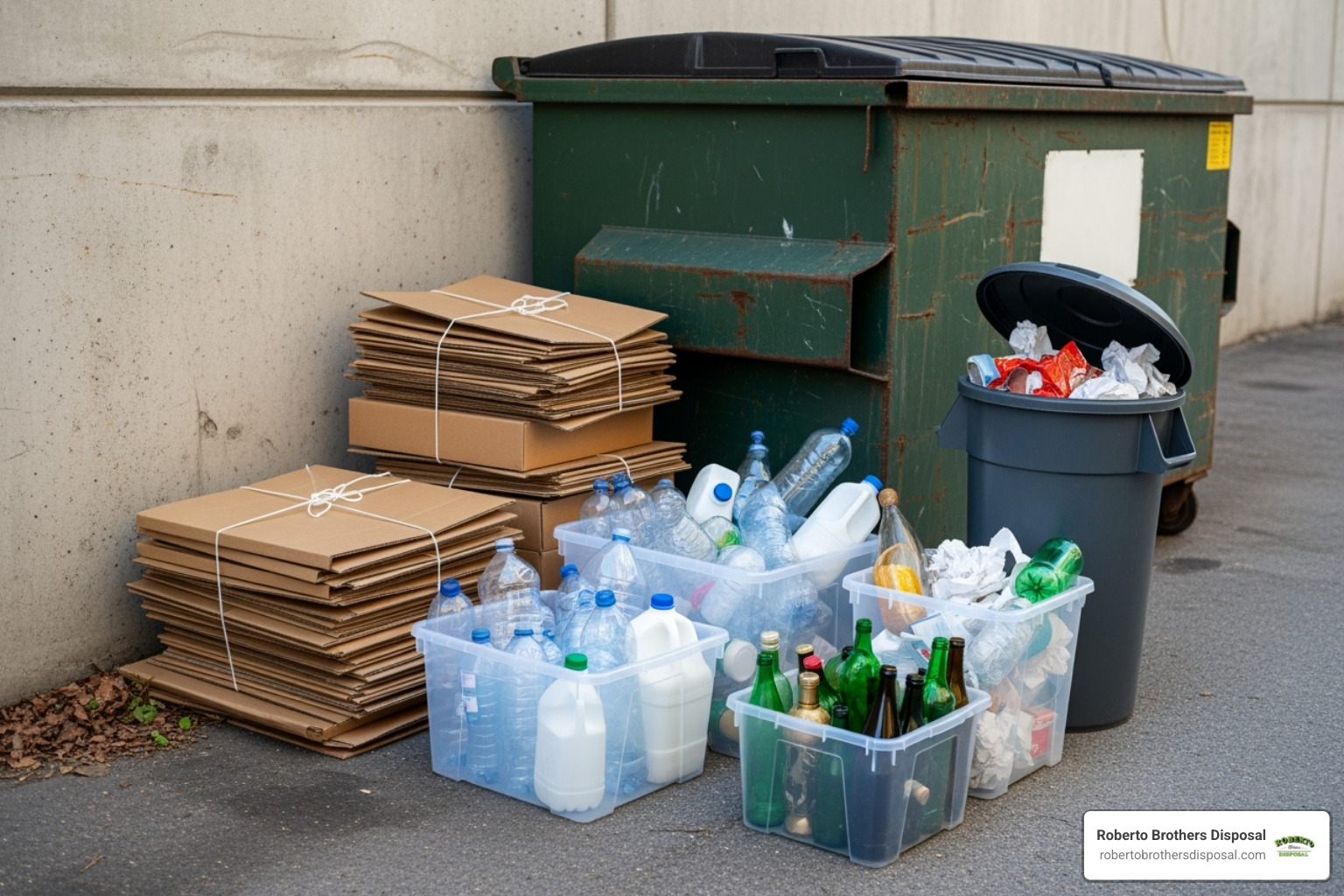
- Mixed Recycling: Separate containers for plastic, glass, and paper can save you money, as recyclables are often cheaper to dispose of.
- Cardboard-Only: A dedicated cardboard dumpster is usually the most budget-friendly recycling choice for businesses with high cardboard volume.
- Heavy Debris: Materials like concrete, brick, and dirt are dense. Their weight can quickly exceed limits, leading to higher costs. We offer special services for Construction Waste Disposal.
- Special or Prohibited Items: Items like mattresses, tires, electronics, and hazardous waste can’t go in regular dumpsters or cost extra for special handling. Landfills charge by weight, directly affecting your cost.
Laws prohibit hazardous, flammable, and toxic materials in general landfills. Always confirm with us what is allowed in your dumpster to avoid unexpected charges. Additionally, “clean-loading” a dumpster with a single material (like concrete or clean wood) can sometimes lead to discounted pricing because it simplifies recycling.
Decoding Your Quote: Pricing Models & Hidden Fees
Understanding the pricing model and potential hidden fees is key to managing your commercial dumpster rental prices. Carefully reading your service agreement and asking questions upfront can prevent surprises. Our FAQs page also answers common questions.
Flat-Rate vs. Variable-Rate Pricing Explained
Commercial dumpster service quotes typically use one of two pricing models:
- Flat-Rate Pricing: This is our preferred model for transparency. You get one all-inclusive price that bundles the container rental, delivery, pickup, a set weight allowance, and disposal fees. This makes budgeting predictable. Our flat-rate quotes are generally guaranteed for at least the first year, unless you change your service agreement.
- Variable-Rate Pricing: Also known as “dumpster + weight” pricing, this model has a base rental fee plus charges based on the actual weight of your waste. While it might seem fairer for fluctuating waste volumes, it can be harder to predict your exact cost.
We believe transparent, bundled pricing helps businesses budget more effectively without the stress of fluctuating costs.
Common Surcharges and How to Avoid Them
Even with transparent pricing, certain situations can lead to extra fees. Knowing these common surcharges and how to prevent them helps you avoid unexpected costs.
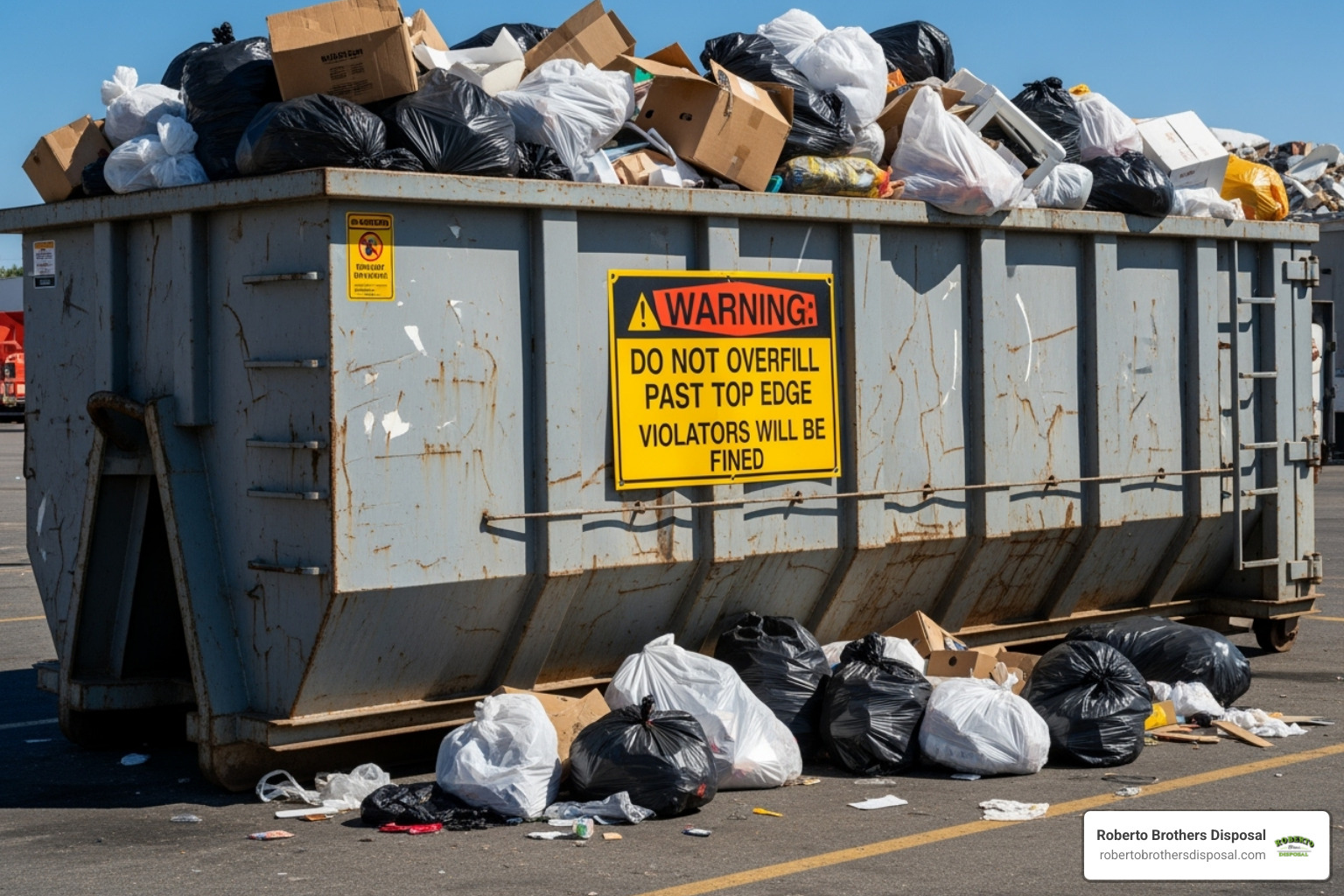
- Overage Fees: These occur if your waste exceeds the weight limit in your agreement.
- Prevention Tip: Accurately estimate your waste volume. If unsure, choose a slightly larger dumpster. Load the dumpster evenly and don’t fill past the fill line.
- Prohibited Item Fees/Contamination Charges: Placing unallowed items (like hazardous waste) can result in fines. Prohibited items may be returned to your property.
- Prevention Tip: Always confirm the list of accepted and prohibited items with us before filling the dumpster.
- Trip Fees/Blocked Container Fees: If our truck can’t access the dumpster due to obstructions (parked cars, locked gates), you may be charged a trip fee. Drivers cannot transport overloaded containers.
- Prevention Tip: Ensure the dumpster area is clear and accessible on pickup days.
- Cancellation Fees: Cancelling a service without sufficient notice can incur a fee.
- Prevention Tip: Notify us as soon as possible if your plans change.
- Late Payment Fees: Late payments can result in additional charges.
- Prevention Tip: Pay invoices on time or set up automatic payments.
Our goal is clear, upfront pricing. Understanding these potential pitfalls helps ensure your commercial dumpster rental remains cost-effective and free of surprises.
Smart Strategies for Saving on Commercial Dumpster Service
Managing waste is necessary, but it doesn’t have to break your budget. We help you find smart ways to optimize waste disposal for long-term savings on your commercial dumpster rental prices. It’s about efficiency and smart choices.
Long-Term Contracts and Special Features
One of the simplest ways to lower your monthly costs is with a longer service agreement. Committing for a longer period helps us plan our routes more efficiently, and we pass those savings on to you. A three-year agreement can often save you $15 to $30 per month compared to a one-year agreement.
Beyond contract length, special features like lock bars, wheels, or drain plugs have a small additional monthly fee (usually $20-$50 each) but can lead to bigger savings or improved functionality.
Lock bars are a lifesaver for dumpsters in accessible spots. They prevent unauthorized dumping, which can lead to contamination fees or overages, and they also keep animals out. For more handy tips on keeping unwanted animals out of your waste, we recommend checking out resources like this one on preventing animals in dumpsters.
Wheels are a great convenience if you need to move the dumpster, protecting your pavement and adding flexibility. For businesses with wet waste, drain plugs allow for easy cleaning and drainage. These small investments make your waste management more efficient and cost-effective.
How to Lower Your Commercial Dumpster Rental Prices
Beyond smart contracts, several proactive steps can significantly lower your commercial dumpster rental prices.
A waste audit involves analyzing your business’s trash output. We can help with this. Understanding your waste stream allows us to recommend the perfect dumpster size and pickup frequency, ensuring you don’t pay for unused space or unnecessary pickups.
Next, consider recycling programs. Separating recyclables like cardboard and plastics can dramatically reduce the weight and volume in your main dumpster. Since recycling facilities often charge lower fees than landfills, a separate recycling dumpster can be cheaper.
A simple yet powerful tip is to break down boxes and compress waste. Train your team to flatten cardboard and compact other waste. This maximizes dumpster space, potentially allowing for fewer pickups or a smaller, less expensive container.
Staff training is also key. Educating employees on proper sorting, prohibited items, and how to load the dumpster can help you avoid costly contamination fees and maximize your dumpster space.
Choosing the right size from the start is critical. A dumpster that’s too small will lead to costly extra pickups, costing more than getting the right size initially. We’re here to help you make that decision and get it right the first time.
Finally, unlike some large national companies, we pride ourselves on transparent, upfront pricing. Our goal is to offer the best value from the start, custom to your business needs, with no surprises.
Permits, Prohibited Items, and Staying Compliant
Navigating the rules around commercial dumpster placement and waste disposal is an important part of managing your commercial dumpster rental prices and ensuring compliance. Local ordinances and environmental regulations exist for public health, safety, and environmental responsibility.
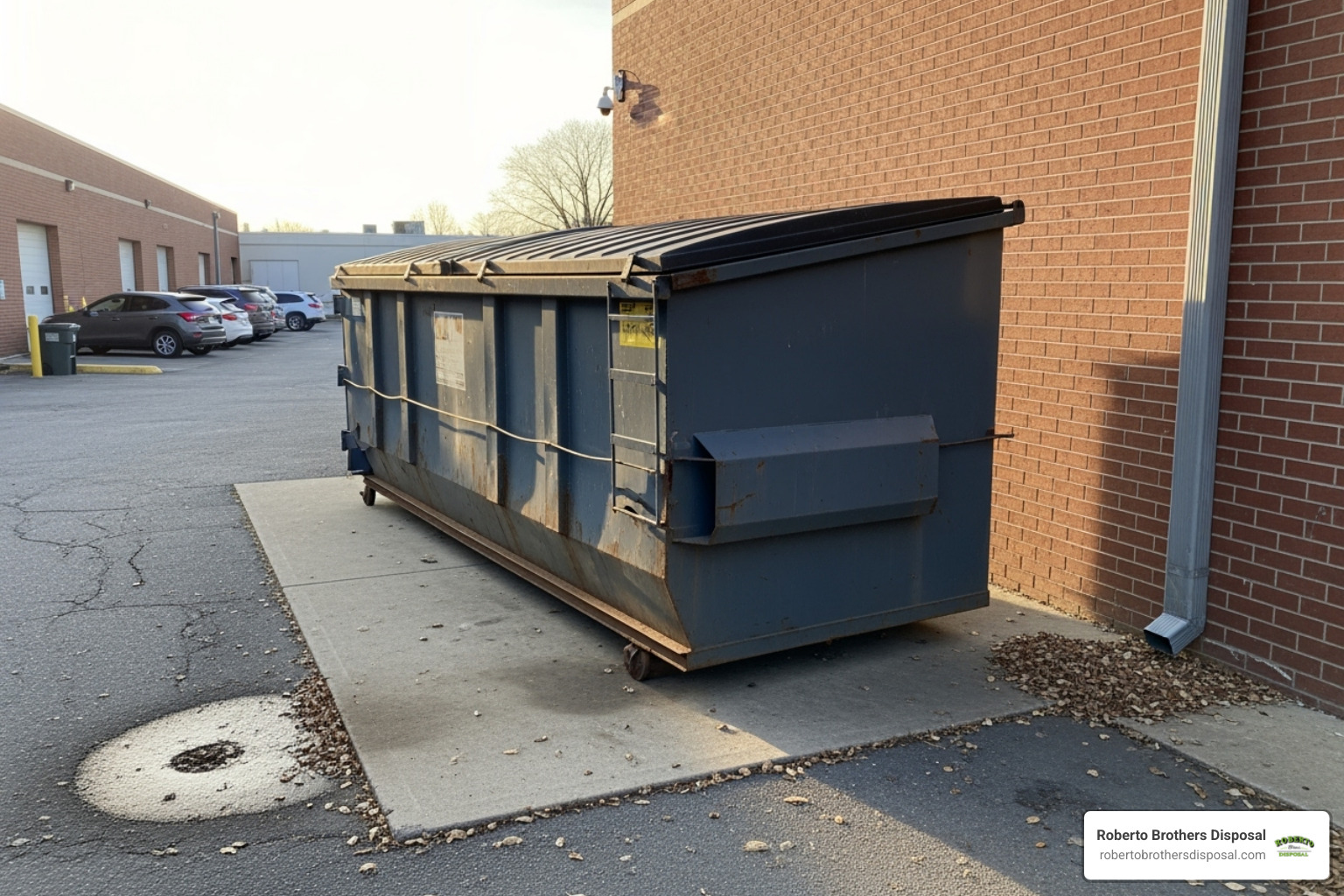
Do You Need a Permit for a Commercial Dumpster?
Whether your business needs a permit for a commercial dumpster largely depends on its placement:
- Private Property: If the dumpster is placed entirely on your business’s private property (like a parking lot or loading dock), you typically do not need a permit.
- Public Right-of-Way: If any part of the dumpster is on public property (a street, sidewalk, or alley), a permit from your local municipality is almost always required to ensure public safety and prevent obstruction.
Permit costs vary by city, typically from $10 to $75, but can be higher in metro areas. It’s crucial to check with your local municipal authorities in the towns we serve across Massachusetts and Southern New Hampshire. Failing to get a required permit can result in fines and service delays. While we can offer guidance, obtaining permits is the business’s responsibility.
What You Can and Cannot Throw Away
Understanding what can and cannot go into your commercial dumpster is vital for compliance and avoiding extra fees. While our dumpsters handle many debris types, strict regulations apply to hazardous materials.
Generally Accepted Materials (for typical commercial waste):
- General trash (non-hazardous office waste, packaging, food waste)
- Mixed recyclables (plastics, paper, cardboard, glass)
- Non-hazardous construction and demolition debris (drywall, wood, flooring – for roll-off dumpsters)
- Non-hazardous yard waste (leaves, branches – for roll-off dumpsters)
- Furniture and fixtures (non-hazardous)
Common Prohibited Items (Always check with us for a definitive list):
- Hazardous Waste: This includes chemicals, paints, solvents, pesticides, asbestos, medical waste, and flammable materials. Nationwide laws prohibit these from being thrown in landfills.
- Electronics (E-waste): Items like computers, TVs, and monitors contain hazardous materials and require special recycling.
- Appliances: Refrigerators and air conditioners with refrigerants must be handled specially. Other appliances like washing machines might also require separate disposal.
- Tires: Due to disposal challenges, tires are usually not allowed in general dumpsters.
- Batteries: All types of batteries are typically prohibited.
- Liquids: Paints, oils, and other liquids should never be poured into dumpsters.
Disposing of hazardous materials requires specialized services. For guidance on responsible disposal, you can consult your local municipality or the Environmental Protection Agency (EPA) website. Always check with us and your local landfill for a comprehensive list of what is allowed. Placing prohibited items in your dumpster can lead to significant fines and delays.
Conclusion: Finding the Best Value for Your Business
Navigating commercial dumpster rental prices can feel like a puzzle, but it’s manageable. We’ve explored how dumpster size, location, pickup frequency, waste type, and contract length all affect the final cost.
The key is finding a transparent, personalized partner who provides clear, upfront pricing. A good provider will help with a “waste audit” to ensure you get the most efficient and cost-effective service for your needs, so you don’t pay for unused space or unnecessary pickups.
Roberto Brothers Disposal is that transparent partner. As a local, family-run business in Ayer, MA, with over 20 years of experience, we understand the needs of businesses across Massachusetts (including Essex, Middlesex, and Worcester Counties) and Southern New Hampshire. Our commitment is simple: personalized service, trusted pricing, and eco-friendly solutions for your budget and the planet.
We’re here to ensure you get the right dumpster when you need it, at a price that makes sense. Ready for a clear, upfront price? Request Free Estimate or Rent a Dumpster with us today.