

Navigating Commercial Construction Waste
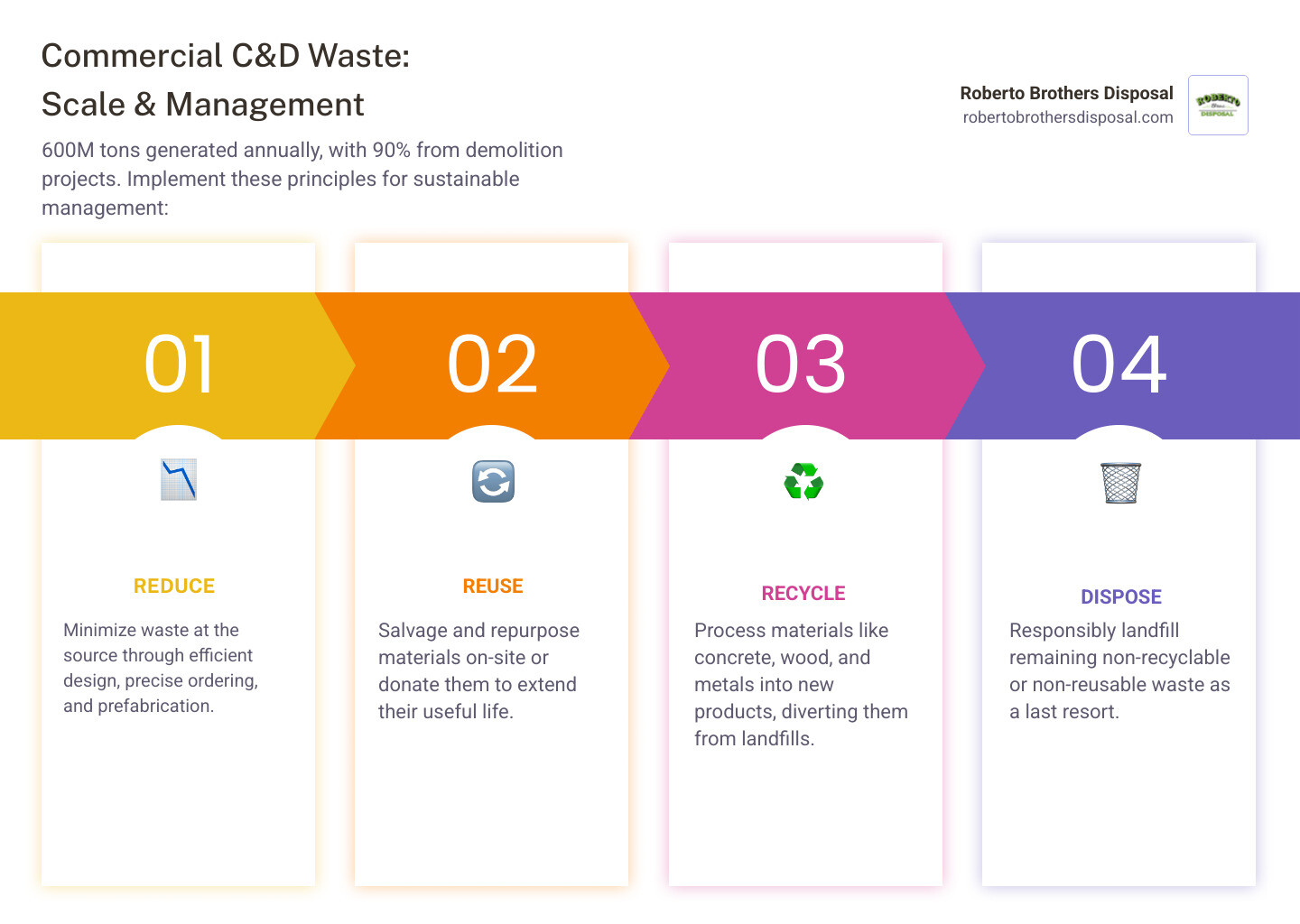
Commercial construction waste is all the debris from building, renovating, or demolishing commercial structures. It’s a massive issue, with the U.S. generating 600 million tons of construction and demolition (C&D) materials in 2018—more than double the municipal solid waste from that year.
Here’s a quick look at the issue:
- Over 90% of this waste comes from demolition, while new construction accounts for less than 10%.
- Improper handling strains landfills, harms the environment, and increases project costs.
- Effective management focuses on reducing waste, reusing materials, and recycling as much as possible.
Understanding the scale of this problem is the first step toward smart solutions that prioritize environmental responsibility, cost savings, and better building practices.
Commercial construction waste helpful reading:
Understanding the Scope of Commercial Construction Waste
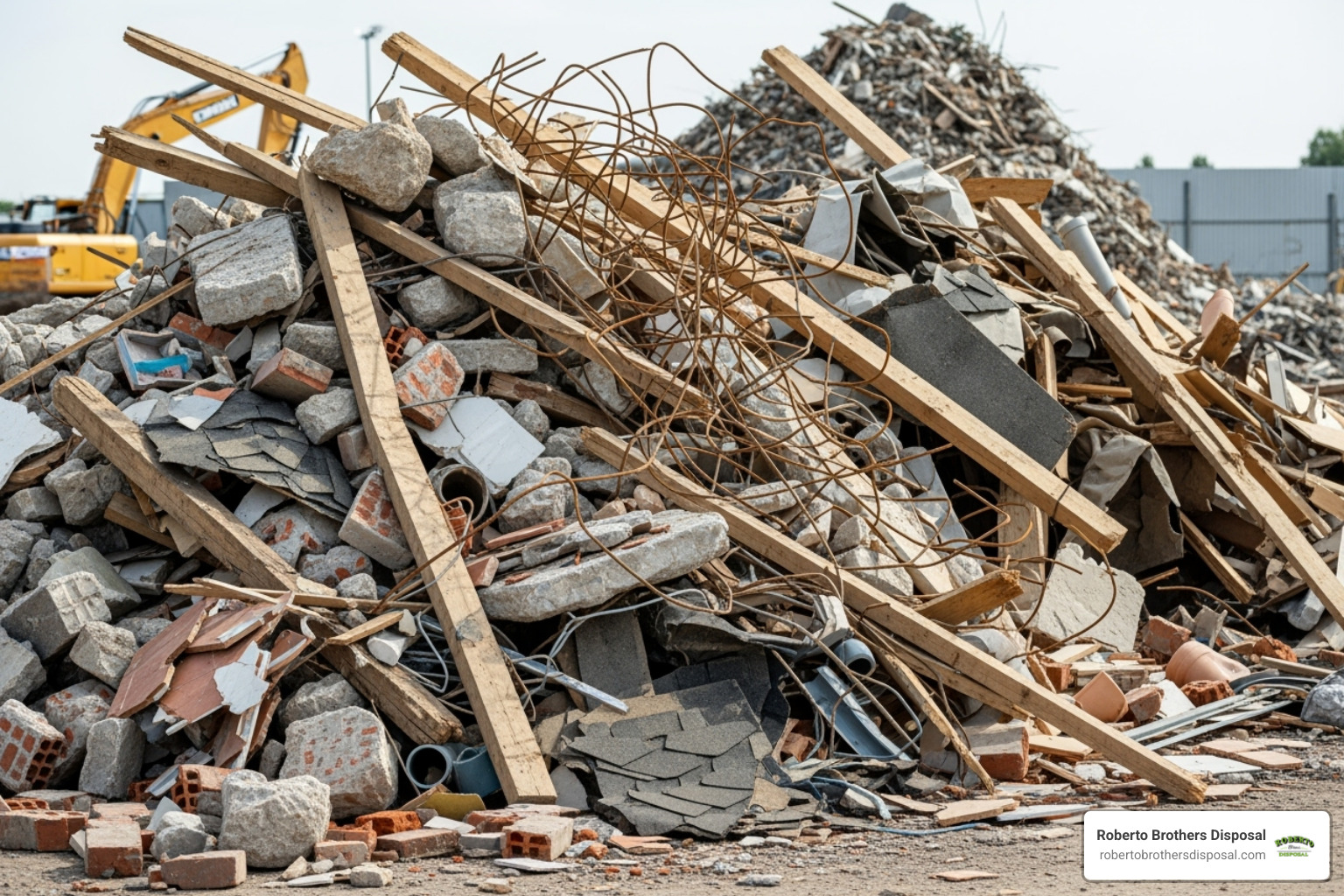
Commercial construction waste represents an enormous stream of materials from building, renovating, and demolishing structures. This complex mix of debris creates significant environmental and economic challenges.
In fact, construction and demolition (C&D) materials are the largest single source of our nation’s waste, making up about 30% of the total. This volume puts immense pressure on landfills, increasing project costs and shortening the lifespan of disposal sites. Improper disposal can also contaminate soil, groundwater, and air. For more details, you can explore the staggering scale of C&D waste.
At Roberto Brothers Disposal, we are committed to eco-friendly solutions that minimize environmental impact and keep as much commercial construction waste as possible out of landfills.
Common Types of Construction Debris
Knowing what’s in your commercial construction waste is the first step to managing it effectively. Common materials include:
- Concrete: Often the heaviest component, it can be crushed and reused as aggregate for new concrete or road bases.
- Wood: A large part of the waste stream (about 30%), clean wood can be recycled into engineered products, mulch, or biofuel.
- Drywall (Gypsum Board): 100% recyclable into new drywall or used as a soil amendment.
- Metals: Highly valuable for recycling, steel, copper, and aluminum can be melted and reused endlessly.
- Asphalt: Pavement and roofing shingles can be ground up for new paving or roofing products.
- Bricks and Masonry: Can be crushed and reused as aggregate, fill, or salvaged for new projects.
- Cardboard and Packaging: Highly recyclable, but must be kept clean.
- Plastics: Increasingly common, but recycling can be complex due to varied types.
- Glass: Recyclable, but often landfilled due to low value and high transport costs.
Hazardous Materials on a Job Site
Some commercial construction waste materials pose serious health and environmental risks, requiring special handling to avoid fines and liabilities. Identifying and separating them is critical.
Key hazardous materials include:
- Asbestos: Found in older insulation, flooring, and roofing. Inhaling fibers causes severe lung disease; removal is heavily regulated.
- Lead-based paint: Common in buildings pre-1978. Dust is highly toxic, and its removal requires strict containment.
- Solvents and Adhesives: Paints, varnishes, and glues can contain volatile organic compounds (VOCs) and must be disposed of as hazardous waste.
- Mercury: Present in old thermostats and fluorescent bulbs. It’s a neurotoxin requiring specialized recycling.
- Polychlorinated Biphenyls (PCBs): Found in old caulk and electrical equipment, these are persistent pollutants regulated as hazardous waste.
Proper handling of hazardous waste is a legal requirement. At Roberto Brothers Disposal, we strictly follow all regulations, including the Resource Conservation and Recovery Act (RCRA), to ensure worker and environmental safety.
Best Practices for Managing and Reducing Debris
Effective management of commercial construction waste is a smart strategy that improves efficiency, saves money, and boosts your project’s reputation. It all starts with a solid waste management plan.
Our approach at Roberto Brothers Disposal follows the waste management hierarchy: reduce waste first, then reuse materials, then recycle, with proper disposal as the last resort. This method keeps as much material as possible out of landfills.
Step 1: Reduce and Reuse
The best way to handle commercial construction waste is to avoid creating it. Smart planning and design are key. Strategies include designing for disassembly (making materials easy to salvage later), prefabrication (using pre-assembled parts to reduce on-site cutting), and accurate ordering to prevent excess.
Consider deconstruction versus demolition. Deconstruction involves carefully dismantling a building to salvage valuable components for reuse, unlike traditional demolition which creates mixed rubble. This process recovers more materials and saves resources.
Finally, donating salvaged materials like doors, windows, and lumber to non-profits such as Habitat for Humanity keeps them out of landfills, provides tax benefits, and supports the community. Prioritizing reduction and reuse cuts disposal costs and contributes to a circular economy.
Step 2: Recycle Your Commercial Construction Waste
After reducing and reusing, recycling is the next priority. Recycling commercial construction waste creates jobs, reduces project expenses by lowering disposal fees, and can even provide rebates for valuable materials like metals. It also conserves natural resources and energy.
Common recyclables include metals, concrete, bricks, clean wood, drywall, and asphalt.
Partnering with a certified recycling facility is crucial to ensure materials are handled correctly. At Roberto Brothers Disposal, we work with trusted facilities to process your sorted waste properly. Recycling also helps achieve sustainability goals and earn certifications like a LEED rating, which often require diverting a percentage of waste from landfills. We provide solutions to make recycling easy and help you meet these targets.
Step 3: Responsible Disposal
When disposal is unavoidable, we do it responsibly. Our goal is landfill diversion whenever possible, exploring options like waste-to-energy facilities for non-recyclable materials.
Proper disposal of non-recyclables involves using licensed, regulated facilities that meet all environmental standards.
Adhering to regulations is non-negotiable. Waste disposal is tightly controlled, and states like Massachusetts have specific waste bans on C&D materials like wood, metal, and concrete. Our full compliance protects you from fines.
The complexity of waste management makes partnering with a waste management expert essential. Roberto Brothers Disposal offers comprehensive Construction Waste Disposal services. Our local expertise in Massachusetts and Southern New Hampshire ensures your project’s waste is handled efficiently and legally.
Choosing the Right Waste Disposal Solutions
Finding the right disposal solution for your commercial construction waste is simpler with the right guidance. The key is to match your project’s unique needs with the most effective options.
Every project is different, so we start with a thorough project assessment. We evaluate the work type, estimated waste volume, timeline, and site access to determine the best container types, service frequency, and cost factors while ensuring full regulatory compliance.
Selecting the Correct Dumpster Size
Getting the dumpster size right is crucial for keeping your project on track and on budget. Too small means extra hauls and costs; too big means paying for unused space.
Here’s a guide to our dumpster sizes:
| Dumpster Size | Dimensions (H x W x L) | Best For |
|---|---|---|
| 10 Yard | 3.25′ x 7.25′ x 12′ | Small renovations, concrete/dirt disposal |
| 15 Yard | 4′ x 7.25′ x 14′ | Single-room remodels, roofing debris |
| 20 Yard | 5.5′ x 7.25′ x 14′ | Multi-room renovations, large cleanouts |
| 28 Yard | 6′ x 7.25′ x 17′ | Major construction, demolition projects |
The 10-yard is ideal for heavy materials like concrete. The 15-yard works well for single-room remodels. The 20-yard is a versatile choice for multi-room renovations, while the 28-yard offers maximum capacity for major construction or demolition.
Weight is as important as volume, as heavy materials can reach weight limits quickly. Our team helps you select the most cost-effective size for your commercial construction waste.
Understanding Waste Disposal Costs
Understanding disposal costs helps you plan your budget accurately. Key factors include:
- Landfill tipping fees: Charged by weight, making heavy materials more expensive to dispose of.
- Hauling charges: Cover transportation to and from your site.
- Rental fees: The base cost for the dumpster rental period.
- Recycling rebates: Clean, sorted materials like metals can earn you money back.
- Contamination fees: Penalties for mixing non-recyclable waste into a recycling dumpster. Proper sorting is key to avoiding these.
Our transparent pricing bills debris by the pound, so you only pay for what you dispose of, with no hidden fees. Learn more on our Commercial Dumpster Rental Prices page.
How to Choose a Waste Management Partner
Your waste management partner is crucial for a smooth project. Look for:
- Local Expertise: A partner familiar with local regulations and facilities. We have over 20 years of experience in Massachusetts and Southern New Hampshire.
- Reliability: Timely deliveries and pickups are essential to keep your project on schedule.
- Transparent Pricing: Clear, upfront costs with no hidden fees.
- Compliance Knowledge: A partner who understands and adheres to all federal, state, and local waste regulations.
- Range of Services: A single provider for all your needs, from roll-offs to recycling services.
As a local, family-run business, we offer personalized, eco-friendly solutions. Find out more about choosing the right partner on our Dumpster Companies page.
Emerging Trends and Technologies in Waste Management
The management of commercial construction waste is evolving, driven by sustainability, new regulations, and technology. At Roberto Brothers Disposal, we accept these innovations to offer our clients the most advanced solutions.
Key trends include:
- Circular Economy: Shifting from a “take, make, dispose” model to a continuous loop. This involves designing for end-of-life to keep materials in use longer through reuse, recycling, and remanufacturing.
- Smart Technology and IoT: Dumpster sensors signal when they are full, optimizing pickup schedules and reducing fuel consumption. GPS tracking ensures efficient routing.
- Waste Tracking Software: Digital platforms help contractors monitor waste generation, track landfill diversion rates, and generate reports for compliance and sustainability certifications like LEED.
- Advanced Sorting Robotics: AI-powered robots at material recovery facilities (MRFs) sort mixed waste with speed and accuracy, improving the quality of recycled materials.
- Sustainable Building Materials: A shift towards materials with lower embodied carbon, higher recycled content, and better recyclability, such as mass timber and recycled steel.
- Prefabricated Construction: Manufacturing building components off-site in a factory setting significantly reduces on-site scrap and waste.
These advancements are changing commercial construction waste from a problem into a resource. We stay at the forefront of these trends to provide cutting-edge solutions. For your next project, consider a Roll Off Dumpster Rental Near Me from a partner who understands these developments.
Frequently Asked Questions about Commercial Construction Waste
We get a lot of questions about managing construction waste. Here are answers to some of the most common concerns.
Can I mix all types of construction waste in one dumpster?
While convenient, mixing all waste in one dumpster is usually not the best approach.
- Cost: Mixed (“commingled”) debris costs more to dispose of because it requires sorting at a specialized facility. Sorting materials like clean concrete or metal into separate dumpsters on-site can significantly lower costs. For example, Concrete Dumpster Rental Prices are often lower for clean, easily recyclable loads.
- Contamination: Mixing materials can contaminate valuable recyclables, rendering them unusable and forcing them into a landfill.
- Hazardous Waste: It is illegal and unsafe to mix hazardous materials (asbestos, lead paint, chemicals) with general construction debris. These require special handling and disposal.
Our advice is to sort materials on-site. We can provide separate dumpsters to facilitate this, helping you save money and recycle more effectively.
What is the difference between construction waste and demolition waste?
Though often grouped as “C&D waste,” they differ:
- Construction Waste: Debris from new builds or renovations. It includes material off-cuts, trimmings, and packaging. According to the EPA, this accounts for less than 10% of all C&D debris.
- Demolition Waste: Debris from tearing down structures. It’s typically heavier and more varied, including concrete, steel, and brick. Demolition generates over 90% of all C&D debris and can be more complex due to the volume and potential for hazardous materials in older buildings.
Understanding the difference helps in planning the best management strategy.
How do I ensure my business is compliant with waste regulations?
Ensuring compliance is critical to avoid fines and project delays.
- Know the Regulations: Understand federal laws like the Resource Conservation and Recovery Act (RCRA), as well as state and local rules, which can include landfill bans and mandatory recycling.
- Obtain Permits: Your project may require specific permits for generating, transporting, or disposing of waste, especially if it’s hazardous.
- Maintain Records: Keep detailed documentation of your waste streams, handling procedures, and disposal/recycling receipts. This is crucial for proving compliance and for green building certifications.
- Partner with an Expert: The easiest way to ensure compliance is to work with a licensed and insured waste management company. We handle the regulatory complexities, so you can focus on your project.
Adopting a Sustainable Materials Management (SMM) approach also helps ensure you manage materials responsibly from start to finish.
Conclusion
Managing commercial construction waste is more than just hauling debris; it’s an opportunity to make smart choices that benefit the environment, your budget, and your project’s efficiency.
Here are the key takeaways:
- Plan Ahead: Integrate waste management into your project from the start.
- Follow the Hierarchy: Prioritize reducing, reusing, and recycling before disposal.
- Know Your Materials: Handle all waste, especially hazardous materials, safely and legally.
- Use the Right Tools: Select the correct dumpster size and sort materials on-site to boost efficiency and cut costs.
- Choose the Right Partner: Work with a reliable, transparent partner who understands local regulations.
Implementing these practices helps your business contribute to a healthier environment while improving your bottom line.
At Roberto Brothers Disposal, we make managing commercial construction waste headache-free. As a local, family-run business with over 20 years of experience in Massachusetts and Southern New Hampshire, we deliver reliable, fast, and eco-friendly solutions.
Ready to simplify your next project’s waste management? Get a Roll-Off Dumpster Rental for Your Next Project with us today.
